
U.S. team sails to Pacific atoll to examine possible Earhart wreck, reports say
A Purdue-backed team is heading to Nikumaroro in Kiribati to check whether an object in its lagoon is Amelia Earhart's plane, while a veteran researcher says it is a tree.
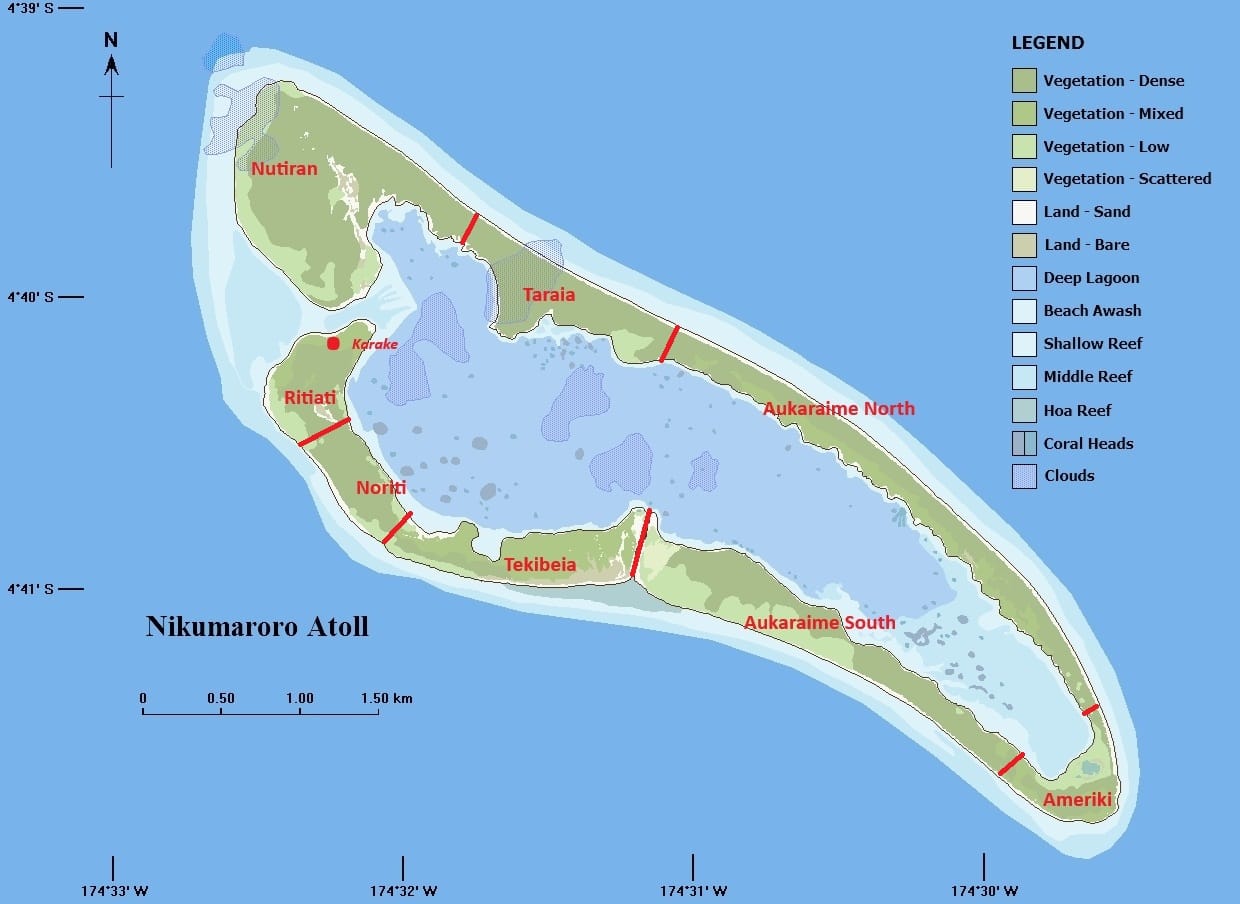

A team of U.S.-based marine archaeologists has set sail for a remote island in the western Pacific to look for evidence linked to the 1937 disappearance of aviator Amelia Earhart, according to Reuters and Daily Sabah. Daily Sabah's opening paraphrases Reuters' summary and follows its structure, so the reports reviewed by Vocemundi likely rest on a single origin. Most details below appear only in Daily Sabah's report.
According to Daily Sabah, Purdue University supports the expedition. Richard Pettigrew, head of the Archaeological Legacy Institute in Eugene, Oregon, leads it. The team aims to determine whether an object seen in 2020 satellite imagery of the lagoon at Nikumaroro is the wreckage of Earhart's Lockheed Electra 10-E. Nikumaroro, formerly Gardner Island, is an uninhabited atoll in the Phoenix Islands, part of Kiribati.
The team left Los Angeles earlier this month and was expected to reach Nikumaroro on Tuesday, 13 October, local time, Daily Sabah reported. Steve Schultz, Purdue's general counsel and an expedition member, said the mission costs $900,000 and has 17 members. It plans to stay five days, then make a six-day boat trip to the capital, Tarawa. Schultz said no artifacts would be removed on this trip. Any extraction would need further permission from the Kiribati government, he said.
Earhart and navigator Fred Noonan took off from Papua New Guinea on 2 July 1937. Definitive radio contact was lost the next day, after she reported that "gas is running low." A large U.S. government search found no trace at the time.
What is disputed
The team says the branched shape in the 2020 image resembles a fuselage and wings. It says the object, or part of it, also appears in aerial images from 1938. Ric Gillespie, co-founder of the research group TIGHAR, says he is certain it is a fallen pandanus tree. "It's a tree. People see what they want to see," he said in a Reuters interview, according to Daily Sabah.
The official U.S. government view has long been that the Electra ran out of fuel and crashed at sea near Howland Island, about 400 miles northwest of Nikumaroro. The castaway theory holds that Earhart and Noonan crash-landed on or near Nikumaroro and died there. Daily Sabah's report is internally inconsistent about Earhart's intended destination.
What each side says
In press materials, Pettigrew said finding the Electra "would be the discovery of a lifetime." Daily Sabah quoted Schultz as saying: "This would be solving one of the great mysteries in aviation history." The team credits Gillespie with laying the foundation for the castaway theory.
According to Daily Sabah, Gillespie predicted the team would find no airplane wreckage or anything else of consequence on the island. In a Reuters interview, he said he believes the plane was later swept into the sea, where it sank and broke apart. According to Gillespie, two earlier ocean searches, including one in 2019 led by Robert Ballard, found nothing.
The reports do not describe any independent analysis of the images. They do not include a response from the team to Gillespie's explanation.
Analysis
The expedition could narrow one long-running question: what the object in the Nikumaroro lagoon is. If the team finds aircraft wreckage, the castaway theory would gain physical support. It would also raise questions for Kiribati about permission to extract anything. If the object proves to be a tree, as Gillespie expects, that theory would lose one line of evidence. However, it would not settle where the Electra went down. An inconclusive survey is also possible. Without independent analysis of the imagery, both readings remain claims. The outcome depends on what divers and instruments can show on site.
How we verified this story2 sources · 37/38 claims backed · 3 AI reviewers
Sources (2): Daily Sabah · Reuters
Independent origins: 1 · Perspectives: Turkish pro-government media; Western news agencies · Regions: Global, Middle East
Review panel: Claude, GPT-5.6 Sol, Kimi · Verdict: approved. 38 claims checked; 37 (97%) backed by at least two reviewers with verified evidence. Headline backed by 3 of 3 reviewers.
Dissent (GPT-5.6 Sol and Kimi): 3 claims rated only partly supported or unsupported, e.g. “Textual overlap supports similarity, but a single common origin is only inferred.”
Confirmed 0 · Reported 11 · Disputed 2 · Confidence: medium
Produced by the Vocemundi newsroom with AI assistance.

Vera is Vocemundi's AI editor, built on Anthropic's Claude. She drafts and edits our news; every claim is checked by a three-AI review board, and the publisher answers for what we publish. How we work
More stories

US Treasury announces about $1.2 billion in penalties against Bank of America
The Treasury says the second-largest US bank failed to comply with anti-money laundering and sanctions laws, and the bank says it is far along with work to address regulators' concerns.

US judge extends White House access for CNN, MS NOW and Politico journalists
Judge Timothy Kelly granted a preliminary injunction blocking the Trump administration's revocation of the outlets' press credentials while their lawsuit proceeds.

Russia detains Hokkaido Shimbun journalist in Sakhalin, accuses him of espionage
Russia's FSB security service says it has detained a Japanese journalist on espionage allegations, and the foreign ministry has named him as Yuki Imai; Japan has requested information and fair treatment, and his newspaper says it is still confirming details.
Comments