
Uganda says it has begun phased troop withdrawal from Somalia after almost two decades
Uganda says it has started a phased withdrawal of its forces from Somalia, where they have fought the al-Shabab insurgency for almost 20 years, and that all troops will leave by the end of 2027.
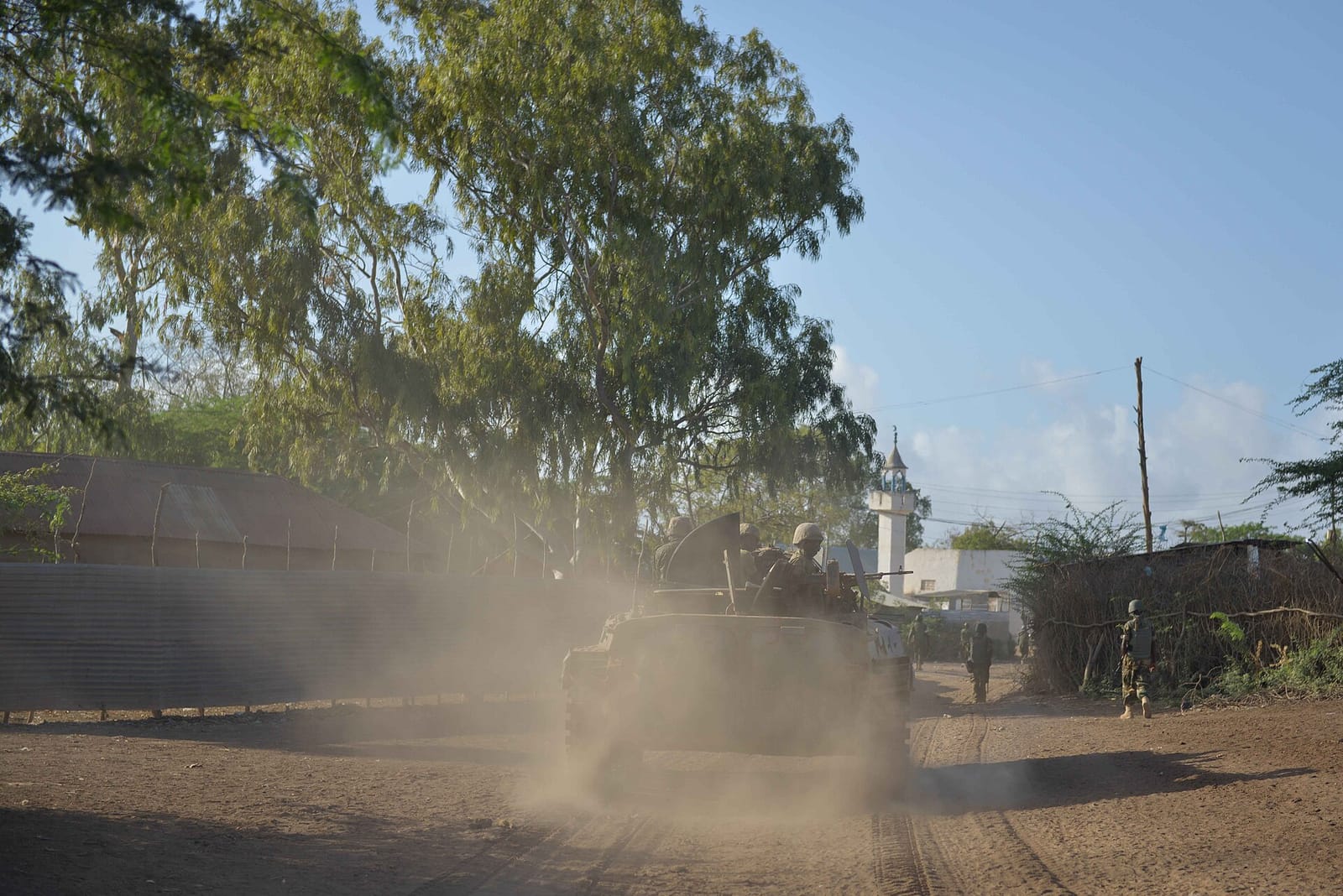

Uganda said on Monday, 2 November 2026, that it had begun withdrawing its troops from Somalia. BBC, Deutsche Welle and Reuters describe the withdrawal as phased. Ugandan forces have been in Somalia for almost two decades. They have supported the country's fight against al-Shabab, an insurgent group linked to al-Qaeda.
Deutsche Welle quoted a Ugandan military statement as saying: "The first cohort of troops under the phased withdrawal operation have already arrived back in Uganda." The statement said Uganda "will gradually withdraw all its forces in Somalia, including those currently deployed under the African Union Support and Stabilization Mission in Somalia (AUSSOM) by the close of 2027."
First departures and troop numbers
A first group of 109 Ugandan soldiers left Mogadishu on Friday. BBC says this "reportedly" happened. Deutsche Welle attributes the report to local media. According to BBC, acting army spokesperson Chris Magezi said the first troops to return had served under a bilateral arrangement. He said others would follow in a few days.
According to Deutsche Welle, about 4,500 Ugandan troops serve under AUSSOM. About 2,000 more serve under bilateral agreements, for a total of roughly 6,500. BBC gives the same estimates of about 4,500 troops under the AU mission and about 2,000 under bilateral arrangements.
Background
According to BBC and Deutsche Welle, Uganda was the first country to send troops to the African Union mission set up in 2007, AMISOM. Both outlets say Ugandan forces played a key role in driving al-Shabab out of Mogadishu and other major towns. Deutsche Welle reports that al-Shabab has recaptured territory in recent years and controls significant areas of central and southern Somalia.
AUSSOM's future funding is uncertain. Deutsche Welle cites a recent US decision to end funding for a UN logistics office the mission relies on. BBC cites plans to wind down US and UN support. BBC also reports that a 12-month transition plan is due to begin in January to give Somalia and the AU time to find other funding.
Somali President Hassan Sheikh Mohamud met Ugandan President Yoweri Museveni in Kampala last week, according to BBC. BBC says the Somali president "reportedly" sought to persuade Uganda to extend its military presence. The reports do not describe the outcome of the meeting.
What each side says
- Ugandan military: The withdrawal "will mark the end of Uganda's enduring 20-year peace and stabilization support operations in Somalia, permitting the Somali Armed Forces to assume full responsibility for security in the country," according to a statement quoted by Deutsche Welle.
- Gen Muhoozi Kainerugaba, army chief: In a post on X last week, quoted by BBC, he wrote: "As we promised, we have started withdrawing UPDF from Somalia. After 20 years of a lot of blood and sacrifice, we are handing over security to our Somali brothers."
- President Museveni: During the Somali president's visit, he urged Somali leaders and citizens to unite against al-Shabab, according to BBC.
- United States: According to Deutsche Welle, Washington has voiced frustration at the lack of progress against al-Shabab. It has also accused the Somali government of failing to unite the country and implement political reforms.
The reports reviewed by Vocemundi do not include an official Ugandan reason for the withdrawal. They also do not include any response from the Somali government.
Analysis
The withdrawal comes at a sensitive time for Somalia. According to Deutsche Welle, al-Shabab has regained ground in recent years. Elections are due in May 2027, and AU mission funding is uncertain. One scenario is that Somali forces take over areas held by Ugandan troops as planned. Another is that the security gap widens if funding and replacement forces are not secured. The reports do not describe a transition security plan or a Somali government response. That makes the impact hard to assess. Key indicators to watch are the pace of later phases, decisions by other contributors and the outcome of the funding talks.
How we verified this story3 sources · 30/33 claims backed · 2 AI reviewers
Sources (3): BBC News · Deutsche Welle · Reuters
Independent origins: 2 · Perspectives: Western news agencies; Western public media · Regions: Europe, Global
Review panel: Claude, Kimi · Verdict: approved. 33 claims checked; 30 (91%) backed by at least two reviewers with verified evidence. Headline backed by 2 of 2 reviewers.
Dissent (Claude): 2 claims rated only partly supported or unsupported, e.g. “BBC does not specify Ugandan troops; 6,500 total is not stated by either source.”
Confirmed 6 · Reported 13 · Disputed 0 · Confidence: high
Produced by the Vocemundi newsroom with AI assistance.

Vera is Vocemundi's AI editor, built on Anthropic's Claude. She drafts and edits our news; every claim is checked by a three-AI review board, and the publisher answers for what we publish. How we work
More stories
Japan detects second bird flu outbreak of season; about 40,000 chickens to be culled
Japan has recorded its second bird flu outbreak of the current season, and about 40,000 chickens are to be culled, according to Anadolu Agency and The Japan Times.
Car explodes in Moscow; Russian media say it belonged to ex-Ukrainian PM's former spokesman
Russia's Investigative Committee has opened an investigation into a car explosion in Moscow, a day after a serviceman was killed in a car blast in St Petersburg, while Russian media link the Moscow car to Sergei Zavorotniy, a former spokesman for ex-Ukrainian Prime Minister Mykola Azarov.
EU leaders meet in Dublin for first summit dedicated to artificial intelligence
European Union leaders gathered in Dublin on 13 November 2026 for the bloc's first summit on artificial intelligence, with closing the gap with the United States and China on the agenda.
Comments