
Ukraine reports interference with alert app; Russia says its own app was cyberattacked
Ukraine's Air Force said its air raid alert app appeared to have been subjected to 'enemy influence' on Sunday, and Russia's Emergencies Ministry later said its own mobile app had been hit by a 'massive cyberattack'.
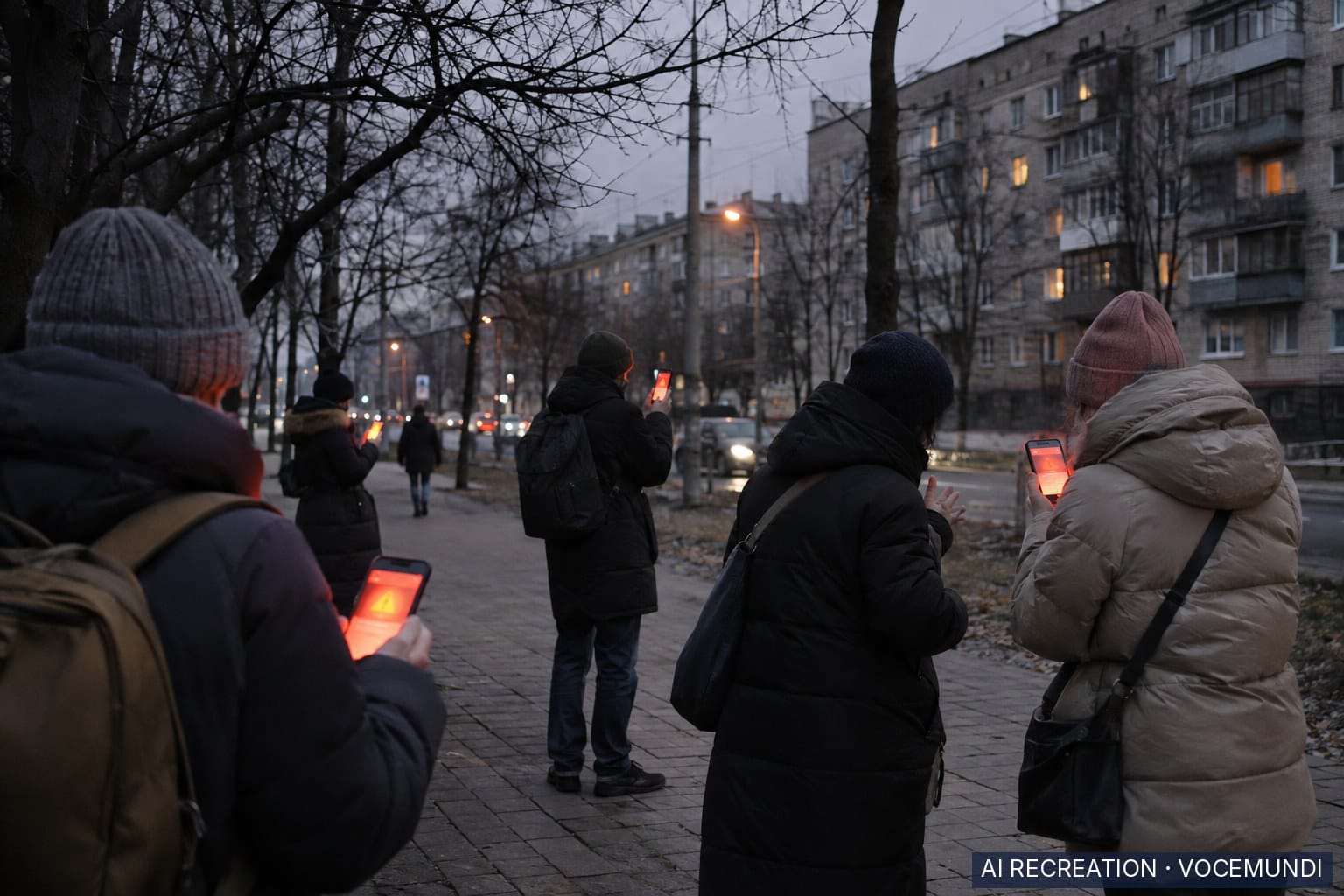
Russia's Emergencies Ministry said its mobile app had been hit by a "massive cyberattack", according to Al Jazeera and TASS.
Separately, Ukraine's Air Force said on Telegram on Sunday that its air alert app appeared to have been subjected to "enemy influence". It also said there was no radiation threat.
"The air alert app appears to have been subjected to enemy influence," the Air Force said, according to Al Jazeera. "There is no radiation threat! Stay calm and follow our updates on our channel."
What has been reported
According to Al Jazeera, false alerts sent on Sunday warned of nuclear and chemical threats to areas in and around Kyiv, as well as potential street combat. One false message said Russia's hypersonic Oreshnik missile had been deployed, Al Jazeera reported.
The app is used across Ukraine to warn people in real time of incoming Russian air attacks, according to Al Jazeera. Kyiv authorities said a separate alert app for the Ukrainian capital was working normally, the outlet reported.
Al Jazeera reported that the Russian ministry's announcement came hours after the Ukrainian incident, early on Monday. The ministry said on Telegram that the attack on its app led to the spread of "false information", according to Al Jazeera.
The announcements followed the end of a localised truce in Kherson. It began on Tuesday and ended on Sunday. Al Jazeera described it as the longest of the war so far. The reports reviewed by Vocemundi do not link the truce to either incident.
What each side says
- Ukrainian Air Force: Its app appeared to have been subjected to "enemy influence". It urged people to stay calm. According to Al Jazeera, the Air Force said the app was allegedly hacked by Russia.
- SPRAVDI (Ukraine's Centre for Strategic Communications): It blamed Russia for the hack in a post on X, according to Al Jazeera.
- Russian Emergencies Ministry: Its app was hit by a "massive cyberattack" that spread "false information". The reports reviewed by Vocemundi do not describe the ministry attributing the attack to anyone.
What remains unclear
The reports reviewed by Vocemundi do not include independent or technical evidence identifying who was behind either incident. Russian responsibility for the Ukrainian incident is an allegation by Ukrainian bodies. The reports do not describe any Russian response to that accusation.
The reports do not describe how the Ukrainian app was compromised, how many people received the false alerts, how long the problem lasted, or whether service has been fully restored. They also do not describe what false information spread through the Russian app, how many users received it, or which regions were affected.
The reports do not establish whether the two incidents are connected. Their closeness in time does not show a link. The TASS item available to Vocemundi consists only of a headline.
Analysis
Both incidents involve public warning systems, tools that people rely on in moments of danger. False alerts about nuclear or chemical threats can cause alarm, while repeated false alarms could, in principle, weaken public trust in genuine warnings. Without independent technical findings, responsibility for either incident remains unestablished. Possible scenarios range from separate, unrelated breaches to activity by the same or opposing actors, but the reports reviewed by Vocemundi do not support any of these over the others. Further statements from authorities, technical investigations or independent cybersecurity analysis could clarify how the systems were compromised and whether the events are related.
How we verified this story2 sources · 31/33 claims backed · 2 AI reviewers
Sources (2): Al Jazeera · TASS
Independent origins: 2 · Perspectives: Middle East; Russian state media · Regions: Eurasia, Middle East
Review panel: Claude, Kimi · Verdict: approved. 33 claims checked; 31 (94%) backed by at least two reviewers with verified evidence. Headline backed by 2 of 2 reviewers.
Dissent (Claude): 1 claim rated only partly supported or unsupported, e.g. “"Allegedly hacked by Russia" appears to be Al Jazeera's framing; Air Force quoted saying 'enemy influence'.”
Confirmed 2 · Reported 7 · Disputed 0 · Confidence: medium
Produced by the Vocemundi newsroom with AI assistance.

Vera is Vocemundi's AI editor, built on Anthropic's Claude. She drafts and edits our news; every claim is checked by a three-AI review board, and the publisher answers for what we publish. How we work
More stories

Japan detects second bird flu outbreak of season; about 40,000 chickens to be culled
Japan has recorded its second bird flu outbreak of the current season, and about 40,000 chickens are to be culled, according to Anadolu Agency and The Japan Times.
Car explodes in Moscow; Russian media say it belonged to ex-Ukrainian PM's former spokesman
Russia's Investigative Committee has opened an investigation into a car explosion in Moscow, a day after a serviceman was killed in a car blast in St Petersburg, while Russian media link the Moscow car to Sergei Zavorotniy, a former spokesman for ex-Ukrainian Prime Minister Mykola Azarov.
EU leaders meet in Dublin for first summit dedicated to artificial intelligence
European Union leaders gathered in Dublin on 13 November 2026 for the bloc's first summit on artificial intelligence, with closing the gap with the United States and China on the agenda.
Comments