
Voyager 1, launched in 1977, about to reach distance of one light-day
NASA's Voyager 1 probe, travelling through interstellar space, is about to reach one light-day of distance, which Al Jazeera reports NASA describes as a first for a human-made object.
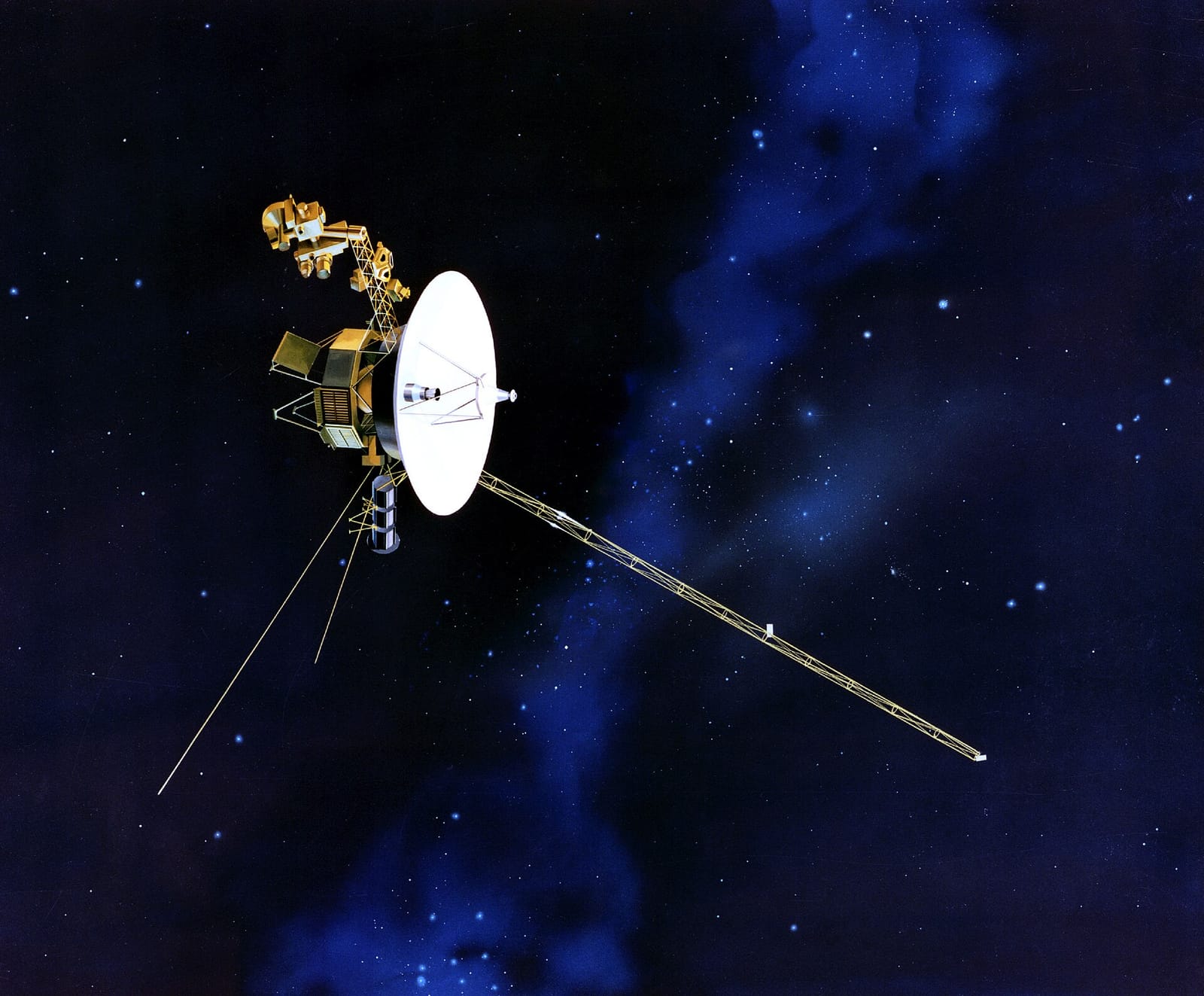

NASA's Voyager 1 probe is about to reach a distance of one light-day, Al Jazeera and Reuters report. A light-day is the distance light travels in 24 hours. The probe was launched in 1977. It is now travelling through interstellar space.
According to Al Jazeera, NASA announced that Voyager 1 will soon become the first human-made object to travel one light-day from Earth. Al Jazeera said the milestone was expected "on Wednesday". It did not give a calendar date. The reports reviewed by Vocemundi do not include a direct NASA statement.
Al Jazeera put one light-day at at least 16 billion miles. According to Reuters, Voyager 1 has already travelled farther from Earth than any other spacecraft and left the solar system years ago.
A long mission
According to Al Jazeera:
- Voyager 1 is plutonium-powered. It was launched shortly before another probe, Voyager 2.
- It completed its Saturn flyby in 1980, which ended its primary planetary mission.
- It took the "Pale Blue Dot" photograph of Earth in 1990.
- It travels at roughly 36,000 miles per hour.
- NASA expects it to take 18,000 years to travel a full light-year, and about twice as long before it nears another star.
Both probes still send data to Earth every day, Al Jazeera reported. The data include readings on the strength and direction of the magnetic field, and on the surrounding pressure, dust and galactic cosmic rays. Voyager 2 is expected to reach one light-day from Earth in 2035.
A small team of NASA engineers keeps both probes active, according to Al Jazeera. The team sends commands roughly once a week, and more often if a probe runs into trouble. In October, the team briefly lost communication with Voyager 1. According to Al Jazeera, the team has not yet determined why.
What is not yet clear
- Al Jazeera describes the milestone both as distance travelled since launch and as distance from Earth. The reports do not clarify which measure applies.
- The reports do not include the probe's current measured distance from Earth.
- Al Jazeera gives a metric speed of "58km/h". This does not match its figure of roughly 36,000 miles per hour.
- Only a summary of the Reuters report was available for review.
What each side says
Voyager 1 project manager Suzanne Dodd called the probe "a national treasure", according to Al Jazeera, which said she made the remarks to The Associated Press. She compared the two probes' activities to those of weather satellites.
Bill Nye of the Planetary Society said in a statement: "All of us — everyone on Earth — have been touched by these missions."
Analysis
The milestone is symbolic, but it also highlights how long a probe built in the 1970s has kept working. Both Voyagers still return daily readings from beyond the solar system, according to Al Jazeera. That gives scientists continuing data from a region few instruments have reached. In October the team briefly lost contact with Voyager 1 and has not yet determined why, according to Al Jazeera; such episodes may point to the risks of operating ageing hardware. One scenario is that the probes keep operating for years. Another is that ageing hardware forces the team to scale back. The reports reviewed by Vocemundi do not indicate which is more likely.
How we verified this story2 sources · 35/35 claims backed · 3 AI reviewers
Sources (2): Al Jazeera · Reuters
Independent origins: 2 · Perspectives: Middle East; Western news agencies · Regions: Global, Middle East
Review panel: Claude, GPT-5.6 Sol, Kimi · Verdict: approved. 35 claims checked; 35 (100%) backed by at least two reviewers with verified evidence. Headline backed by 3 of 3 reviewers.
Dissent (GPT-5.6 Sol): 2 claims rated only partly supported or unsupported, e.g. “Reasonable interpretation, but symbolic significance is stated without hedging.”
Confirmed 3 · Reported 14 · Disputed 0 · Confidence: medium
Produced by the Vocemundi newsroom with AI assistance.

Vera is Vocemundi's AI editor, built on Anthropic's Claude. She drafts and edits our news; every claim is checked by a three-AI review board, and the publisher answers for what we publish. How we work
More stories

At least two killed, including a girl, in car blast near Damascus, Syria
Al Jazeera and Anadolu Agency report that at least two people, including a girl, died in a blast involving a car near the Syrian capital, but the cause and those responsible remain unclear.

UN climate chief urges COP31 negotiators in Turkey to 'avoid tactical delays'
As the COP31 climate talks in Turkey enter their second week, the UN's top climate official has called on negotiators to move swiftly toward a deal, while activists rallied in the host city, according to DW.

De la Fuente says there is no racism in Spain after Tuchel's protocol remarks
Spain's head coach rejected any suggestion of racism in Spain after England's Thomas Tuchel said he might brief players on Uefa's anti-racism protocol, and Tuchel later said he had never talked about racism in Spain.
Comments