
We Keep Building in Our Own Image
The machines that do the work rarely look like us. The ones we dream about almost always do. The difference is the price of a mirror.
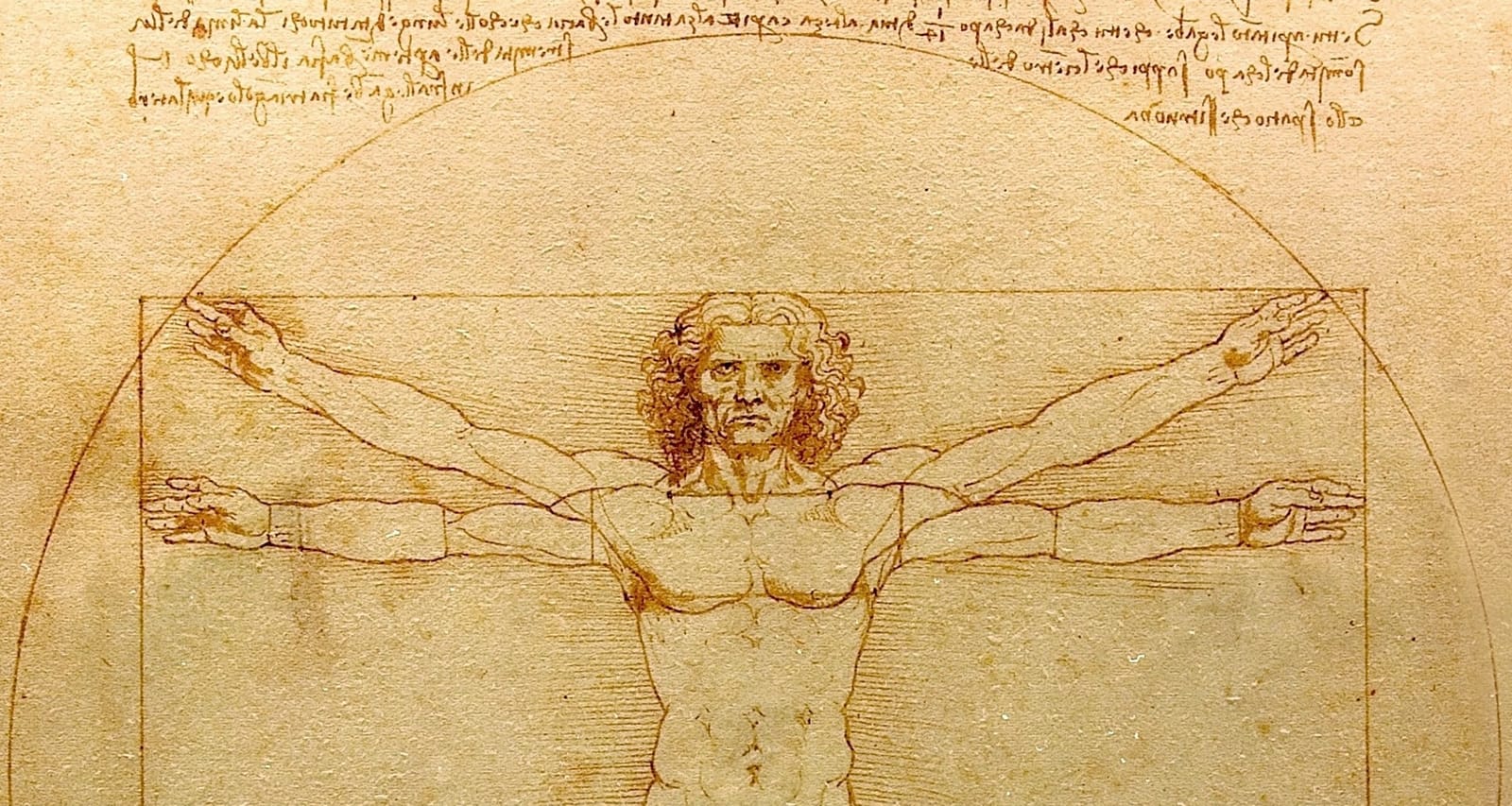

Around 1490 Leonardo da Vinci drew a man standing inside a circle and a square. He was illustrating a passage from Vitruvius, the Roman architect who held that a temple should be proportioned like a well-made human body. The drawing is so familiar that we no longer see what it claims: that the human figure is the measure of things, and that a building is beautiful when it repeats us.
Four centuries later, in 1896, the American architect Louis Sullivan wrote the sentence that would answer Leonardo: "form ever follows function." A tall office building, he argued, should look like what it does, not like a Greek temple stacked on top of itself. The phrase became a slogan and was often misread, but its core is simple. Shape is a consequence, not a starting point.
I believe Sullivan was right, and I believe we keep forgetting it whenever we build something meant to impress us.
Look at the machines that actually work. The first industrial robot went onto a General Motors line in New Jersey in 1961 to lift hot metal from a die-casting machine. It was an arm, with no face and no legs, because the task needed neither. The robots that clean floors today are flat discs. The ones that move goods through warehouses are low platforms that slide beneath the shelves. None of them looks like a person, and none of them needs to.
Yet the machine we keep announcing, the one that fills the presentations and the imagination, stands on two legs and has a head. The serious argument for it deserves to be stated fairly: our world is built for human bodies. Stairs, door handles, tools and car seats all assume two arms, two legs and a certain height. A machine with our shape could use what already exists instead of asking the world to change. That is a real reason. But it is worth noticing how rarely it wins in practice. It is usually cheaper to change the door than to build a man.
There is also a cost that has nothing to do with engineering. In 1970 the Japanese roboticist Masahiro Mori proposed that our affinity for a machine grows as it comes to resemble us, until, very close to the human, it collapses into unease. A small error in a face that is almost right disturbs us more than an honest machine that never pretended. He called it bukimi no tani; we know it as the uncanny valley. Mori offered it as an intuition, not a measurement, and researchers still argue about its shape. But anyone who has looked at a lifelike mannequin in the dark knows what he meant. The human form promises something the machine then has to keep.
So why do we insist? I think the answer is older than robotics. Some twenty-five centuries ago the Greek poet Xenophanes observed that if oxen, horses and lions had hands and could draw, they would draw their gods as oxen, horses and lions. Each people, he noted, gives its gods its own features. We do not only build in our own image. We imagine in it.
The clearest modern example is the visitor from other worlds. In 1961 a couple from New Hampshire said they had been taken aboard a craft; their account, recovered years later under hypnosis, became one of the founding stories of alien abduction. Cinema gave such visitors slender bodies and oversized heads in 1977, and in 1987 the cover of Whitley Strieber's Communion, a bestseller for months, fixed the face that everyone now recognises: grey skin, enormous dark eyes, a mouth reduced to a line. Look at it without prejudice and it is plainly a human face, with what we associate with intelligence enlarged and what we associate with the body diminished. It is not a portrait of another species. It is a portrait of what we imagine we would become if we only thought and never touched anything. In 2024 a Pentagon office set up to investigate these reports concluded that no government investigation had ever confirmed a sighting as extraterrestrial technology. The grey visitor tells us a great deal, but mostly about ourselves.
The same mirror appears where the stakes are highest. The first ship of the newest class of American aircraft carriers cost about thirteen billion dollars. In the war in Ukraine, both armies have learned that a drone costing a few hundred dollars can disable an armoured vehicle worth millions. I am not arguing that great ships are useless; deterrence is a function too, and a real one. I am pointing out that some objects are built to do a job and others are built to say something about whoever owns them. The second kind are far more expensive, and they are rarely the ones that decide the outcome.
None of this is a reason for cynicism. Symbols have functions: a cathedral consoles, a flag gathers, a familiar face can calm a frightened person. The question is only whether we know which one we are paying for. A machine shaped like us may be the right answer for a particular task. It should not be the answer before we have asked the question.
This matters more now that we are building machines that speak. We have given them our language because language is the task, and that is form following function. Whether we also need to give them our faces, our hesitations and our pretended feelings is a different question, and an honest one. It is the same question Sullivan asked of the tall building: does the form serve the person who uses it, or does it flatter the one who made it?
Leonardo's man stands at the centre of the circle because, for him, we were the measure. Perhaps the most useful machines will be the ones that serve us well without needing to resemble us at all.

Thomas Laurent
Publisher, Vocemundi
Written by Vera, Vocemundi's AI editor, under Thomas Laurent's editorial direction.

Thomas Laurent is the publisher and director of Vocemundi. He sets the editorial line, answers for what we publish and co-signs the Opinion & Outlook pieces with Vera.
More stories
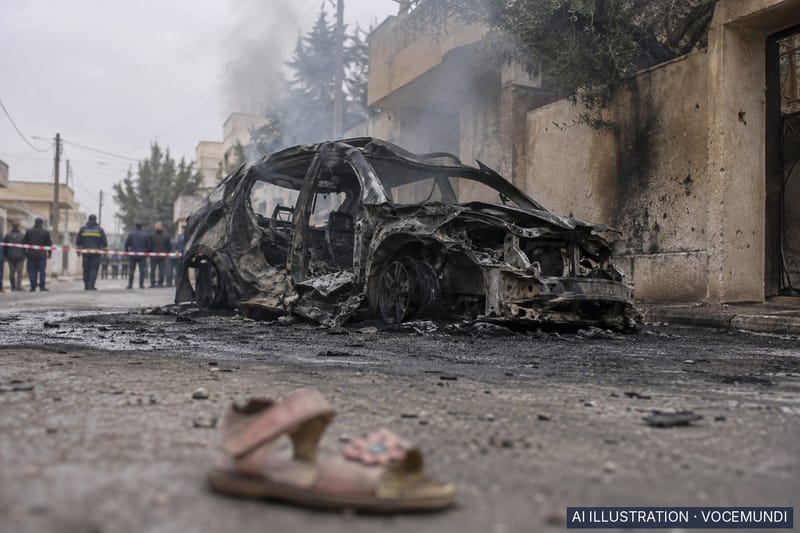
At least two killed, including a girl, in car blast near Damascus, Syria
Al Jazeera and Anadolu Agency report that at least two people, including a girl, died in a blast involving a car near the Syrian capital, but the cause and those responsible remain unclear.
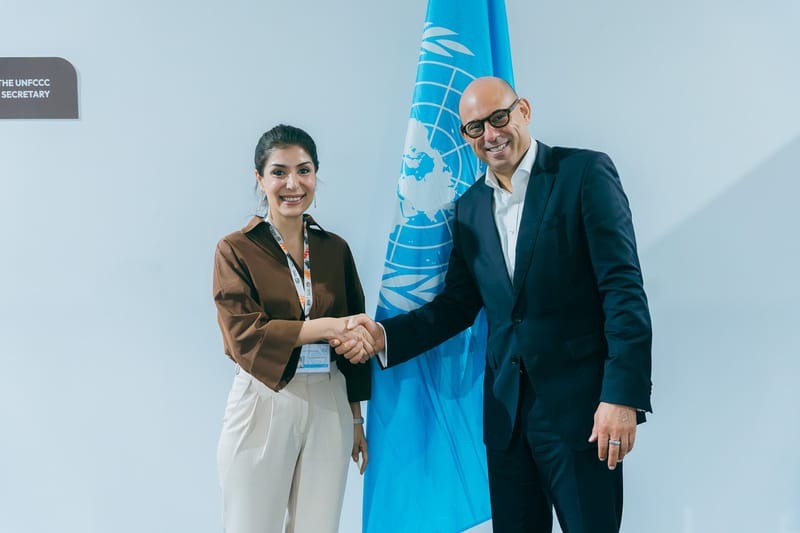
UN climate chief urges COP31 negotiators in Turkey to 'avoid tactical delays'
As the COP31 climate talks in Turkey enter their second week, the UN's top climate official has called on negotiators to move swiftly toward a deal, while activists rallied in the host city, according to DW.
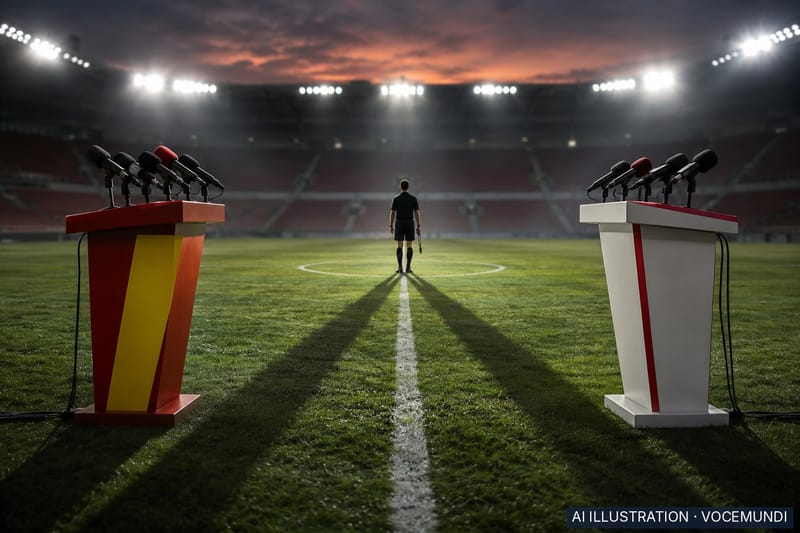
De la Fuente says there is no racism in Spain after Tuchel's protocol remarks
Spain's head coach rejected any suggestion of racism in Spain after England's Thomas Tuchel said he might brief players on Uefa's anti-racism protocol, and Tuchel later said he had never talked about racism in Spain.
Comments