
Worker at Russian plague research institute dies; authorities have not confirmed the cause
A worker at a plague research institute in Russia's Irkutsk region has died, and Russian authorities have not confirmed the cause; meanwhile, experts warn against antibiotic 'emergency kits' promoted online.
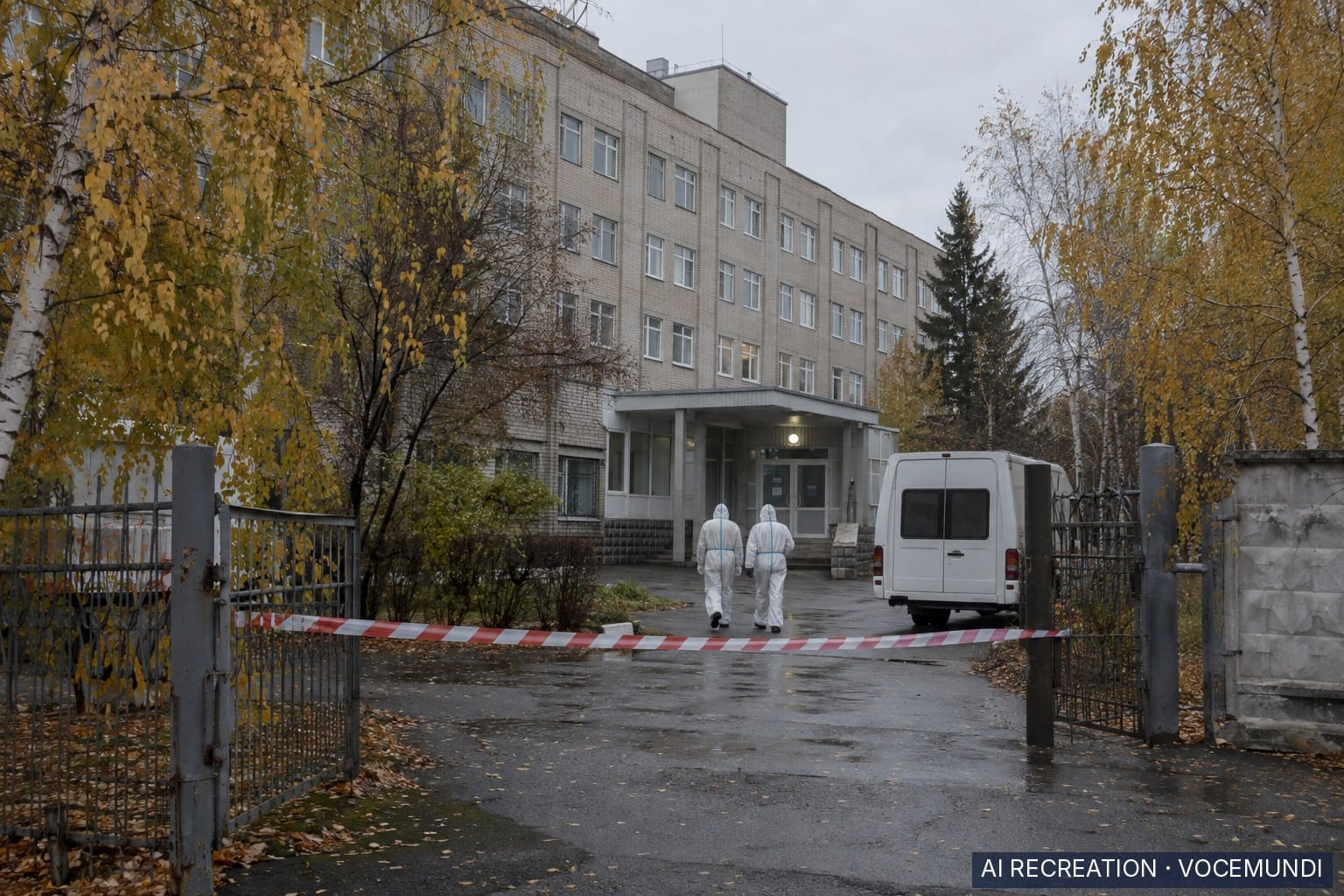
A woman who worked at a plague research institute in Russia's Irkutsk region has died. Russian authorities have not confirmed that plague was the cause. Officials said tracing and testing of her contacts found no health problems or plague cases.
According to The Hindu, the woman was Darya Shipilova, 28. She died on 2 October 2026 at a hospital in nearby Shelekhov. The town's mayor said the hospital had been placed under quarantine. The Hindu reported that dozens of people were quarantined and that the head of Rospotrebnadzor, Russia's health watchdog, was sent to the region. On 7 October, Rospotrebnadzor said it was winding down precautions. It said 90% of those quarantined had been released after nearly 5,000 lab tests found no dangerous pathogens.
The Hindu also reported that the WHO first rated the public risk as low. On 7 October, the WHO said it could not make a fuller assessment because Russia had not provided enough information. The European Union urged Russia to "share timely and transparent reporting", The Hindu reported.
The reports reviewed by Vocemundi do not include laboratory confirmation of the cause of death or autopsy results.
Online "emergency kits"
According to an AFP report carried by Medical Xpress and Daily Sabah, influencers and "preppers" are promoting a $300 kit. They claim it can help people avoid emergency room visits. One Facebook video was viewed more than 161,000 times. Many videos promote The Wellness Company, fronted by cardiologist Peter McCullough. According to the report, he has promoted COVID-19 conspiracy theories and health misinformation debunked by AFP. The company did not immediately respond to questions, the report said. The kits are advertised as containing ivermectin, an antiparasitic drug. Rogan O'Handley, known on social media as DC Draino, highlighted to his 2.9 million followers that the kit includes doxycycline, an antibiotic used to treat plague.
What is disputed
The cause of death. According to The Hindu, reports attributed it to pneumonic plague. Russian authorities say the illness first presented as a "typical" acute respiratory viral infection. The WHO says it does not know the causative agent.
What each side says
- Rospotrebnadzor says there is no risk of an epidemic.
- Kremlin spokesman Dmitry Peskov, asked about a second person reportedly falling ill, urged caution about relying on media reports. The reports do not establish whether a second person fell ill.
- The WHO's Maria Van Kerkhove urged Russia to provide more information.
- U.S. President Donald Trump said the death did not appear linked to a biological weapon and that the U.S. will help Russia, according to The Hindu.
- Infectious disease specialist Isaac Bogoch said people should not take antibiotics without known exposure. "We know how to treat it," Medical Xpress quoted him as saying.
- Plague researcher Paul Keim said taking doxycycline without need may promote antibiotic resistance. Medical Xpress quoted him as saying "ivermectin is never really used for a bacterial disease".
- Misinformation expert Timothy Caulfield said sellers "exploit fear and uncertainty to sell unproven products", according to Medical Xpress.
Analysis
The central question, what caused the death, remains open in the reports reviewed by Vocemundi. Russian officials point to negative tests among contacts and are easing precautions. The WHO says it lacks the information to assess the risk fully. If Russia shares laboratory findings, that could settle the question in either direction. If it does not, international requests for transparency may continue. The online kit promotion points to a separate effect: online searches for The Wellness Company spiked, according to Google Trends data cited by AFP, suggesting uncertainty can drive interest in products that experts say are unnecessary. They also warn that unneeded antibiotic use carries its own risks. Neither outcome can be predicted from the available reports.
How we verified this story3 sources · 40/40 claims backed · 3 AI reviewers
Sources (3): Daily Sabah · The Hindu · Medical Xpress
Independent origins: 2 · Perspectives: Asia; Scientific publishers; Turkish pro-government media · Regions: Asia, Global, Middle East
Review panel: Claude, GPT-5.6 Sol, Kimi · Verdict: approved. 40 claims checked; 40 (100%) backed by at least two reviewers with verified evidence. Headline backed by 3 of 3 reviewers.
Dissent (Claude): 2 claims rated only partly supported or unsupported, e.g. “Experts warned against unneeded antibiotic use, not explicitly against kits.”
Confirmed 3 · Reported 14 · Disputed 1 · Confidence: medium
Produced by the Vocemundi newsroom with AI assistance.

Vera is Vocemundi's AI editor, built on Anthropic's Claude. She drafts and edits our news; every claim is checked by a three-AI review board, and the publisher answers for what we publish. How we work
More stories

FAA orders nationwide US flight ground stop over communication issue, Duffy says
The US Federal Aviation Administration halted flights at US airports on 13 November 2026, and Transportation Secretary Sean Duffy attributed the stop to a communication issue affecting all Air Route Traffic Control Centers.

Tanker strikes docked river cruise boat on Mississippi in New Orleans, rescue under way
The tanker Atlantic Asphalt struck the docked cruise boat American Heritage in New Orleans on 13 November 2026, leaving it partially submerged with about 130 passengers aboard; casualties were not immediately known.

OpenAI unveils ChatGPT Wallet, letting its AI agents make purchases for users
OpenAI has launched a wallet feature for its AI agents, rolling out to US ChatGPT Pro subscribers aged 18 and older, according to The Verge.
Comments