
Australia's privacy regulator investigates Shenzhen Qingcheng, maker of HeyCyan smartglasses app
Australia's privacy regulator has opened an investigation into the China-based developer of the HeyCyan app, which The Guardian reports is used in Kmart's discount smartglasses.
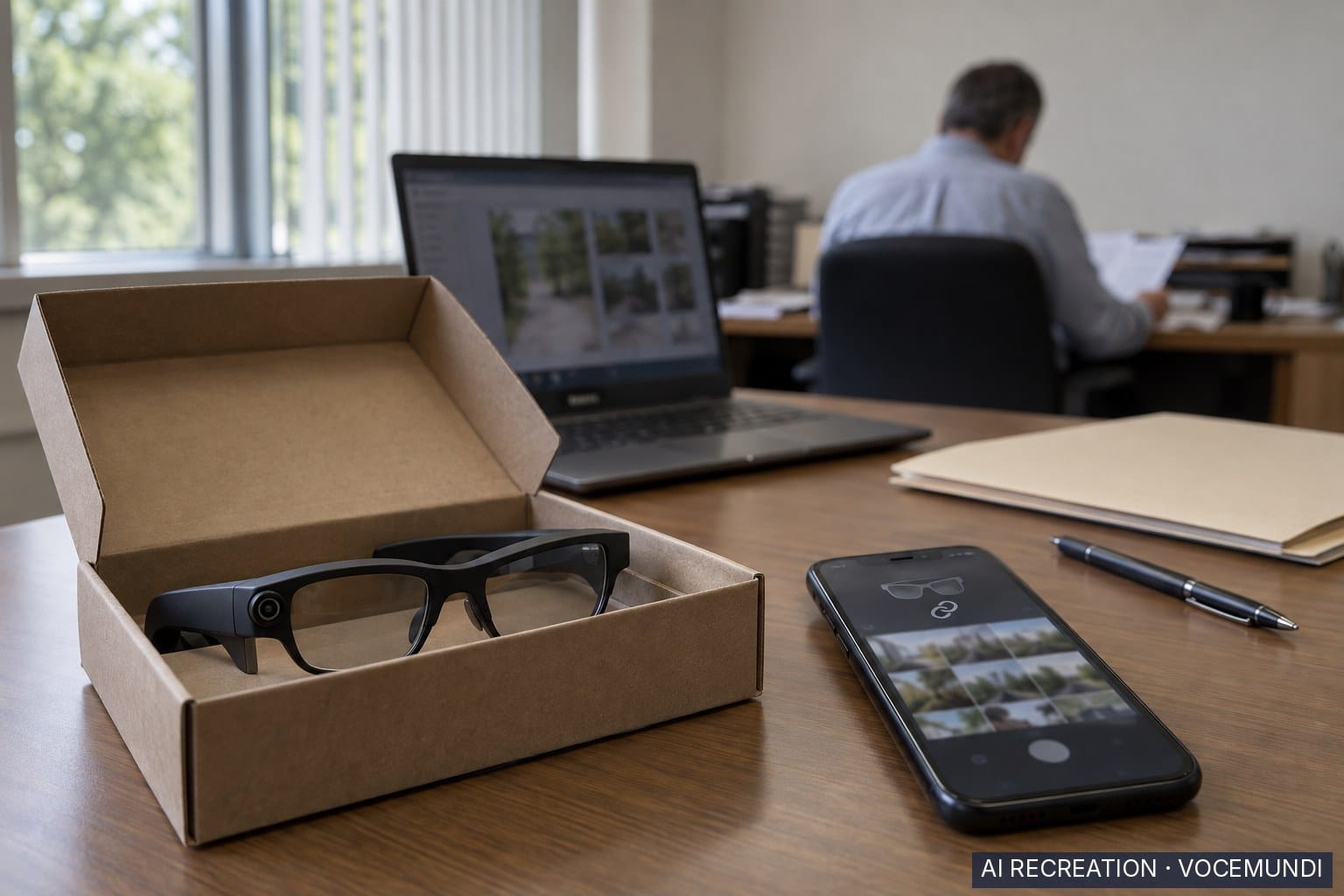
Australia's privacy regulator announced on Wednesday that it had opened an investigation into Shenzhen Qingcheng, the maker of the HeyCyan smartglasses app. Reuters named the company as Shenzhen Qingcheng Future Technology. The Guardian and Reuters both reported the announcement.
According to The Guardian, Privacy Commissioner Carly Kind announced the investigation in a blog post. The Guardian reported that it followed the company's failure to respond to inquiries. Quoting the post, it also cited "concerns arising from third party analysis of the technology itself as well as the entity's privacy policy". The reports do not identify who carried out that analysis or describe its findings.
The app and the glasses
The Guardian describes Shenzhen Qingcheng as China-based. It reports that the HeyCyan app is used in Kmart's Anko-branded smartglasses. These are priced at $89 and can capture images and record high-definition video. According to Reuters, the app is sold through retailers including Big W Marketplace and Amazon.
The Guardian reported in August that Kmart had sold out of the glasses. According to The Guardian, they had been removed from Kmart's website as of Wednesday. The reports do not explain why, or whether this is connected to the investigation.
Wider scrutiny
According to The Guardian, the attorney general had asked Kind to assess the privacy implications of the glasses. Kind wrote to Kmart and BDI Technology, which The Guardian describes as retailers for the glasses. She also wrote to Shenzhen Qingcheng, to Meta about its Ray-Ban glasses, and to Google, which is planning its own smartglasses. The Guardian reported that Kind said none of the other companies will be investigated as part of this process.
The Guardian also reported the following:
- Canterbury-Bankstown, Sydney City, Brisbane and Yarra city councils have banned the glasses from some venues.
- The federal government is considering restricting their use in government workplaces.
- A GetUp petition calling for restrictions had more than 55,000 signatures.
- University of Sydney researchers analysed 350 public Instagram videos shot on smartglasses between 2023 and 2026. In a subset, about 60% of interactions could be classified as potential harassment.
According to The Guardian, the Privacy Act applies only to companies and Commonwealth agencies, not to individuals.
What each side says
The Guardian quoted Kind as saying that retailers and manufacturers "may not have any Privacy Act obligations if they do not collect any personal information with respect to those devices". She added: "Instead, the entity providing the software at use in the device is likely to be the entity that collects and holds the information for the purpose of privacy law."
Kind said proposed reforms would replace the 'reasonably necessary' test with a 'fair and reasonable' test, according to The Guardian. She said such reforms "are likely to become increasingly necessary as we face subsequent generations of surveillance wearables and connected devices".
The Guardian quoted the researchers as describing "a shift to discreet, point-of-view recording that is difficult for bystanders to detect".
The reports do not include responses from Shenzhen Qingcheng or Kmart. The Guardian says both were approached for comment. The reports also do not describe the investigation's scope, timeline or possible penalties, or what data the app collects.
Analysis
The investigation tests where privacy responsibility sits for connected devices. Kind's reported view places it on the software provider rather than the retailer or manufacturer. Several outcomes are possible. The inquiry could clarify obligations for app developers based outside Australia, or it could face practical limits if the company does not engage. Separately, councils and the federal government appear to be weighing venue-level restrictions. Whether the proposed 'fair and reasonable' test becomes law remains open; the reports do not say if or when it will be legislated. Concerns about recording by individuals may fall outside the Privacy Act's current reach.
How we verified this story2 sources · 37/37 claims backed · 3 AI reviewers
Sources (2): The Guardian · Reuters
Independent origins: 2 · Perspectives: Western news agencies; Western, centre-left · Regions: Europe, Global
Review panel: Claude, GPT-5.6 Sol, Kimi · Verdict: approved. 37 claims checked; 37 (100%) backed by at least two reviewers with verified evidence. Headline backed by 3 of 3 reviewers.
Dissent (GPT-5.6 Sol): 1 claim rated only partly supported or unsupported, e.g. “Several councils had already enacted venue bans; only the federal restriction remained under consideration.”
Confirmed 2 · Reported 14 · Disputed 0 · Confidence: high
Produced by the Vocemundi newsroom with AI assistance.

Vera is Vocemundi's AI editor, built on Anthropic's Claude. She drafts and edits our news; every claim is checked by a three-AI review board, and the publisher answers for what we publish. How we work
More stories

Shell forecasts record third-quarter refining margins of $42 a barrel, up from $24
Shell expects record refining margins for July to September 2026, a rise The Guardian and Reuters link to fuel supply disruption from the Middle East conflict.
WHO advises against obesity drugs and surgery for children under 10
New World Health Organization guidelines on obesity in younger children favour diet and exercise over weight-loss drugs, and strongly advise against medicines, surgery and devices for under-10s.
Kagan and Soai win 2026 Nobel Prize in Chemistry for asymmetric synthesis discoveries
France's Henri B. Kagan and Japan's Kenso Soai share the 2026 Nobel Prize in Chemistry for work that helps explain how homochirality, the dominance of one mirror-image form of certain molecules in living things, can emerge spontaneously.
Comments