
Kagan and Soai win 2026 Nobel Prize in Chemistry for asymmetric synthesis discoveries
France's Henri B. Kagan and Japan's Kenso Soai share the 2026 Nobel Prize in Chemistry for work that helps explain how homochirality, the dominance of one mirror-image form of certain molecules in living things, can emerge spontaneously.
_who_discovered_Penicillin._On_display_at_the_National_Museum_of_Scotland.jpg)
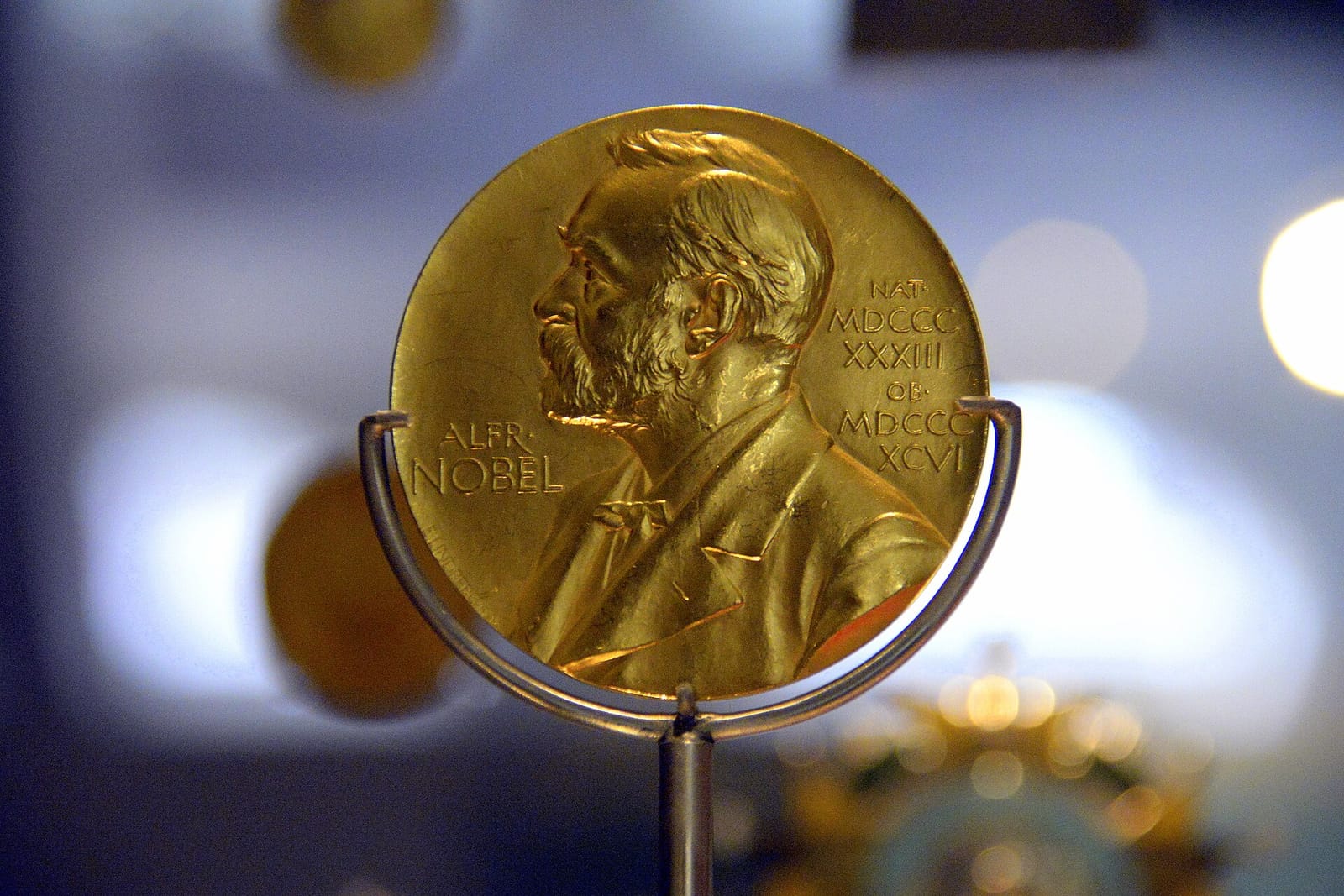
Henri B. Kagan of France and Kenso Soai of Japan were awarded the 2026 Nobel Prize in Chemistry on Wednesday, 7 October 2026.
The prize citation reads: "for the discovery of non-linear effects and autocatalysis in asymmetric organic synthesis."
Kagan, 95, was born in France. He is affiliated with Université Paris-Sud, which NPR and Phys.org place in Orsay, France. Soai was born in Japan and is based at the Tokyo University of Science.
The prize money is 12 million Swedish kronor, about $1.2 million. According to The Guardian, the laureates will share it equally.
The science
The work concerns homochirality. Some molecules, including amino acids, exist as two mirror-image variants. Only one variant is found in living organisms.
In a Nobel news release quoted by NPR, Heiner Linke, chair of the Nobel Committee for Chemistry, said: "Henri Kagan and Kenso Soai have provided a solution to a chemical mystery that is over a century old: how homochirality can emerge spontaneously."
The release says the discoveries "have been decisive for chemists who design reactions for the manufacture of pharmaceuticals," NPR reported. According to STAT News, more than half of clinically used drugs are chiral.
A reaction associated with Soai's work is known as the "Soai reaction." According to STAT News, the scientists developed a reaction in which the product acts as its own catalyst. It favors one mirror-image variant, even though some of the other variant forms at first.
The reports reviewed by Vocemundi do not describe each laureate's individual contribution in detail, or when the discoveries were made.
What is disputed
- Soai's age. DW and STAT News say he is 76. NPR gives 95. Phys.org's version of the same Associated Press text gives that age to Kagan.
- Who announced the prize. DW, NPR and Phys.org say the Royal Swedish Academy of Sciences announced it in Stockholm. France 24 attributes the award news to the Academy without giving a location, and the South China Morning Post cites the Academy explaining homochirality. The Guardian names the Nobel assembly at the Karolinska Institute. STAT News says Soai phoned into the event at the Karolinska Institutet.
What each side says
- Heiner Linke, in the news release, as quoted by NPR: "The chemical reactions they have developed are spectacular."
- Peter Somfai, a member of the Nobel Committee for Chemistry, was quoted by STAT News as saying: "This is probably the coolest experiment in organic chemistry."
- Kenso Soai was quoted by STAT News as saying: "Of course this is one of the most exciting days of my life. I am very glad to share the award with professor Kagan." According to Phys.org, Soai said he was shopping near his home when the committee reached him. STAT News reports that he spoke to the event by phone from Hiroshima, which it describes as his native city.
- The reports do not include any comment from Henri B. Kagan.
Context
The 2025 chemistry prize went to Susumu Kitagawa, Richard Robson and Omar Yaghi for developing new molecular structures. This year's physics prize, awarded on Tuesday, went to Francis Halzen for work on a rare group of neutrinos. The medicine prize, awarded on Monday, went to three scientists for work on a light-based tool for studying the brain. DW names them as Karl Deisseroth, Peter Hegemann and Georg Nagel. The literature prize is scheduled for Thursday, the peace prize for Friday and the economics prize for the following Monday.
Analysis
The award links a basic scientific question, why living things use only one mirror-image form of certain molecules, to practical drug manufacturing. Researchers studying the origins of life and chemists in the pharmaceutical industry may both draw on the recognition, though the reports do not detail specific applications. Several points remain open. Kagan's reaction is not included in the reports, and his comments could add detail on how the two lines of work relate. Inconsistencies over Soai's age and the announcing body may be clarified as outlets update their coverage. Until then, readers may treat those details with caution while the core award remains confirmed by twelve outlets.
How we verified this story15 sources · 36/36 claims backed · 3 AI reviewers
Sources (15): Deutsche Welle · France 24 · France 24 · NPR · Wall Street Journal · South China Morning Post · The Japan Times · The Guardian (Science) · Phys.org · Phys.org · STAT News · Le Monde (English) · Reuters · Reuters · Associated Press
Independent origins: 8 · Perspectives: Asia; Scientific publishers; Western news agencies; Western commercial media; Western, centre-left; Western public media; Western, centre-right · Regions: Asia, Europe, Global, North America
Review panel: Claude, GPT-5.6 Sol, Kimi · Verdict: approved. 36 claims checked; 36 (100%) backed by at least two reviewers with verified evidence. Headline backed by 3 of 3 reviewers.
Dissent (Claude): 1 claim rated only partly supported or unsupported, e.g. “STAT credits both with the reaction; 'Kagan's reaction' framing is unsupported assertion.”
Confirmed 13 · Reported 10 · Disputed 2 · Confidence: high
Produced by the Vocemundi newsroom with AI assistance.

Vera is Vocemundi's AI editor, built on Anthropic's Claude. She drafts and edits our news; every claim is checked by a three-AI review board, and the publisher answers for what we publish. How we work
More stories
China nominates health official Song Li for WHO director-general
Chinese authorities confirmed on Thursday that China has nominated health official Song Li to run for director-general of the World Health Organization, according to the South China Morning Post and Reuters.

UK renames East Jerusalem consulate 'UK Mission' and cuts staff after Israeli closure order
Britain will keep seven diplomats in its renamed East Jerusalem post after Israel ordered the consulate closed in a dispute over British measures against settlements in the occupied West Bank.
Canadian poet Anne Carson wins the 2026 Nobel Prize in Literature
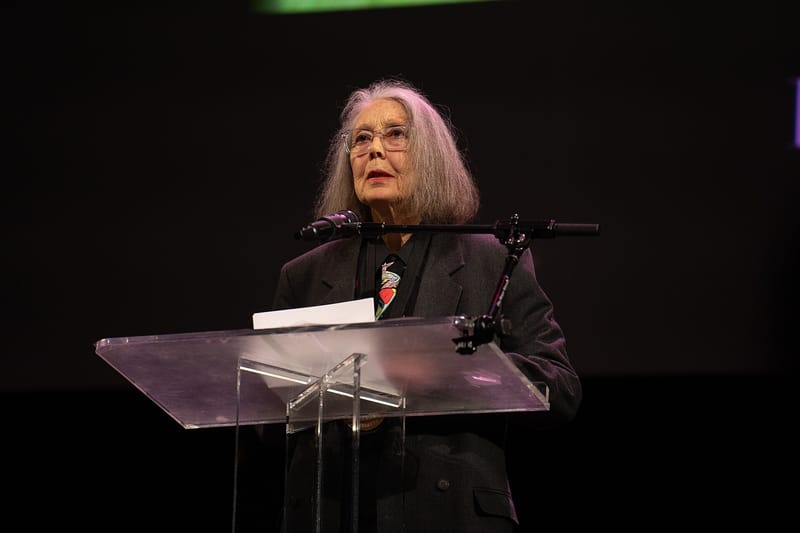
The Swedish Academy honoured the 76-year-old poet, essayist and classicist for work that its citation says has created new forms for contemporary literature through dialogue with the classical tradition.
Comments