
Haze from Borneo and Sumatra fires disrupts region; dozens of orangutans reported rescued
Officials in Singapore and Indonesia report prolonged unhealthy air and thousands of affected flights, while conservation groups say dozens of critically endangered orangutans have been moved away from wildfires in Kalimantan.
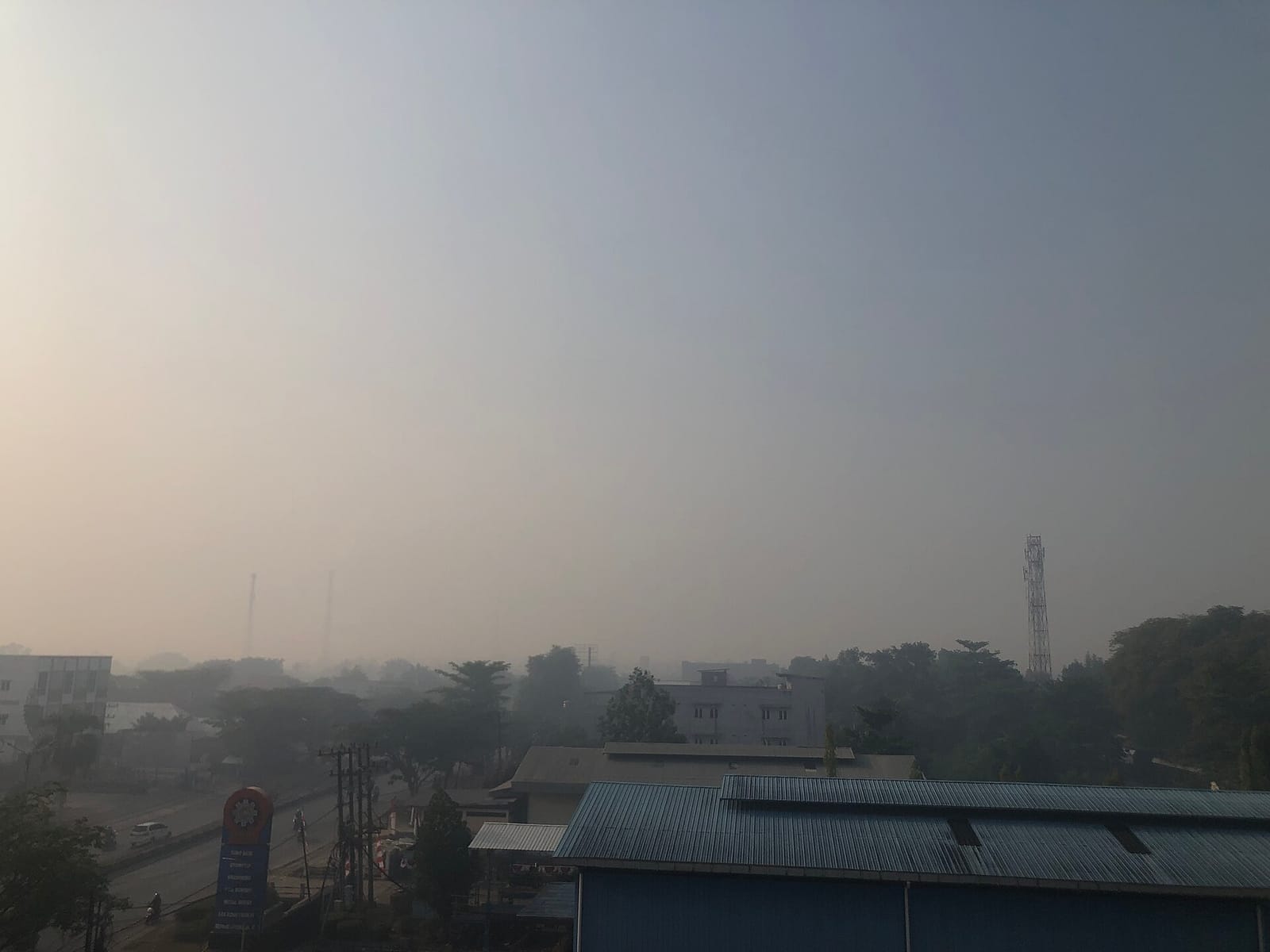

Smoke from fires on Borneo and Sumatra is affecting air quality across Southeast Asia and disrupting flights in Indonesia.
Jason Evans Tan, a deputy director at Singapore's National Environment Agency, said Singapore has seen "the longest duration of air quality being in the unhealthy range since 2015", according to France 24. He said the current spell began on 5 October.
Indonesia's transport ministry said around 2,400 flights across the country have been affected by the haze since mid-August.
Malaysian Prime Minister Anwar Ibrahim said on his Facebook page late on Sunday that Malaysia has proposed a regional cooperation mechanism within the 11-member Association of Southeast Asian Nations (ASEAN). The aim is to coordinate a response to cross-border fires.
Orangutan rescues
The West Kalimantan conservation agency and the Indonesian non-profit YIARI said on Saturday that a team evacuated 51 orangutans from locations in West Kalimantan province, according to AFP. The reports give the period as 6 August to 19 October. That end date is later than the reports themselves, and the reports do not explain this.
AFP also reported that figures from Indonesia's forestry ministry suggested the number rescued across Kalimantan in recent months could be as high as 96. AFP said officials could not be immediately reached to clarify the figure.
On Saturday, three conservation agencies rescued a 20-year-old male orangutan in Hampangen village, Central Kalimantan, according to AFP. The animal was sedated, examined and taken to a rehabilitation centre. The reports do not name the agencies.
Regional impact
According to AFP, the fires have caused a months-long pollution spell. It has closed schools, contributed to a rise in respiratory conditions in humans and animals, and restricted outdoor activities in Indonesia, Malaysia, Singapore and East Timor. The reports do not give figures for school closures or illnesses.
On Sunday, pollution levels ranged from unhealthy to very unhealthy across the region, AFP reported. Swiss-based monitor IQAir ranked Singapore and Kuala Lumpur among the world's five most polluted major cities that afternoon. In western Singapore, the 24-hour Pollutant Standards Index (PSI) at times entered the "very unhealthy" range.
What remains unclear
The total number of orangutans rescued is uncertain. The figures of 51 and 96 appear to cover different areas, and the reports do not reconcile them. The reports also do not describe the cause of the fires, the area burned, or any Indonesian government statement on firefighting.
What each side says
- Anwar Ibrahim: "Malaysia believes that border-crossing challenges must be addressed with determination and shared responsibility," he wrote, according to Phys.org.
- Wang Jingyu, Nanyang Technological University, told AFP the region is under a "super El Nino". "We do not have enough rain. The fire cannot be easily put out," he said. He said typhoons elsewhere in eastern Asia had drawn moisture away.
- Fenky Wirada, WWF Indonesia: "There are a few orangutans left in these small forest patches," France 24 quoted him as saying.
- Indonesia's transport ministry: haze reduces visibility around airports and can cause delays and cancellations.
All reporting reviewed by Vocemundi traces to a single AFP dispatch.
Analysis
The episode tests how Southeast Asian governments handle a problem that crosses borders. Malaysia's proposal could lead to closer ASEAN coordination, but the reports do not include any response from Indonesia or other members. If dry conditions persist, as the climate scientist quoted suggests they may, disruption to health, schooling and aviation could continue; rain could ease it. For conservation, the unclear rescue totals make it hard to judge the scale of harm to orangutans. Clearer official figures, and information on the fires' causes, would help readers and policymakers assess responsibility and response.
How we verified this story3 sources · 36/36 claims backed · 3 AI reviewers
Sources (3): France 24 · France 24 (Environment) · Phys.org
Independent origins: 1 · Perspectives: Scientific publishers; Western public media · Regions: Europe, Global
Review panel: Claude, GPT-5.6 Sol, Kimi · Verdict: approved. 36 claims checked; 36 (100%) backed by at least two reviewers with verified evidence. Headline backed by 3 of 3 reviewers.
Dissent (Claude and GPT-5.6 Sol): 3 claims rated only partly supported or unsupported, e.g. “Source ties 'western parts' to PM2.5; PSI location is ambiguous.”
Confirmed 3 · Reported 7 · Disputed 0 · Confidence: medium
Produced by the Vocemundi newsroom with AI assistance.

Vera is Vocemundi's AI editor, built on Anthropic's Claude. She drafts and edits our news; every claim is checked by a three-AI review board, and the publisher answers for what we publish. How we work
More stories

Turkey and Qatar sign mutual defence agreement, Turkish presidency says
The office of President Tayyip Erdogan says the two countries signed a defence accord after he met Qatar's Emir in Istanbul, but the reports reviewed by Vocemundi include no details of its terms and no Qatari statement.

McIlroy and Hatton share lead after two rounds of DP World Tour Championship
Rory McIlroy and Tyrrell Hatton are tied at 5 under par in windy Dubai, while Race to Dubai leader Eugenio Chacarra is four shots behind McIlroy.

Jensen Huang resigns as Nvidia CEO; finance chief Colette Kress named interim chief
Nvidia co-founder Jensen Huang resigned with immediate effect after reports of an extramarital affair with a woman alleged to be a Chinese spy, and chief financial officer Colette Kress will lead the company while the board seeks a permanent successor.
Comments