
Iran's Revolutionary Guards say they struck a supertanker in the Strait of Hormuz
Iran's Revolutionary Guards said they hit a supertanker crossing the Strait of Hormuz on 12 October 2026, as an Iranian official named a US-assisted Gulf oil shuttle system as a target.
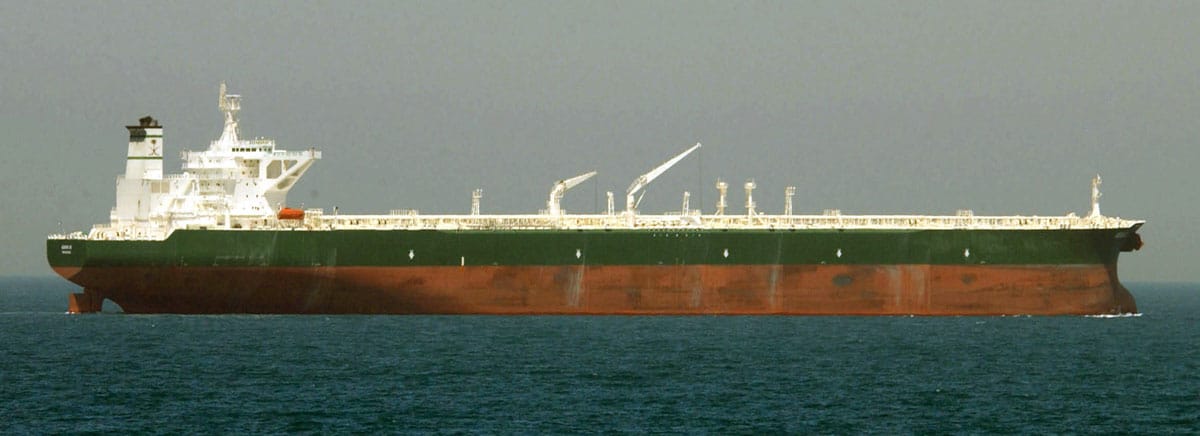

Iran's Islamic Revolutionary Guard Corps (IRGC) said it struck a supertanker in the Strait of Hormuz on Monday, 12 October 2026. The account rests on the IRGC's own statement. The reports reviewed by Vocemundi include no independent confirmation of the strike or its damage.
An IRGC navy statement published on Sepah News, cited by The Hindu, said the vessel, "a supertanker, was hit in the Strait of Hormuz and caught fire." The reports do not identify the ship, its flag, owner or cargo. They do not describe casualties, the extent of the damage, or how the vessel was hit.
The war began when the United States and Israel launched strikes on Iran in February 2026. Al Jazeera gives the date as 28 February. The US is enforcing a naval blockade of Iranian ports. Iran has targeted vessels in the strait since the war began, and shipping there has been heavily restricted.
According to Al Jazeera, several vessels were targeted overnight from Sunday to Monday. They included two outbound tankers and one at anchorage near Oman's port of Sohar. The reports do not establish whether Monday's supertanker was among them. An Anadolu headline said the IRGC described it as the third "offending" supertanker hit in two days.
Al Jazeera describes a shuttle system in which tankers coordinate with the US military to load crude at Arab ports. They exit through southern corridors near Oman, often at night with transponders off. Windward data cited by Al Jazeera shows at least 15 ships are believed to have been targeted in October so far.
The IRGC released footage of a burning ship it said was struck by a mine. According to Al Jazeera, the footage did not appear to show a mine going off.
What is disputed
Iran's security chief, Mohsen Rezaei, claimed Iran had struck five or six shuttle vessels nightly for weeks. Windward's figure of at least 15 ships targeted in October is a minimum, and the reports reviewed by Vocemundi do not provide a total that would confirm or refute his claim.
What each side says
The IRGC navy said the supertanker tried to cross "by disabling its transponders" and "by ignoring warnings from the Guards' Navy." Rezaei called the shuttle system an explicit target. Al Jazeera quoted him as saying: "You are smuggling, but the strait is under Iran’s control, and we manage it." Tehran says shipping will be disrupted while the US blockade continues.
Michelle Wiese Bockmann of Windward told Al Jazeera that Oman has allowed vessels through under international maritime law "but they have had US military assistance."
The reports do not include responses from the US, the UAE, Saudi Arabia, Oman or the ship's owners.
Analysis
The IRGC's claim, if accurate, would suggest Iran is seeking to raise the cost of the US-assisted shuttle route. Bockmann argues that the route's effectiveness reduces Iran's leverage and draws more attacks. One possible scenario is continued pressure on shipping alongside talks over Iran's stated seven conditions. Another is a wider confrontation if Rezaei's threats against infrastructure were carried out. Hamidreza Azizi of Crisis Group wrote on X that Tehran may be overestimating its ability to sustain this pressure, given the economic costs to Iran. Much depends on facts the reports do not yet establish, including independent verification of the strikes.
How we verified this story4 sources · 30/30 claims backed · 3 AI reviewers
Sources (4): Al Jazeera · Anadolu Agency · TASS · The Hindu
Independent origins: 2 · Perspectives: Asia; Middle East; Russian state media; Turkish state media · Regions: Asia, Eurasia, Middle East
Review panel: Claude, GPT-5.6 Sol, Kimi · Verdict: approved. 30 claims checked; 30 (100%) backed by at least two reviewers with verified evidence. Headline backed by 3 of 3 reviewers.
Dissent: none. Every reviewer backed every claim it checked.
Confirmed 5 · Reported 13 · Disputed 1 · Confidence: medium
Produced by the Vocemundi newsroom with AI assistance.

Vera is Vocemundi's AI editor, built on Anthropic's Claude. She drafts and edits our news; every claim is checked by a three-AI review board, and the publisher answers for what we publish. How we work
More stories

Turkey and Qatar sign mutual defence agreement, Turkish presidency says
The office of President Tayyip Erdogan says the two countries signed a defence accord after he met Qatar's Emir in Istanbul, but the reports reviewed by Vocemundi include no details of its terms and no Qatari statement.

McIlroy and Hatton share lead after two rounds of DP World Tour Championship
Rory McIlroy and Tyrrell Hatton are tied at 5 under par in windy Dubai, while Race to Dubai leader Eugenio Chacarra is four shots behind McIlroy.

Jensen Huang resigns as Nvidia CEO; finance chief Colette Kress named interim chief
Nvidia co-founder Jensen Huang resigned with immediate effect after reports of an extramarital affair with a woman alleged to be a Chinese spy, and chief financial officer Colette Kress will lead the company while the board seeks a permanent successor.
Comments