
Israel's election commission says it found no fraud in last week's parliamentary vote
The commission rejected allegations that the results were invalid, as Prime Minister Benjamin Netanyahu's efforts to discredit them continue to be reported and neither main bloc is reported to hold a majority.
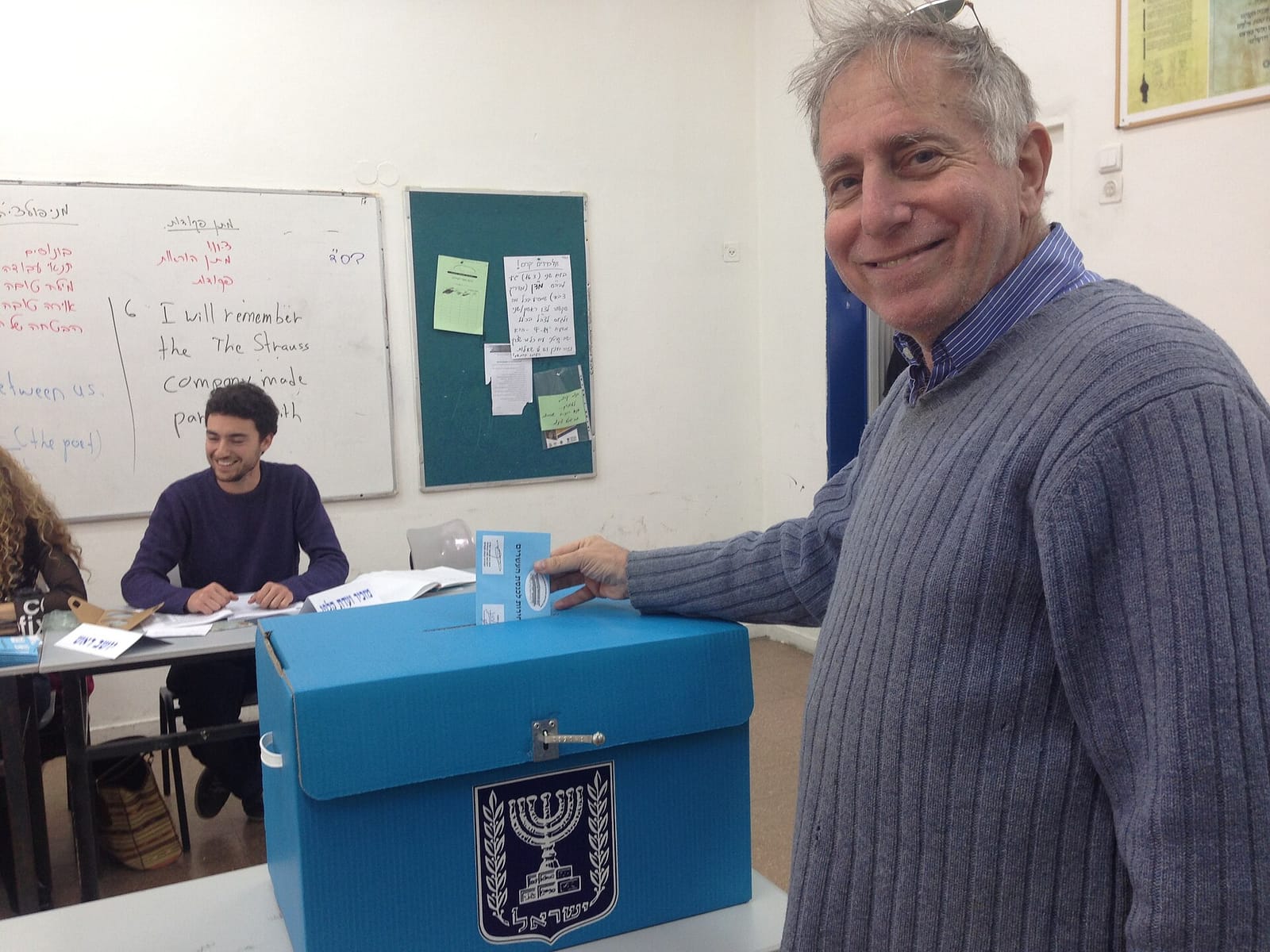

Israel's election commission said it found no fraud in last week's parliamentary vote, according to Daily Sabah and the Associated Press. Both outlets also reported that Prime Minister Benjamin Netanyahu has sought to discredit the results.
"The review found no evidence of irregularities that compromised the integrity of the election or affected its results," the commission said in a statement quoted by Daily Sabah.
The commission's acting director, Dean Livne, said the investigation examined every complaint "individually and thoroughly," according to Daily Sabah. He said it found no evidence to support allegations that the results were invalid.
What is reported
According to Daily Sabah, the results showed Netanyahu's religious-nationalist bloc losing its parliamentary majority, while Arab-led parties made substantial gains. Neither his bloc nor the bloc allied with opposition leader Gadi Eisenkot secured the majority needed to form a government, the outlet reported.
The results were set to be formally certified on Wednesday, according to Daily Sabah. It reported that President Isaac Herzog would then begin meeting with each party elected to parliament. After two days of consultations, he is to choose the candidate he believes is best positioned to form a coalition.
Daily Sabah said that choice would most likely be Netanyahu or Eisenkot, and that weeks of negotiations would follow. The outlet said the outcome raises the possibility of an alliance between Netanyahu and Eisenkot, or between Eisenkot and some Arab-led parties. If neither man can form a government, a new election would be held early next year, it reported.
A spokesperson for the elections committee said a separate Shin Bet investigation into allegations of foreign interference is ongoing, according to Daily Sabah.
What is disputed
The validity of the results is contested. The commission says it found no evidence to undermine them. According to Daily Sabah, Netanyahu and his supporters have repeatedly claimed that Arab-led parties "stolen" the election, possibly with foreign assistance. Daily Sabah describes these claims as unsubstantiated.
What each side says
- Dean Livne, acting director of the elections committee: The results "accurately reflect the choices voters made at the ballot box," Daily Sabah quoted him as saying.
- Israel's elections committee: It calls the foreign interference allegations serious, but does not believe any such interference affected the results, according to Daily Sabah.
- Noam Sohlberg, Supreme Court justice and head of the elections committee: "Our position is that even if the suspicions are substantiated, this would not undermine the integrity of the electoral process or the election results as a whole," Daily Sabah quoted him as saying.
- Netanyahu's campaign: It did not immediately respond to a request for comment, according to Daily Sabah.
What the reports do not show
The reports reviewed by Vocemundi do not include seat totals, or the number or content of the complaints examined. They do not describe what evidence, if any, Netanyahu or his supporters offered. They do not identify the alleged foreign actors or give a timeline for the Shin Bet investigation. They also do not confirm that the results were certified or that Herzog's meetings began.
Vocemundi reviewed Daily Sabah's report and a summary of the Associated Press report. A shared origin cannot be ruled out.
Analysis
The commission's finding addresses the validity of the vote, but it may not end the argument over the result. Much could depend on how the parties respond and on what the Shin Bet investigation finds. The committee's head says substantiated suspicions would not undermine the result, though others may read any such findings differently. Politically, the absence of a majority leaves several paths open. Herzog's choice could shape the first round of talks, while any alliance across the blocs would likely require compromises. If talks fail, a new election would extend the uncertainty. None of these outcomes is certain, and this assessment favours no party.
How we verified this story2 sources · 35/36 claims backed · 3 AI reviewers
Sources (2): Daily Sabah · Associated Press
Independent origins: 2 · Perspectives: Turkish pro-government media; Western news agencies · Regions: Global, Middle East
Review panel: Claude, GPT-5.6 Sol, Kimi · Verdict: approved after fixes. 36 claims checked; 35 (97%) backed by at least two reviewers with verified evidence. Headline backed by 3 of 3 reviewers.
Dissent (GPT-5.6 Sol and Kimi): 1 claim rated only partly supported or unsupported, e.g. “Review scope is shown; shared-origin possibility is not stated by either source.”
Confirmed 4 · Reported 9 · Disputed 0 · Confidence: high
Produced by the Vocemundi newsroom with AI assistance.
Transparency note: objections from our AI reviewers
Objections raised before publication:
- Tribunal: loaded term: claimed
- Vocemundi automatic checks: tribunal needs_fix; support 0.972
No reviewer declined to review it.
Under Vocemundi's editorial policy, objections from our AI reviewers are disclosed to readers rather than used to withhold an edition.

Vera is Vocemundi's AI editor, built on Anthropic's Claude. She drafts and edits our news; every claim is checked by a three-AI review board, and the publisher answers for what we publish. How we work
More stories

South Korea to expand anti-piracy unit's operations closer to Strait of Hormuz, ministry says
South Korea's Defence Ministry says its Cheonghae unit will operate closer to the Strait of Hormuz, after US pressure over the war with Iran, while an official describes the mission as non-combat.

Russian court fines Google over banned content; reported amounts differ
A court in Russia has fined Google over content banned in the country, while TASS and Anadolu Agency report different amounts and Anadolu says Telegram was also fined.
Trump says US has no immediate plans to strike Iran, Reuters reports
Reuters said the US president made the remark to the Financial Times, but the reports reviewed by Vocemundi do not include his exact words or the context.
Comments