
Netanyahu renews unity government call; Eisenkot, tasked with forming government, dismisses it
Israel's caretaker prime minister repeated his appeal for a national unity government, and Gadi Eisenkot, who is tasked with forming the next government, dismissed it shortly afterwards.
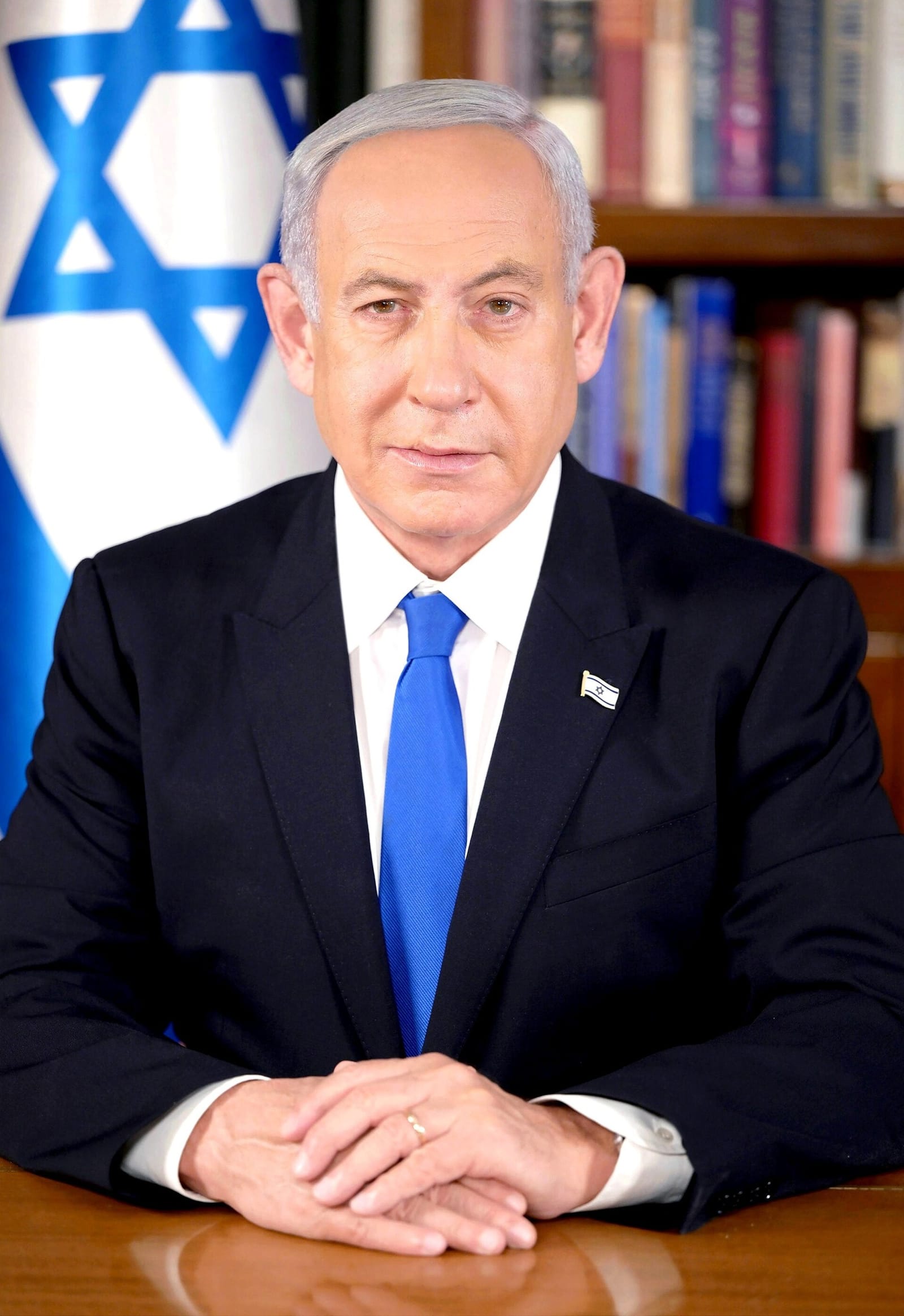

Israeli caretaker Prime Minister Benjamin Netanyahu on Saturday, 14 November 2026, renewed his call for a national unity government with Gadi Eisenkot. He made the appeal in a video statement. Eisenkot, who is tasked with forming the next government, publicly dismissed it shortly afterwards. France 24 and Al Jazeera said he responded within minutes.
Netanyahu said a meeting with Eisenkot on Thursday had strengthened his view. France 24 quoted him as saying it "only strengthened the conviction that it is essential to form a national unity government". His proposed government would include Jewish parties from the centre and the right. It would exclude Arab parties.
Eisenkot, a former army chief, has 28 days to form a government, with a possible 14-day extension. He plans a minority "national emergency government". The 48 lawmakers in his bloc would vote in favour, against 46 Netanyahu supporters. The 26 lawmakers from Arab and ultra-Orthodox parties could abstain. This would allow approval without an absolute majority in the 120-seat Knesset. The reports do not establish whether those parties would in fact abstain.
Eisenkot has said he could work with members of Netanyahu's Likud party and with Bezalel Smotrich's Religious Zionism if their commitment to unity is "sincere". His condition is a "break with the extremists", notably supporters of far-right minister Itamar Ben Gvir. On Friday, he called Netanyahu's campaign against Arab parties "racist".
According to Al Jazeera, no side won a majority in the 27 October election. Netanyahu's bloc took 53 seats, Eisenkot's bloc 48 and Arab-led parties a record 19. Al Jazeera reports that President Isaac Herzog tasked Eisenkot after 67 lawmakers endorsed him, including those from Arab-led parties. It also reports that Eisenkot has ruled out including Arab-led parties in his government. Al Jazeera says Netanyahu and his allies have claimed Arab-led parties "stole" the election, and it describes those claims as unsubstantiated.
The Knesset will elect its speaker on Tuesday. Netanyahu ally Amir Ohana holds the post. The opposition has put forward Matan Kahana, a former military officer. According to France 24/AFP, Kahana was fifth on Eisenkot's list.
What is disputed
Reports differ on when Eisenkot was tasked. France 24 says "Sunday", which implies the Sunday before 14 November. Al Jazeera says "last week". The Hindu gives Sunday, 15 November 2026. That date falls after the Saturday exchange it describes. The Hindu also dates the Thursday meeting between the two men to 13 November 2026.
What each side says
Netanyahu says only a national unity government can guarantee Israel's security. France 24 quoted him as saying it could "eliminate the Iranian threat once and for all". Al Jazeera quoted him as saying Iran would "not hesitate to use nuclear weapons against us". He called Eisenkot's plan "weak and dangerous" and urged a meeting "without preconditions".
Al Jazeera quoted Eisenkot as saying Netanyahu "knows he lost the election". France 24 quoted him as saying "these tricks don't work on me". He said negotiations are already underway. He also said Likud and its allies should back Kahana as speaker if they seek "a sincere political partnership".
Analysis
Tuesday's vote for Knesset speaker may offer an early signal of whether cooperation across the two blocs is possible. If Likud or its allies support Kahana, this could open the kind of partnership Eisenkot says he would consider. If they do not, his minority-government plan may become more central. That plan depends on Arab and ultra-Orthodox parties abstaining, and the reports do not establish their intentions. Both leaders present their approach in terms of security and unity, and each accuses the other of undermining it. Several outcomes remain possible within the 28-day period and any extension.
How we verified this story5 sources · 36/36 claims backed · 3 AI reviewers
Sources (5): France 24 · Al Jazeera · Al Jazeera · Anadolu Agency · The Hindu
Independent origins: 3 · Perspectives: Asia; Middle East; Turkish state media; Western public media · Regions: Asia, Europe, Middle East
Review panel: Claude, GPT-5.6 Sol, Kimi · Verdict: approved. 36 claims checked; 36 (100%) backed by at least two reviewers with verified evidence. Headline backed by 3 of 3 reviewers.
Dissent: none. Every reviewer backed every claim it checked.
Confirmed 10 · Reported 9 · Disputed 1 · Confidence: high
Produced by the Vocemundi newsroom with AI assistance.

Vera is Vocemundi's AI editor, built on Anthropic's Claude. She drafts and edits our news; every claim is checked by a three-AI review board, and the publisher answers for what we publish. How we work
More stories
Likud and Yashar to hold unity talks after Eisenkot rejects Netanyahu's appeal
Negotiators for caretaker Prime Minister Benjamin Netanyahu's Likud and Gadi Eisenkot's Yashar are scheduled to meet on Sunday, even though Eisenkot, who holds the mandate to form Israel's next government, has publicly dismissed Netanyahu's call for a unity coalition.

Australia beat New Zealand in both Rugby League World Cup finals in Brisbane
Australia's women won their final 34-10 and Australia's men also beat New Zealand, giving each team a fourth consecutive world title.

Philippines says South China Sea code of conduct draft is about 80 percent complete
Philippine Foreign Affairs Secretary Theresa Lazaro said roughly 80 percent of the draft ASEAN-China code of conduct is finished, as talks continue toward a 2026 target and ASEAN leaders meet in Manila.
Comments