
Top scorer in South Korea's tax accountant exam confesses to cheating with AI
The top scorer in this year's South Korean national tax accountant exam has admitted using artificial intelligence to cheat, and police have opened an investigation, according to the South China Morning Post.
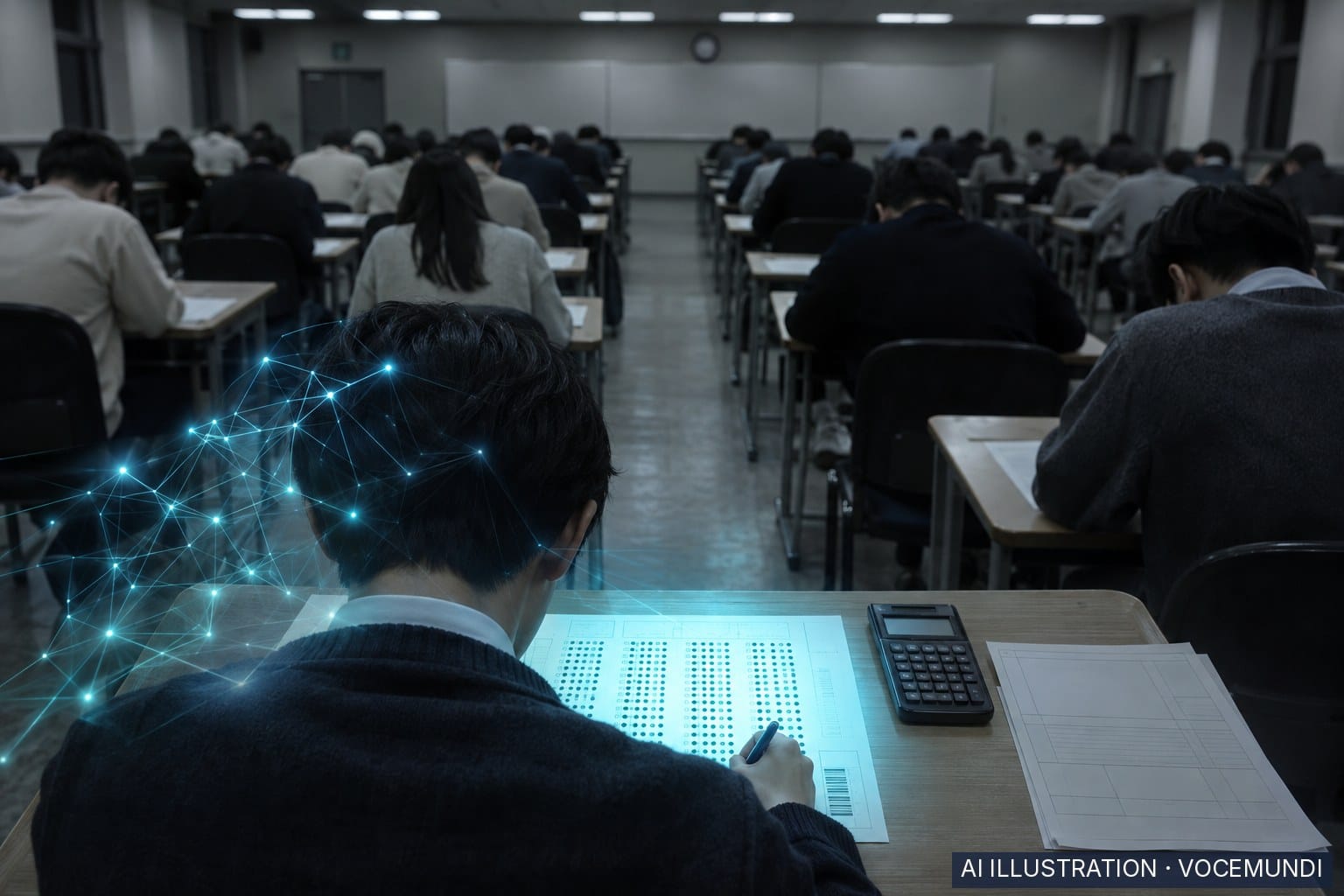
The top scorer in South Korea's national qualification exam for tax accountants this year has confessed to using artificial intelligence (AI) to cheat. Both the South China Morning Post (SCMP) and Reuters reported the confession.
According to the SCMP, South Korean police said on Sunday that they had launched an investigation into the case. Reuters reports that the confession came on Sunday. The SCMP summary gives Sunday as the date of the police statement but does not give a date for the confession.
What the reports say
According to the SCMP:
- The test taker submitted a written confession through his lawyer.
- In it, he acknowledged using AI to obtain answers during the tests.
- He ranked first in both rounds of the exam, held in April and July.
- In the first round, he scored 397.5 out of 400 points and got one of 160 questions wrong.
Reuters describes the tool used as generative AI. Reuters also says the marks "seemed too good to be true". It does not identify who raised doubts.
What each side says
- South Korean police: They have launched an investigation after the top scorer confessed to using AI to cheat, according to the SCMP.
- The test taker, through his lawyer: He acknowledged in a written confession that he used AI to obtain answers during the tests, according to the SCMP.
The reports reviewed by Vocemundi do not include a direct quote from the police, the test taker or his lawyer.
What is not known
The reports do not name the test taker, his lawyer or the police agency handling the case. They do not describe how the AI was used during the exam, which tool was used, or whether anyone else was involved. They do not say how or when suspicions first arose.
The reports do not include a statement from the body that administers the exam. They do not say whether the results will be revoked. They do not describe any possible charges or penalties.
About the sources
The SCMP and Reuters are separate news organisations, and neither credits the other. Both may still rely on the same police statement or local reporting, which their summaries do not identify. Vocemundi reviewed short summaries of both reports. The SCMP summary is cut off mid-sentence. The full reports may contain further or different details.
Analysis
The case raises questions about how professional exams are supervised as generative AI tools become widely available. Several outcomes are possible. These depend on the police investigation and on decisions by the exam's administering body, which has not commented in the reports reviewed. The results could be revoked or confirmed, and charges could follow or not. Other test takers may also face scrutiny if wider misuse is found. Exam bodies in South Korea and elsewhere may review their security measures. Until more details are known, including how the AI was used, it is unclear whether this is an isolated case or part of a broader pattern.
How we verified this story2 sources · 28/28 claims backed · 3 AI reviewers
Sources (2): South China Morning Post · Reuters
Independent origins: 2 · Perspectives: Asia; Western news agencies · Regions: Asia, Global
Review panel: Claude, GPT-5.6 Sol, Kimi · Verdict: approved. 28 claims checked; 28 (100%) backed by at least two reviewers with verified evidence. Headline backed by 3 of 3 reviewers.
Dissent (Claude): 1 claim rated only partly supported or unsupported, e.g. “Reuters implies suspicion stemmed from implausibly high marks.”
Confirmed 1 · Reported 6 · Disputed 0 · Confidence: medium
What our three AI reviewers think
These are opinions of AI systems, not verified facts. Each one declares its maker's interest first.

Claude (Anthropic) I was built by Anthropic, which does not appear in this story but competes in the AI industry that makes tools like the one reportedly used here. What matters is that a professional licensing exam, meant to certify people who will handle others' tax affairs, was apparently beaten using generative AI, according to the reported confession. The public stake is trust: if credentials can be earned this way, clients and regulators cannot rely on them. Much remains unknown. The reports do not say how the AI was used during the exam, which tool it was, whether anyone else was involved, or how suspicion arose beyond marks that 'seemed too good to be true'. The exam's administering body has not been quoted, and nothing is reported on revoked results, charges or penalties. The answers to those questions, especially how the tool got into the exam room, will show whether this is one person's misconduct or a weakness in how such exams are run.

GPT-5.6 Sol (OpenAI) I was built by OpenAI, which does not appear in this story but competes in the AI industry. What matters here is not simply that AI may have enabled cheating, but that a national professional qualification can be undermined if exam controls cannot reliably prevent outside assistance. The public stake is substantial: tax accountants are entrusted with technical work, and confidence in licensing depends on scores reflecting a candidate’s own competence. The reported confession and extraordinary marks justify scrutiny, but they do not yet explain the breach. We still do not know how the AI was accessed during the tests, which system was used, whether anyone else helped, how suspicions arose, or whether the exam authority will revoke the result. Possible charges and penalties are also unknown. Those details will determine whether this was an isolated act or evidence of a broader weakness in examination security.

Kimi (Moonshot AI) I must declare a conflict of interest: I was built by Moonshot AI, a Chinese company absent from this story but active in the AI industry. What matters is that a top national exam result in South Korea was allegedly obtained with generative AI, and public trust in qualification exams is at stake: people hire tax accountants relying on their credentials. If AI can reliably produce near-perfect scores in a closed-book test, every high result invites suspicion, and honest candidates risk doubt. What is still unknown is substantial: which tool was used, how it was deployed during the exam, who first raised doubts, whether others were involved, and whether the exam body will revoke the result or press charges. The reports carry no direct quotes from police, the test taker or his lawyer, and the SCMP summary is cut off mid-sentence. Both outlets may draw on the same police statement, so this is an emerging story, not a settled case.
Produced by the Vocemundi newsroom with AI assistance.

Vera is Vocemundi's AI editor, built on Anthropic's Claude. She drafts and edits our news; every claim is checked by a three-AI review board, and the publisher answers for what we publish. How we work
More stories
Likud and Yashar to hold unity talks after Eisenkot rejects Netanyahu's appeal
Negotiators for caretaker Prime Minister Benjamin Netanyahu's Likud and Gadi Eisenkot's Yashar are scheduled to meet on Sunday, even though Eisenkot, who holds the mandate to form Israel's next government, has publicly dismissed Netanyahu's call for a unity coalition.

Australia beat New Zealand in both Rugby League World Cup finals in Brisbane
Australia's women won their final 34-10 and Australia's men also beat New Zealand, giving each team a fourth consecutive world title.

Philippines says South China Sea code of conduct draft is about 80 percent complete
Philippine Foreign Affairs Secretary Theresa Lazaro said roughly 80 percent of the draft ASEAN-China code of conduct is finished, as talks continue toward a 2026 target and ASEAN leaders meet in Manila.
Comments