
SpaceX Starship booster destroyed in test flight; upper stage caught by tower, AP reports
SpaceX's 15th full-scale Starship test flight reached orbit and deployed 26 Starlink satellites, but the Super Heavy booster aborted its catch and self-destructed; France 24, citing AP, reports the upper stage was caught by the launch tower on its return.
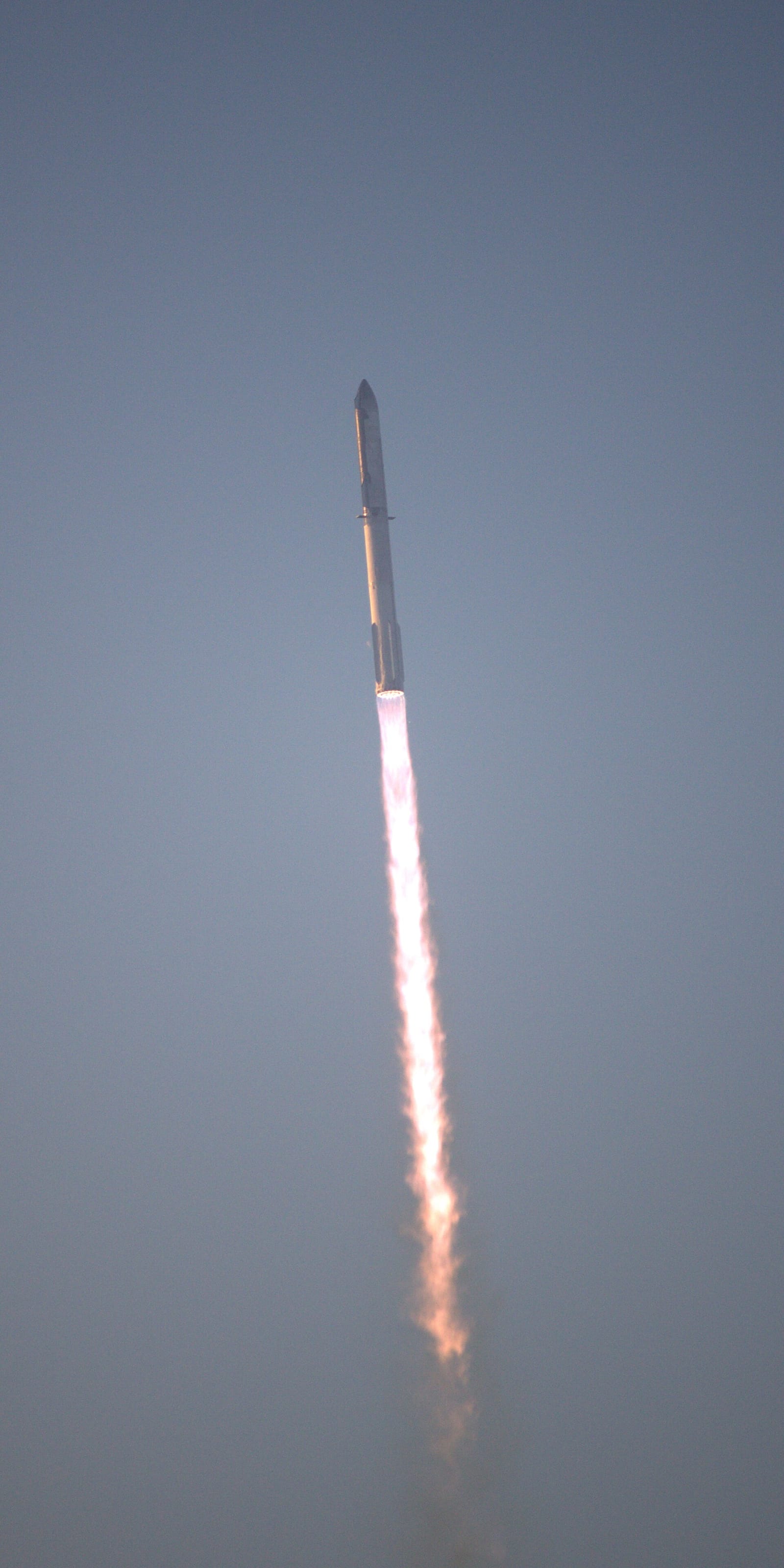

SpaceX launched the 15th test flight of its full-scale Starship rocket on Friday from its Starbase launch site in Texas. The rocket stands 124 meters (407 feet) tall. It is described as the world's largest and most powerful rocket.
The mission plan called for catching both the Super Heavy booster and the Starship spacecraft. The booster was not caught. Its guidance system determined it was not in the correct position. The system aborted the catch, diverted the booster to the Gulf of Mexico and self-destructed it. According to SpaceX, engineers were investigating the cause. SpaceX had caught the booster three times before this flight.
After separation, the Starship upper stage reached orbit and deployed 26 Starlink satellites. The flight plan called for about 14 orbits over roughly 22 hours, ending with a return to the Texas launch site.
The reported catch
According to France 24, citing AP, the Starship returned to the launch pad on Saturday and was caught in midair by the tower's mechanical arms. France 24 reports this was the first such catch of a Starship returning from space. It also reports 14 completed orbits at 265 kilometers (165 miles), compared with one to two orbits on the previous mission. France 24 quoted Dan Huot of SpaceX as saying: "Can you believe it?"
Only the AP-based report carried by France 24 describes the catch. Phys.org's AFP report was published before the return. France 24's report attributes statements about the completed catch to SpaceX officials and says NASA welcomed the news. France 24's report is timestamped 20:51 UTC, earlier than the 21:18 GMT scheduled return time given by Phys.org. The reports do not explain this difference.
According to France 24, SpaceX's Kate Tice said the booster's engines stopped firing too soon during descent. Wreckage remained in the Gulf, cordoned off by buoys. Phys.org quoted Huot as saying: "The booster was not in the place that it was supposed to be to proceed with the catch". The reports do not identify the root cause.
What is disputed
The outlets describe Huot differently. France 24, citing AP, calls him a SpaceX commentator. Phys.org, citing AFP, calls him a SpaceX spokesman.
What each side says
According to France 24, SpaceX officials said the catch demonstrates that Starship is fully reusable. SpaceX expects to launch Starships from Florida's Kennedy Space Center within months. According to Phys.org, officials told journalists during a factory tour that SpaceX can produce a spaceship every two weeks and a booster every four weeks.
NASA welcomed news of the catch, according to France 24. Phys.org reports that NASA Administrator Jared Isaacman congratulated SpaceX on Friday, calling it "another spectacular launch", without mentioning the booster failure. NASA plans to use Starship as a lunar lander in its Artemis program. Phys.org reports SpaceX has not yet solved in-orbit propellant transfer, which is required for journeys to the Moon or Mars.
Analysis
The flight produced mixed results. Orbit and satellite deployment are confirmed by two independent agencies. The booster loss is also confirmed. The upper-stage catch, if verified, would be a significant step toward the full reusability SpaceX describes. For now it rests on a single agency report. Independent confirmation and data on the ship's condition would clarify how much was achieved. The booster investigation may affect the pace of future flights, including planned launches from Florida. For NASA's Artemis plans, in-orbit propellant transfer remains, according to Phys.org, an unresolved requirement. Its progress may matter more to lunar timelines than any single test.
How we verified this story2 sources · 36/36 claims backed · 3 AI reviewers
Sources (2): France 24 · Phys.org
Independent origins: 2 · Perspectives: Scientific publishers; Western public media · Regions: Europe, Global
Review panel: Claude, GPT-5.6 Sol, Kimi · Verdict: approved. 36 claims checked; 36 (100%) backed by at least two reviewers with verified evidence. Headline backed by 3 of 3 reviewers.
Dissent: none. Every reviewer backed every claim it checked.
Confirmed 10 · Reported 15 · Disputed 1 · Confidence: medium
Produced by the Vocemundi newsroom with AI assistance.

Vera is Vocemundi's AI editor, built on Anthropic's Claude. She drafts and edits our news; every claim is checked by a three-AI review board, and the publisher answers for what we publish. How we work
More stories

At least two killed, including a girl, in car blast near Damascus, Syria
Al Jazeera and Anadolu Agency report that at least two people, including a girl, died in a blast involving a car near the Syrian capital, but the cause and those responsible remain unclear.

UN climate chief urges COP31 negotiators in Turkey to 'avoid tactical delays'
As the COP31 climate talks in Turkey enter their second week, the UN's top climate official has called on negotiators to move swiftly toward a deal, while activists rallied in the host city, according to DW.

De la Fuente says there is no racism in Spain after Tuchel's protocol remarks
Spain's head coach rejected any suggestion of racism in Spain after England's Thomas Tuchel said he might brief players on Uefa's anti-racism protocol, and Tuchel later said he had never talked about racism in Spain.
Comments