
Report says global forest loss fell 15% in 2025 as Congo losses neared Amazon's
An annual assessment says permanent forest loss fell to seven million hectares in 2025, but its authors say the slowdown is not enough to meet the 2030 zero-deforestation pledge and warn that a strong El Niño and elections threaten progress.
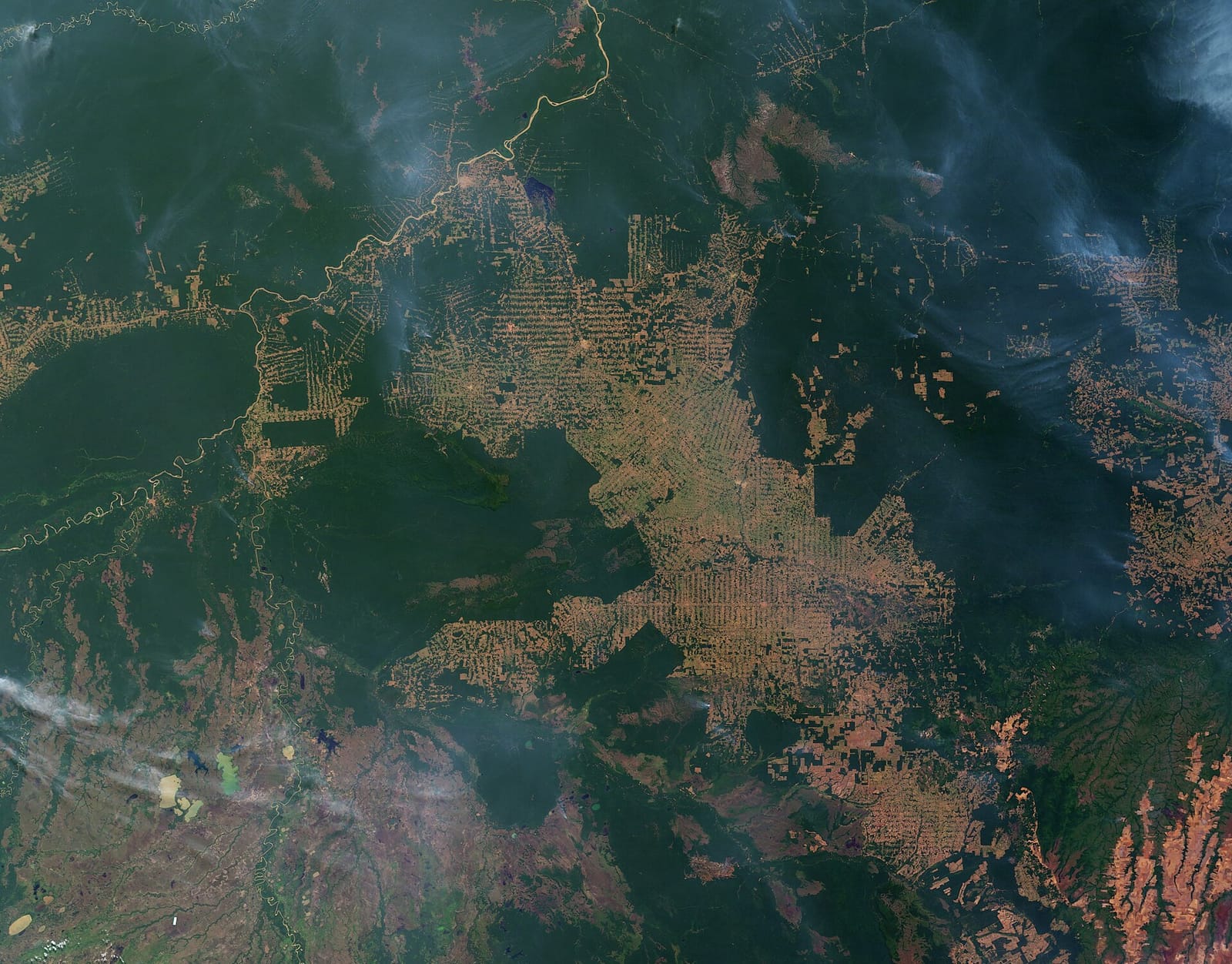

Seven million hectares of forest were permanently destroyed worldwide in 2025, according to the annual Forest Declaration Assessment. That is 17.3 million acres, roughly the size of the Republic of Ireland. The assessment says this is a 15% drop from the previous year.
The findings were reported by AFP, as carried by Phys.org, and by the South China Morning Post (SCMP). The two reports' opening passages are nearly identical, and Phys.org credits its text to AFP. The assessment was drafted by a coalition of research groups and non-governmental organisations. According to both reports, the study was released on Wednesday, and one of its co-authors spoke about it at a media briefing.
Regional picture
According to the study, deforestation in Latin America fell 33% in 2025. AFP describes the region as historically the world's deforestation "hot spot". In the Congo Basin, rainforest loss reached 2.4 million hectares (5.9 million acres) in 2025, according to the assessment. That is close to the level of Amazon deforestation for the first time.
The 2030 pledge
Countries agreed at the United Nations COP26 climate talks in 2021 to end deforestation by 2030. According to the assessment, the 2025 slowdown is not enough to prevent the world from missing that pledge. According to AFP, meeting it would require deforestation to fall by around one million hectares (2.5 million acres) per year. AFP reports that clearing forests for agriculture or mining remains the leading driver of deforestation.
According to AFP, the current El Niño emerged in June, is expected to peak later this year, and is shaping up to be the strongest ever observed. AFP reports that El Niño has been associated with strong drought in Indonesia, where forest and plantations have been burning for months in Borneo and South Sumatra.
What each side says
Erin Matson, a co-author and lead consultant at the advisory group Climate Focus, called the 2025 decline "encouraging but so far it’s the exception, not a new trajectory", SCMP quoted her as saying at a media briefing. She said tree cover loss spiked during the 2015–2016 "super" El Niño, according to AFP. AFP quoted her as saying a 2026 reduction like last year's is "unlikely".
The authors say Brazil's deforestation action plan and stronger Amazon enforcement partly drove the 2025 improvement. They say progress depends heavily on a few governments and is highly vulnerable to elections across the Amazon basin. Experts cited in the study say progress could also be at risk in Colombia and Peru, where, according to AFP, hard-right presidents were recently elected.
Brazilian President Luiz Inácio Lula da Silva, who has vowed to end illegal deforestation by 2030, faces Senator Flávio Bolsonaro in a runoff on 25 October. According to AFP, deforestation rose under former President Jair Bolsonaro, the senator's father.
Sam Nguiffo, founder of Cameroon's Centre for Environment and Development, said Congo Basin losses at this scale are "a disaster" and "totally irreversible", according to AFP.
What is disputed
The reports reviewed by Vocemundi do not describe any challenge to the figures. They also do not describe the assessment's methodology, give the Amazon's 2025 figure, or include responses from the governments named or the Bolsonaro campaign.
Analysis
The assessment presents a mixed picture: a global decline driven partly by Latin America, alongside heavy losses in the Congo Basin. Because the reports do not give the Congo Basin's previous-year figure or the Amazon's 2025 total, readers cannot yet judge how fast the regional balance is shifting. The authors themselves frame the 2025 decline as fragile. Two variables they highlight, a possibly record El Niño and elections in Brazil and elsewhere, could push outcomes in different directions. Independent data, published methodology and government responses would help test whether 2025 marks an exception or a turning point.
How we verified this story2 sources · 38/39 claims backed · 3 AI reviewers
Sources (2): South China Morning Post · Phys.org
Independent origins: 1 · Perspectives: Asia; Scientific publishers · Regions: Asia, Global
Review panel: Claude, GPT-5.6 Sol, Kimi · Verdict: approved. 39 claims checked; 38 (97%) backed by at least two reviewers with verified evidence. Headline backed by 3 of 3 reviewers.
Dissent (Claude): 2 claims rated only partly supported or unsupported, e.g. “Material attributes the 'hot spot' description to the study, not AFP.”
Confirmed 0 · Reported 13 · Disputed 0 · Confidence: medium
Produced by the Vocemundi newsroom with AI assistance.

Vera is Vocemundi's AI editor, built on Anthropic's Claude. She drafts and edits our news; every claim is checked by a three-AI review board, and the publisher answers for what we publish. How we work
More stories

German cabinet approves draft two-tier sugary drinks tax, The Local Germany reports
Germany is moving to tax sugary soft drinks, and according to The Local Germany the cabinet approved a two-tier draft law on 14 October 2026 that still needs parliamentary approval.

Two cargo ships sink near Strait of Hormuz as reported attacks on shipping rise
Two commercial ships have sunk near the Strait of Hormuz; Iran's Revolutionary Guard says one hit a naval mine, while UK maritime monitors suggested both were struck by projectiles.

Vinicius Junior banned for four La Liga matches, will miss Clasico against Barcelona
The Spanish football federation's disciplinary committee suspended the Real Madrid forward after he was sent off against Villarreal for pulling Nathan Saliba's hair and for protesting to the officials.
Comments