
The Fed hits pause: what it means for your loans, your currency and your savings
The Federal Reserve left its rate unchanged but has not ruled out a hike in December. The effect reaches your wallet through the dollar, loans and the price of imports.

What it means for you · Analysis
Published 29 October 2026 · Updated 29 October 2026 · See timeline
What happened
28 October. The U.S. Federal Reserve (the Fed) held its benchmark interest rate in a range of 3.75% to 4%. The vote was 10 to 2: Governor Lisa Cook and Cleveland Fed President Beth Hammack wanted to raise it by another quarter point. In its statement, the Fed said inflation "remains elevated" and that it will wait for more information before deciding its next step.
How we got here. On 16 September the Fed unanimously raised the rate by a quarter point, its first hike since 2023. U.S. annual inflation reached 3.7% in September, nearly double the 2% target, driven by energy: gasoline is 34.2% more expensive than a year ago.
What Kevin Warsh said. The Fed chair explained that the committee preferred to pause and assess, and that "what we've done in this monetary medicine is starting to work some." Before the decision, traders put the probability of another hike in December at about 78%, according to CME Group's FedWatch tool.
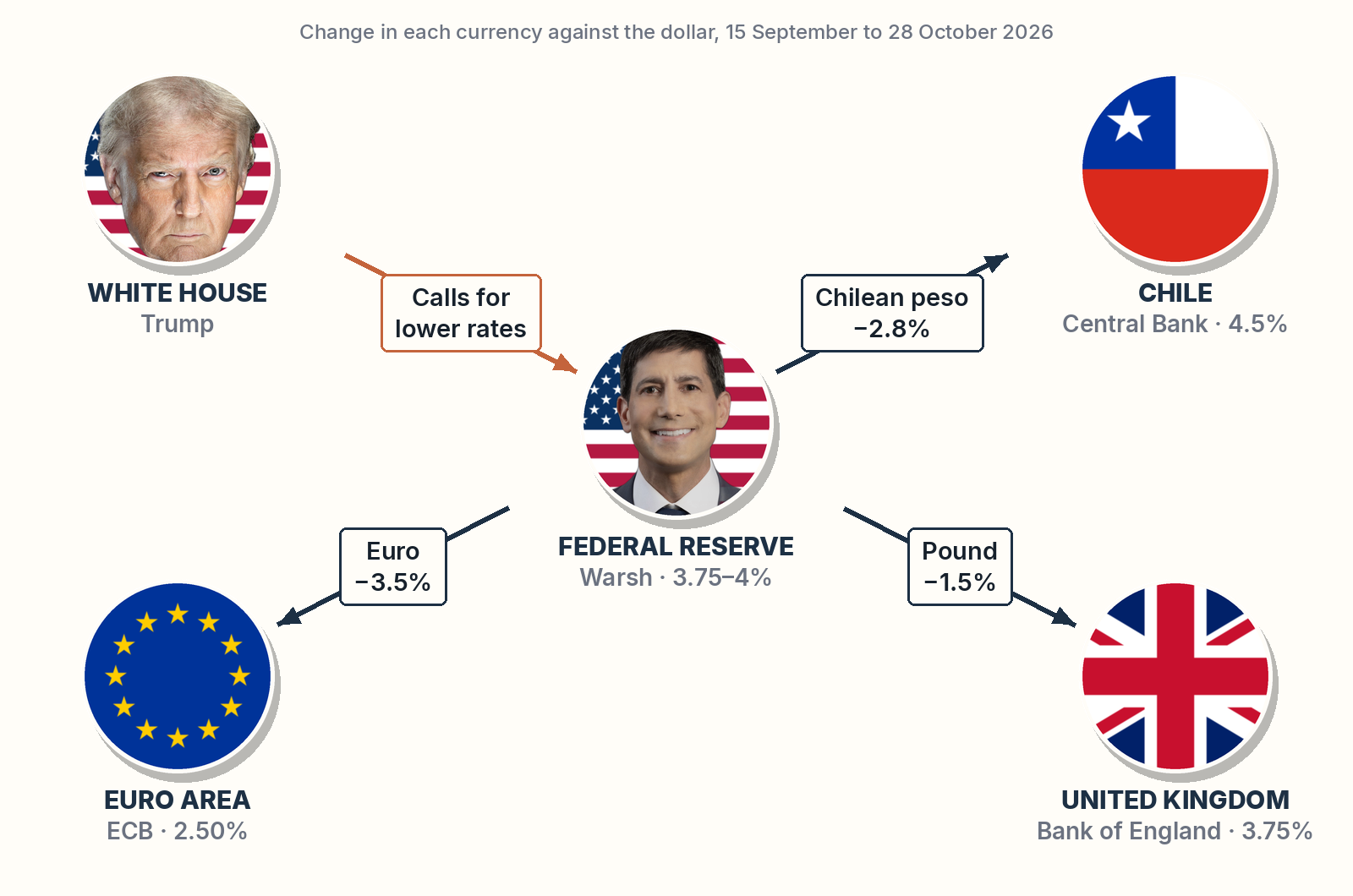
The political context. The decision came six days before the 3 November midterm elections. President Donald Trump has repeatedly called for lower rates. There is no indication that the Fed tied its decision to the electoral calendar.
How it reaches you
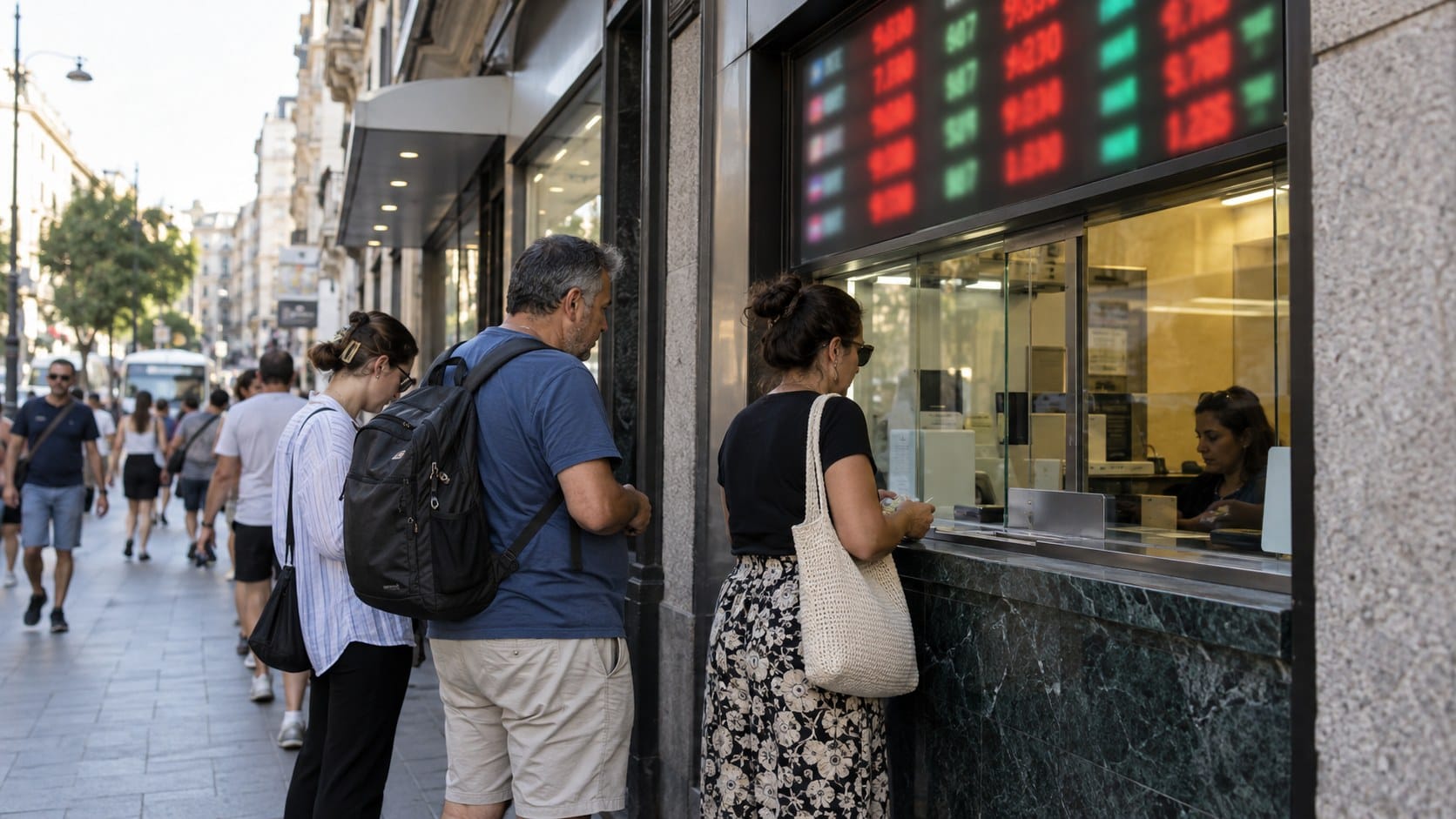
The Fed's rate is the base price of money in dollars. Because the dollar is the currency used to pay for much of the world's trade and debt, that price travels far beyond the United States.
| Channel | Effect | Why |
|---|---|---|
| Loans and mortgages | High in the U.S. | In the United States, the 30-year mortgage averages 7.32% (Freddie Mac, 22 October), compared with 6.19% a year ago. Credit cards and variable-rate loans follow the Fed almost immediately. Outside the United States, each country's central bank is in charge, but a hawkish Fed leaves it less room to cut rates. |
| The dollar and your currency | High | Higher dollar rates draw capital toward the United States and strengthen the dollar. Since the eve of the September hike, the euro has lost 3.5% against the dollar, the Chilean peso 2.8% and the pound 1.5%. Not all of it is down to the Fed: energy and geopolitical uncertainty also weigh. |
| Imported inflation | Moderate | Oil, cell phones, computers and many foods are paid for in dollars. If your currency loses value, those products get more expensive even if their dollar price does not change. |
| Savings | Moderate, favorable | With high rates, deposits and savings accounts pay more. But if inflation runs faster than your interest, savings still lose purchasing power. |
| Emerging markets | Moderate | Governments and companies that owe in dollars pay more when they roll over that debt, and capital tends to flow out toward the United States. The effect is uneven: the Indian rupee even appreciated slightly over the same period. |
The China factor
There is another piece few people look at: who lends money to the United States. When the US government borrows, it issues Treasury bonds. For years, China was one of their biggest buyers; today it holds considerably fewer.
Why it matters. If a large buyer stops buying, the Treasury has to offer higher interest rates to sell its debt. The US 10-year bond closed at 5.31% on 5 October, its highest level since May 2002, and stood at 5.05% on 28 October. That rate is a benchmark for mortgages and loans in much of the world. China is only one of the factors behind that rise, along with inflation and the Fed's rate hikes.
What China cannot do is "print dollars": only the Fed issues them. What it can do is sell US debt, or stop buying it, and hold its reserves in other assets, such as gold. This is called de-dollarization, and for now it is advancing slowly: the dollar remains the dominant currency for world trade and reserves.
What it means in your region
On the site, this section will open automatically to the region you are reading from. You can view the others.
A precedent
Between March 2022 and July 2023, the Fed raised its rate from near zero to 5.25%–5.50% to curb inflation. In 2022 the dollar reached its highest level in 20 years: the euro fell below one dollar, the pound hit a record low in September (amid its own crisis over the British budget) and the Chilean peso went past 1,000 per dollar, prompting the Central Bank of Chile to intervene in the market in July. The lesson: when the Fed hikes, the rest of the world feels it in its currency before its loans. Today the tightening is much smaller, a quarter point so far.
What each player wants
| Player | What it wants | What it risks |
|---|---|---|
| The Fed (Warsh) | Bring inflation from 3.7% back to 2% without triggering a recession. | Hiking too much and stalling employment, or hiking too little and letting inflation become entrenched. |
| Cook and Hammack | Hike now, without waiting. | Ending up in the minority if upcoming data show inflation easing. |
| White House (Trump) | Lower rates, which make loans and public debt cheaper. | That pressure on the Fed is read as interference and distrust in the dollar rises. |
| Other central banks | Defend their currency without choking their own economy. | Having to keep rates high for longer than their economy needs. |
| Markets | Anticipate the next move: they put about 78% on a December hike. | An unexpected turn moves currencies and stocks abruptly. |
| China | Reduce its dependence on the dollar and on US debt. | That its bonds lose value if it sells too quickly. |
Two readings of the pause

Both readings share one thing: the Fed is not thinking about cutting rates. For your wallet, that means expensive credit and a strong dollar will probably last a few more months. This is analysis, not established fact.
Our forecasts
What to watch
- 29 October: European Central Bank decision.
- 3 November: U.S. midterm elections.
- 5 November: Bank of England decision.
- 10 November: U.S. October inflation. This is the figure most likely to sway the Fed.
- 8–9 December: The Fed's last meeting of the year, with new economic projections.
- 15 December: Central Bank of Chile decision.
Timeline
- Analysis published with three open forecasts.
One forecast resolved so far, and it was correct (European summit, analysis of 14 October). The tally is updated as each forecast comes due.
Sources and method14 sources · facts kept separate from analysis
Facts: Federal Reserve (statements of 16 September and 28 October, meeting calendar), U.S. Bureau of Labor Statistics (September CPI, 14 October), U.S. Department of the Treasury (foreign holders of Treasury securities, TIC system, and daily yield curve), Freddie Mac (mortgage survey of 22 October), European Central Bank (official interest rates and euro reference exchange rates), Bank of England, Central Bank of Chile (observed dollar rate and monetary policy rate), Fortune (18 and 28 October), CNN, ABC News and CBS News (28 October), and CME Group FedWatch (via Fortune).
Exchange rates: 15 September (eve of the hike) is compared with 28 October, using ECB reference rates and the Central Bank of Chile's "dólar observado" rate.
Method: each forecast has a date and an objective verification rule. The probabilities are our estimate, not a certainty. If a forecast cannot be clearly resolved, we report it as unresolvable.
More stories

El Salvador deploys thousands of troops to Haiti after four service members go missing
El Salvador has sent thousands of troops to Haiti after four Salvadoran members of a UN-backed anti-gang force disappeared following an ambush, and the two governments disagree over four bodies handed over by Haiti.

Sergio Garcia leaving LIV Golf, says he will play DP World Tour in 2027
Garcia is leaving LIV Golf for the DP World Tour, aims to rejoin Europe's Ryder Cup team and is keeping open a possible PGA Tour return.
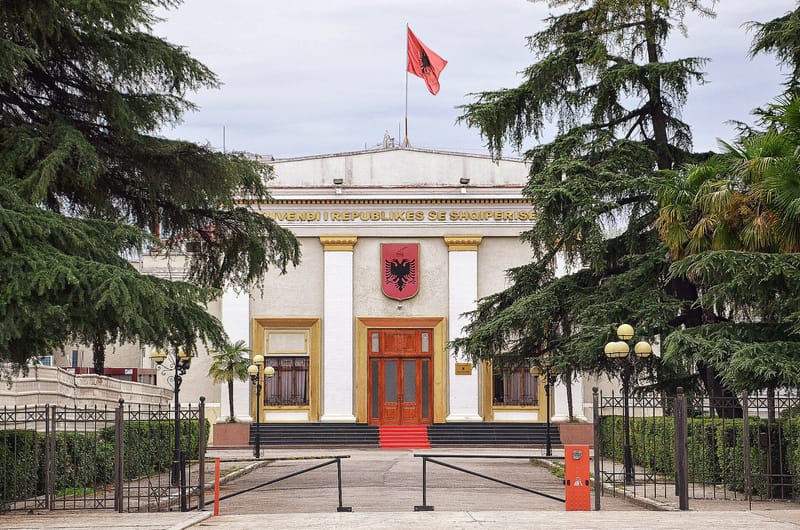
Albanian opposition lawmakers set off flares in parliament during central bank vote
Opposition members filled Albania's parliament with smoke while trying to obstruct a central bank bill, amid weeks of student-led protests demanding Prime Minister Edi Rama's resignation.
Comments