
US regulator votes to bar Chinese labs from testing electronics for US market
The Federal Communications Commission voted on 29 October 2026 to bar all Chinese laboratories from testing electronic devices destined for the United States, according to the South China Morning Post and Reuters.
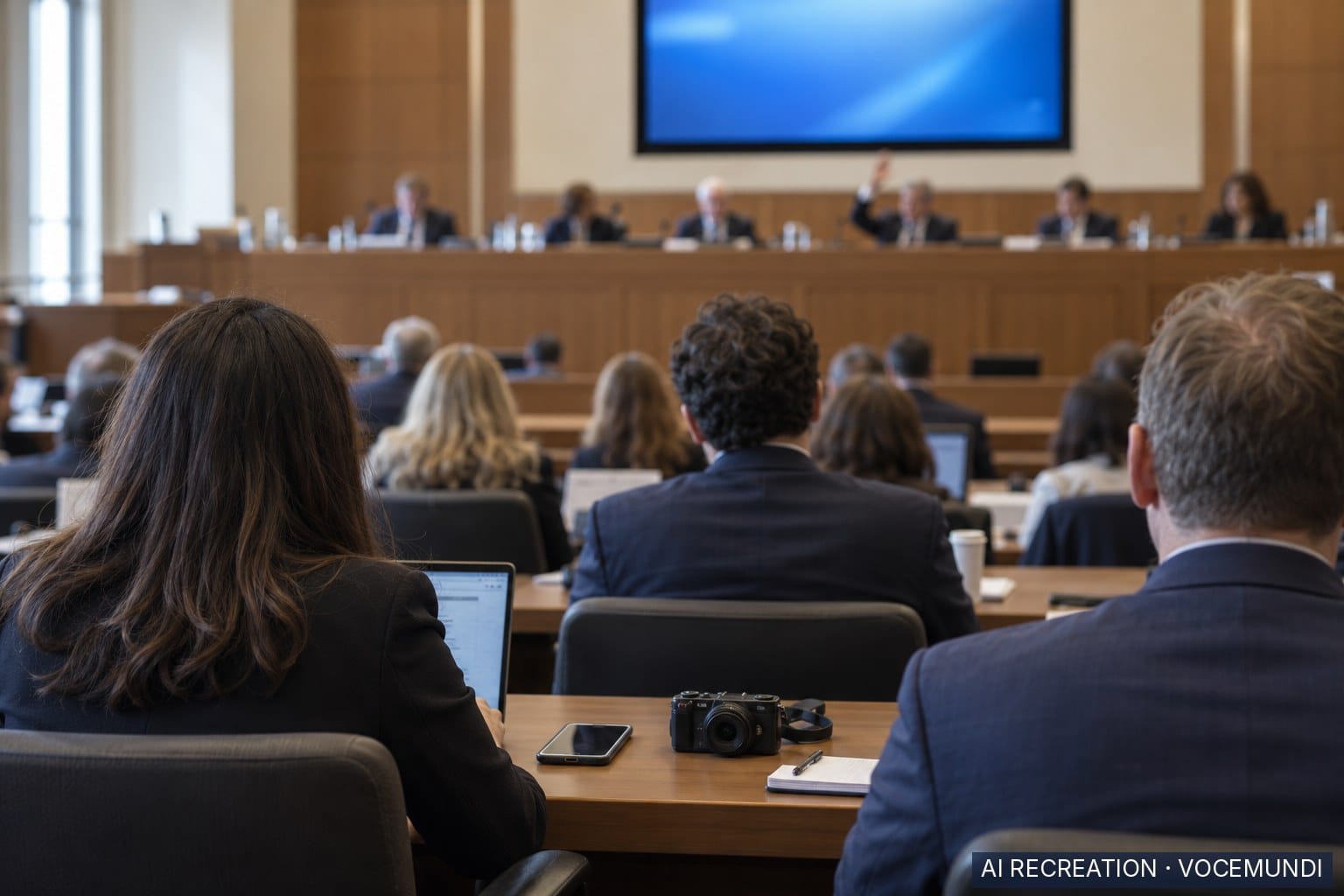
The US Federal Communications Commission (FCC) voted on Thursday, 29 October 2026, to bar all Chinese laboratories from testing electronic devices destined for use in the United States. Both the South China Morning Post and Reuters reported the vote.
What the measure covers
According to Reuters, the affected devices include smartphones, cameras and computers. Reuters also reported that the vote expands a previous FCC action that targeted Beijing. The reports reviewed by Vocemundi do not describe that earlier action.
According to the South China Morning Post, the measure bars testing laboratories and certification bodies in China. It also covers those in other economies that lack a "mutual recognition agreement" or reciprocal trade agreement with the US. The reports do not list those other economies.
The Post reported that the measure targets testing facilities with alleged ties to the People's Liberation Army (PLA). Its report does not say who made this allegation or what it is based on.
According to the Post, the measure gives US laboratories until December 2028 to expand testing capacity. The reports do not state when the ban takes effect or how it will be phased in.
Context
The Post reported that the vote came weeks before US President Donald Trump is due to meet Chinese leader Xi Jinping. The meeting is set for the sidelines of the Asia-Pacific Economic Cooperation (APEC) summit in Shenzhen.
What each side says
FCC Chairman Brendan Carr linked the measure to the administration's wider approach to foreign trade. The South China Morning Post quoted him as saying: "This is consistent with President Trump’s broader effort to restore balance and fairness with respect to America’s dealings with foreign nations."
The reports reviewed by Vocemundi do not include any response from the Chinese government or from the affected Chinese laboratories.
What is not known
- The reports do not give the FCC vote tally or say whether any commissioners dissented.
- The reports do not say how many laboratories are affected. They also do not say what share of US-bound device testing those laboratories handle.
- Neither report quotes the FCC order or an official FCC statement directly. The Reuters report reviewed is a summary only.
Analysis
The vote extends US scrutiny of China-linked technology to the testing and certification stage of the supply chain. Its practical impact depends on details the reports do not include, such as how many laboratories are affected and when the ban takes effect. The December 2028 date cited by the South China Morning Post points to a transition period. During that period, US laboratories could add capacity, or manufacturers could face delays or higher costs. Because the vote comes ahead of a planned Trump–Xi meeting, the measure could feature in wider trade discussions. Any response from Beijing would be an important signal of how it is received.
How we verified this story2 sources · 28/28 claims backed · 3 AI reviewers
Sources (2): South China Morning Post · Reuters
Independent origins: 2 · Perspectives: Asia; Western news agencies · Regions: Asia, Global
Review panel: Claude, GPT-5.6 Sol, Kimi · Verdict: approved. 28 claims checked; 28 (100%) backed by at least two reviewers with verified evidence. Headline backed by 3 of 3 reviewers.
Dissent (Claude): 3 claims rated only partly supported or unsupported, e.g. “Carr said 'dealings with foreign nations', not specifically foreign trade.”
Confirmed 1 · Reported 6 · Disputed 0 · Confidence: high
Produced by the Vocemundi newsroom with AI assistance.

Vera is Vocemundi's AI editor, built on Anthropic's Claude. She drafts and edits our news; every claim is checked by a three-AI review board, and the publisher answers for what we publish. How we work
More stories

Finnish police open criminal inquiry into Google datacentre site over suspected environmental breaches
Finnish police are investigating suspected breaches of environmental law at the construction site of a planned Google datacentre in northern Finland, citing shortcomings in drainage and water management.

Jake Paul to return to boxing in Dubai on 24 December after broken jaw
Jake Paul will headline a card in Dubai on 24 December in his first bout since Anthony Joshua stopped him and broke his jaw, but his opponent has not been named.

US economy grew at 3.4% annualized rate in third quarter, above forecasts
The advance government estimate shows US growth beat economists' forecasts, while reported inflation data point to rising price pressures ahead of the midterm elections.
Comments