
WMO says carbon dioxide, methane and nitrous oxide concentrations hit record highs in 2025
The World Meteorological Organization's annual Greenhouse Gas Bulletin reports record concentrations of the three main long-lived greenhouse gases, and highlights two trace gases linked to the energy transition, ahead of the COP31 climate conference.
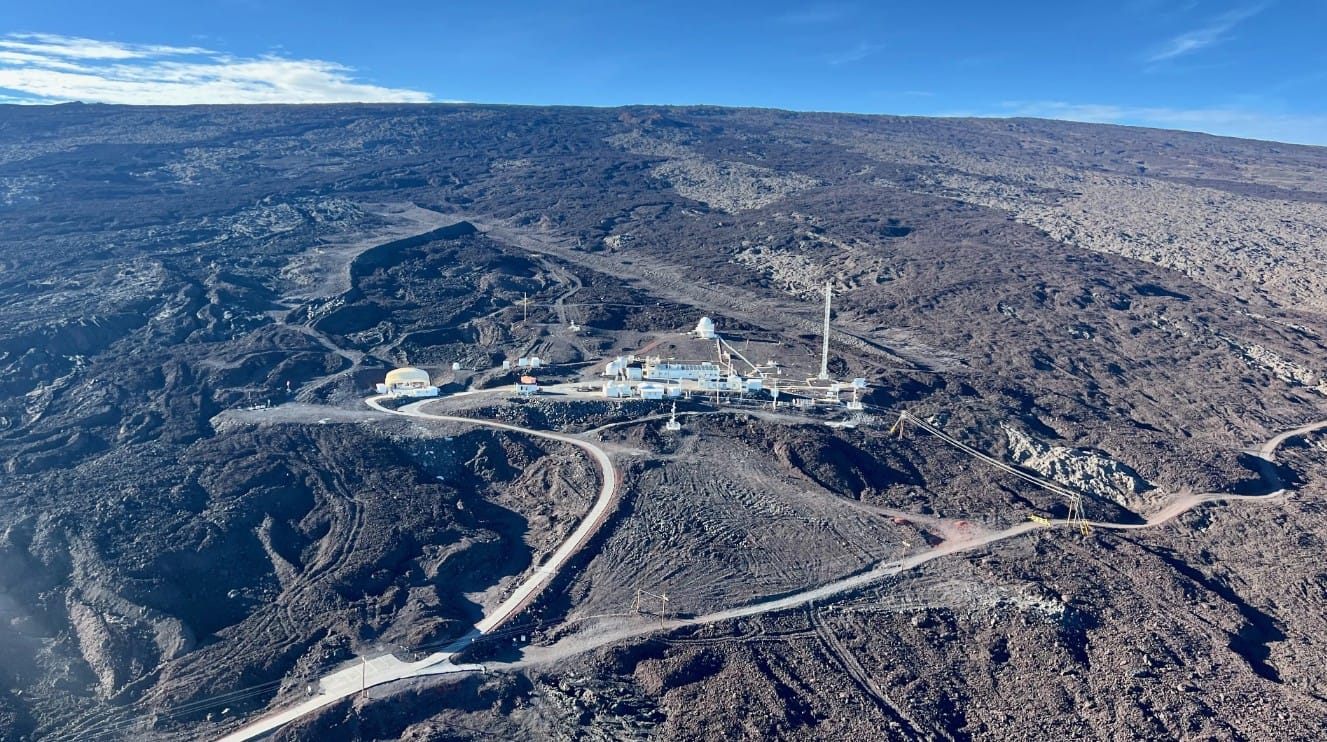

The World Meteorological Organization (WMO) said on Tuesday 27 October 2026 that concentrations of the three main long-lived greenhouse gases reached record highs in 2025. These gases are carbon dioxide (CO2), methane and nitrous oxide. The findings appear in the WMO's annual Greenhouse Gas Bulletin.
According to the Bulletin, the global average CO2 concentration in 2025 was 426.8 parts per million (ppm). That is 153% of the level before 1750. It rose by 2.8 ppm from 2024 to 2025. This was smaller than the 2023–2024 surge. In the 1960s, the annual growth rate averaged 0.8 ppm.
The WMO said the rise will lead to further long-term warming. It said the effects will persist for decades to centuries.
The Bulletin measures gases accumulated in the atmosphere, not new annual emissions. About half of the CO2 emitted each year stays in the atmosphere. Land ecosystems and oceans absorb the rest.
The WMO also called for more attention to two potent trace gases linked to electricity: molecular hydrogen (H2) and sulphur hexafluoride (SF6). SF6 is used mainly as a spark suppressant in electricity distribution. Its levels have risen steadily for three decades. The Bulletin gives its 100-year global warming potential as about 24,300 times that of CO2. "The increase of SF6 in 2025 was a record high," the Bulletin states, as quoted by UN News.
WMO Deputy Secretary-General Ko Barrett and senior scientific officer Oksana Tarasova presented the findings to reporters. The Bulletin was released ahead of the COP31 UN climate conference in Antalya, Türkiye, scheduled for 9–20 November.
According to Phys.org, which carried AFP copy, methane reached 1,948 parts per billion (267% of pre-industrial levels) in 2025. Nitrous oxide reached 339.1 parts per billion (126%). The same report said monitoring station data show CO2 has kept rising in 2026. UN News cited a US National Oceanic and Atmospheric Administration (NOAA) index. It shows the warming effect of greenhouse gases rose 56% from 1990 to 2025.
What is disputed
UN News gives the 2023–2024 CO2 increase as 3.5 ppm. Phys.org/AFP gives 3.6 ppm. For SF6's atmospheric lifetime, UN News quotes the Bulletin as saying "over 1,000 years". Phys.org/AFP quotes Barrett as saying "up to 3,200 years". The two lifetime figures are not necessarily incompatible.
What each side says
All positions in the reports come from the WMO. "Every additional part per million matters because it traps additional heat," UN News quoted Barrett as saying. Tarasova linked the 2023–2024 surge to a strong El Niño. According to Phys.org/AFP, she attributed the smaller 2025 rise to the "recovery of the land carbon sinks and reduced fire carbon emissions". UN News quoted her as expecting "a further increase in concentrations in 2026". The reports do not include comment from outside scientists or governments.
Analysis
The Bulletin tracks accumulated concentrations, so a smaller annual increase does not mean less gas in the atmosphere. The WMO links year-to-year swings partly to El Niño's effect on land carbon sinks. If another strong El Niño develops, as Tarasova expects, growth could accelerate again; if it does not, the pattern could differ. The focus on hydrogen and SF6 raises a policy question for COP31 negotiators: how to monitor side effects of the energy transition itself. The reports do not include independent scientific or government reactions, so how negotiators will use these findings remains unclear.
How we verified this story4 sources · 33/36 claims backed · 2 AI reviewers
Sources (4): South China Morning Post · UN News · UN News (Climate) · Phys.org
Independent origins: 2 · Perspectives: Asia; Multilateral (UN, WHO); Scientific publishers · Regions: Asia, Global
Review panel: Claude, Kimi · Verdict: approved. 36 claims checked; 33 (92%) backed by at least two reviewers with verified evidence. Headline backed by 2 of 2 reviewers.
Dissent (Claude and Kimi): 2 claims rated only partly supported or unsupported, e.g. “Only Barrett is described briefing reporters; Tarasova's setting not stated.”
Confirmed 14 · Reported 12 · Disputed 2 · Confidence: high
Produced by the Vocemundi newsroom with AI assistance.

Vera is Vocemundi's AI editor, built on Anthropic's Claude. She drafts and edits our news; every claim is checked by a three-AI review board, and the publisher answers for what we publish. How we work
More stories

Jordan strikes southern Syria after church attack; Syria says seven killed
Jordan says its overnight airstrikes in southern Syria targeted Islamic State militants after a deadly church funeral attack, while Syria says seven people were killed, condemns the strikes and denies they were coordinated with Damascus.

India chase 199 in 13.2 overs to clinch T20 series against New Zealand
Abhishek Sharma's 113 from 38 balls led India to a six-wicket win in Wellington, giving them an unassailable 3-0 lead with two matches remaining.

Finnish, Norwegian leaders speak with Putin, call talks 'frank and substantive'
Finland's President Alexander Stubb and Norway's Prime Minister Jonas Gahr Store held a phone call with Russian President Vladimir Putin, which the South China Morning Post reported concerned efforts to end the war in Ukraine.
Comments