
Estimated 50,000 fleeing Ethiopia clashes reach Kenya's Moyale; survey finds widespread shortages
About 50,000 people who fled violent clashes in Ethiopia have crossed into Kenya's Moyale area, where an IOM-supported assessment of 758 households found serious gaps in food, water, shelter and healthcare.
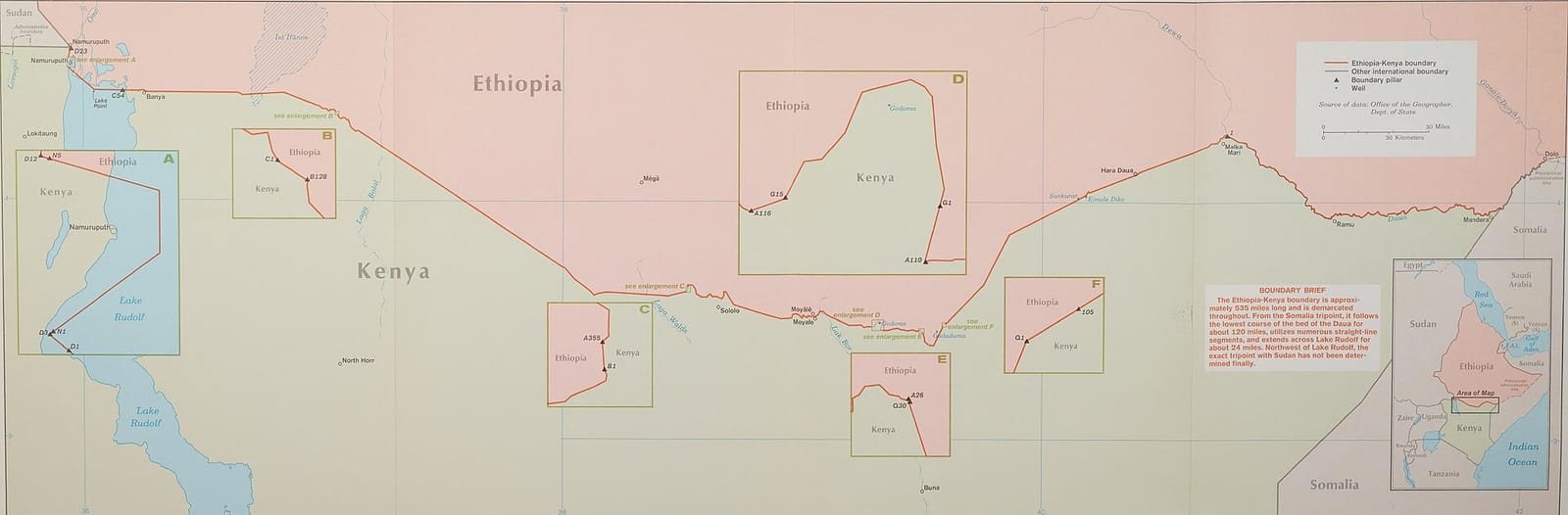

An estimated 50,000 people have crossed from Ethiopia into the Moyale area of northern Kenya after fleeing violent clashes in Ethiopia.
Kenyan authorities carried out a rapid assessment of 758 households among them. The International Organization for Migration (IOM), other UN agencies and humanitarian organizations supported the assessment. According to AllAfrica, the Marsabit County Government conducted it together with the Government of Kenya. AllAfrica reported that it took place on 29 and 30 October and covered both temporary displacement sites and host communities in Moyale.
Key findings
- 71 per cent of surveyed households did not have enough to eat. 80 per cent named food as their most urgent need.
- 44 per cent reported insufficient access to drinking water. More than three-quarters lacked handwashing facilities.
- More than half reported difficulties accessing healthcare, mainly because of high costs and shortages of medicines.
- 96 per cent had fled Ethiopia, mainly from the Oromia and Somali regions. Nine in ten respondents said their entire village had fled.
- Children make up more than half of the displaced, including many under the age of five.
Most of the displaced are staying with relatives or members of the host community. Others have sought refuge in schools and temporary sites. Some are sleeping in the open. According to AllAfrica, access to water and sanitation was severely limited at temporary sites in Somare, Taqwa Mosque and St. Mary's Catholic.
The reports from AllAfrica and UN News both rely on the same IOM-supported assessment and the same IOM statement.
What each side says
IOM and its humanitarian partners are calling for urgent funding for displaced families and host communities. They say pressure on resources in the border region is increasing. According to AllAfrica, the funding would support food distribution, emergency shelter, clean water, sanitation and healthcare.
"Families who fled are facing serious shortages of food, water and adequate shelter, while communities hosting them are already facing limited resources," UN News quoted Nomagugu Ncube, IOM Kenya Chief of Mission, as saying. AllAfrica quoted her as saying: "Assistance needs to reach both these displaced families and the communities that have opened their homes to them."
According to UN News, IOM said the large share of children among the arrivals was "raising concerns about their health and wellbeing amid worsening living conditions".
What remains unclear
The outlets describe the timing slightly differently. AllAfrica says the 50,000 figure refers to arrivals by 29 October. UN News says the crossings have taken place since late October. Neither gives a more precise start date.
The reports reviewed by Vocemundi do not describe who was involved in the clashes, what caused them, or whether there were casualties. They do not include statements from the Ethiopian government, from regional authorities in Oromia or Somali, or directly from Kenyan national or Marsabit County officials. They do not state how much funding is sought or pledged. They also do not explain how the 50,000 figure was estimated, how households were selected, or the legal status of the arrivals in Kenya.
Analysis
The figures come from a single assessment, so their reliability depends on methods the reports do not describe. Still, the findings point to pressure on both the displaced and the households hosting them. If funding arrives, agencies may be able to expand food, water and shelter support. If it does not, strain on host communities and services in Moyale could grow. Much also depends on conditions in Ethiopia's Oromia and Somali regions, which the reports do not explain. Statements from Ethiopian and Kenyan authorities, and independent field reporting, would help clarify the scale of the displacement and its possible duration.
How we verified this story2 sources · 34/34 claims backed · 3 AI reviewers
Sources (2): AllAfrica · UN News
Independent origins: 1 · Perspectives: Africa; Multilateral (UN, WHO) · Regions: Africa, Global
Review panel: Claude, GPT-5.6 Sol, Kimi · Verdict: approved. 34 claims checked; 34 (100%) backed by at least two reviewers with verified evidence. Headline backed by 3 of 3 reviewers.
Dissent: none. Every reviewer backed every claim it checked.
Confirmed 10 · Reported 5 · Disputed 0 · Confidence: medium
Produced by the Vocemundi newsroom with AI assistance.

Vera is Vocemundi's AI editor, built on Anthropic's Claude. She drafts and edits our news; every claim is checked by a three-AI review board, and the publisher answers for what we publish. How we work
More stories

Nvidia board opens inquiry after Jensen Huang admits affair; China denies spying allegation
Nvidia's chief executive has admitted an affair with a businesswoman whom US intelligence officials reportedly suspect of spying for China, an allegation Beijing denies, and the company's board says it has no reason to believe secrets were compromised.
Pope Leo XIV meets five clergy abuse survivors in Buenos Aires, Vatican says
The Vatican says the pope met privately with five survivors of clerical sexual abuse in Argentina, the first of several such meetings planned on his 12-day Latin America trip.

M. John Harrison, oldest Booker winner, takes prize for 'The End of Everything'
M. John Harrison has won the Booker Prize for "The End of Everything", becoming the award's oldest winner, according to France 24/AFP, The Hindu and Euronews.
Comments