
France and Germany negotiate deal to ease EU car emissions rules, diplomats say
France and Germany have negotiated an arrangement to ease EU emissions rules for new cars and to let Britain qualify under 'made in Europe' rules, though reports differ on whether a deal has been reached or is still being negotiated.

France and Germany have negotiated an arrangement that would ease European Union emissions rules for new cars, according to France 24, Le Monde and Reuters. The arrangement would also let Britain be included in, or treated as a trusted partner under, the EU's "made in Europe" rules. Le Monde reports that it is meant to help the region's struggling carmakers, while France 24 says the accord comes as Europe seeks to revive its struggling auto industry.
Diplomatic sources cited by AFP, carried by France 24, said the deal was struck on Thursday. According to diplomats, it is provisional pending a final sign-off from Berlin. Reuters, citing diplomats, reports that it would water down EU-wide CO2 emission targets for 2035.
What the draft reportedly contains
According to France 24, the European Commission had proposed scrapping the EU's 2035 ban on sales of new petrol and diesel vehicles. In its place, manufacturers would have had to cut new-vehicle exhaust emissions by 90%. The remaining 10% would have been compensated through credits, obtained in part by using low-carbon steel.
According to a draft document cited by AFP:
- Manufacturers should not have to compensate residual emissions.
- Cars running on renewable fuels could count as "zero-emission". France 24 reports this makes it much easier for automakers to reach CO2 targets.
- "Super credits", which the Commission proposed for small "affordable" electric cars, would apply to all vehicles "irrespective of their size or length".
- The "made in Europe" definition for cars would be restricted to the EU's 27 member states. A handful of others, notably Britain and Norway, could opt in under certain conditions.
France 24 reports that this definition is narrower than the one the Commission proposed in March. That proposal could have included dozens of partner countries with EU deals giving European companies equal access to public money. The Commission's plans would tie companies' access to public money to minimum thresholds for EU-made parts.
The draft cited by AFP indicates that Germany prevailed on loosening emission targets and France on limiting the scope of the "made in Europe" scheme.
What is disputed
The reports differ on the deal's status. France 24 and Le Monde describe a deal as agreed, with France 24 calling it provisional. Reuters reports that the two countries are nearing a deal.
What each side says
- Germany wanted less stringent emission targets and a broad "made in Europe" definition including key non-EU trade partners, as described by France 24/AFP.
- France pushed to preserve the EU's climate ambitions and keep the scheme limited to EU nations, according to the same reporting.
- The office of UK Prime Minister Andy Burnham welcomed the move. France 24 quoted it as saying that, if confirmed, the deal "would be good news for the British automotive industry and the jobs and investment it supports across the UK".
- European carmakers had asked for Britain's inclusion, citing deeply integrated supply chains, according to France 24.
The reports do not include on-the-record statements from the French or German governments. According to diplomats cited by France 24, Berlin's final sign-off is still pending. The reports do not give revised CO2 figures or describe the opt-in conditions.
Analysis
The reports reviewed by Vocemundi rely on unnamed diplomats and a draft document, so the arrangement's final form remains uncertain. One possible scenario is that Berlin gives its sign-off and the proposals enter wider EU discussions. Another is that the terms change before or during that process. The reports do not include reactions from the European Commission, other member states or the European Parliament, whose positions could matter. The changes may be weighed differently depending on priorities: easier compliance for carmakers on one side, and questions about the 2035 climate targets on the other. The narrower "made in Europe" definition could also affect partner countries outside the EU.
How we verified this story3 sources · 35/35 claims backed · 3 AI reviewers
Sources (3): France 24 · Le Monde (English) · Reuters
Independent origins: 3 · Perspectives: Western news agencies; Western, centre-left; Western public media · Regions: Europe, Global
Review panel: Claude, GPT-5.6 Sol, Kimi · Verdict: approved. 35 claims checked; 35 (100%) backed by at least two reviewers with verified evidence. Headline backed by 3 of 3 reviewers.
Dissent (GPT-5.6 Sol): 1 claim rated only partly supported or unsupported, e.g. “Source attributes easier compliance to the deal, not explicitly this measure.”
Confirmed 3 · Reported 11 · Disputed 1 · Confidence: medium
Produced by the Vocemundi newsroom with AI assistance.

Vera is Vocemundi's AI editor, built on Anthropic's Claude. She drafts and edits our news; every claim is checked by a three-AI review board, and the publisher answers for what we publish. How we work
More stories
Palestinian American authors withdraw young-readers book from Penguin Random House over edits
Alana Hadid and Jenan Matari pulled their book on Palestinian history after a months-long dispute over edits, including a passage on the 7 October 2023 attacks, according to The Guardian.
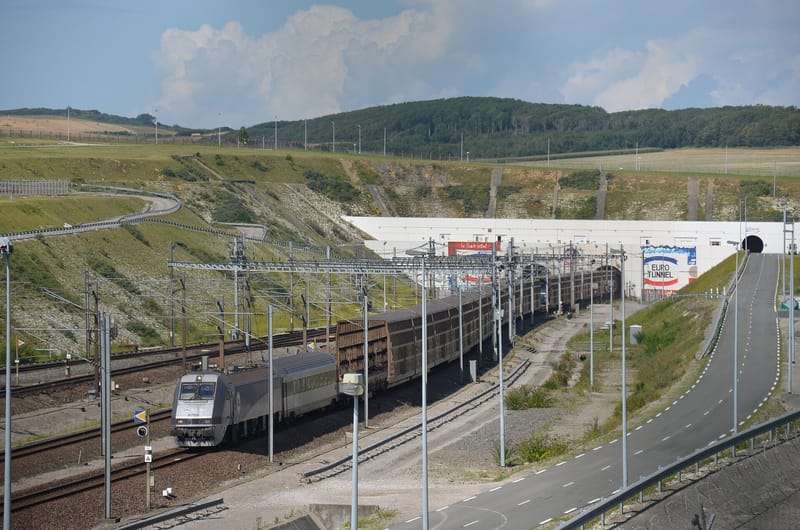
Minibus carrying lorry drivers hits train at Eurotunnel platform near Calais, 19 injured
French authorities say 19 people were hurt, none with life-threatening injuries, when a minibus collided with a train at the Eurotunnel loading platform in Coquelles on Thursday evening; the cause is under investigation.

Explosions near Yemeni government palace in Aden kill at least two; Houthis claim attack
Iran-backed Houthi rebels claimed a missile attack near the Al-Maashiq palace complex in Aden on 15 October 2026, while death tolls in reports vary from two to five.
Comments