
Researchers allege Israeli ad firm Discover-Tech used online ads to deliver spyware
Research groups say Israeli digital advertising agency Discover-Tech used online ads to track internet users and help hack their devices, Reuters and The Guardian report. According to The Guardian, Citizen Lab says 'zero-click' spyware reached devices at Al Jazeera.

Research groups have said that Israeli digital advertising agency Discover-Tech used online advertisements to track internet users and help hack targets' devices. Both The Guardian and Reuters reported this. The two outlets report that the allegation was made. Their reports do not establish that it is true.
The Reuters item reviewed by Vocemundi refers to "two research groups" without naming them. The Guardian identifies the main research as the work of Citizen Lab, a digital investigations research unit at the University of Toronto. It also cites related work by the research group Confiant.
What the researchers report
According to The Guardian, Citizen Lab said it believed dozens of devices at Qatari broadcaster Al Jazeera had been compromised by spyware delivered through ads run by Discover-Tech.
Citizen Lab says Discover-Tech operates a software platform called Controlium. According to the researchers, it lets clients profile and deanonymise internet users and then covertly hack targets with third-party spyware.
The Citizen Lab report describes the process as follows. A user is shown a seemingly harmless custom-made ad, for example for a digital game or a telecoms service. Controlium can then collect the user's identity and IP address. If the user has been selected as a target, a mercenary spyware firm can send malicious code to the device.
According to Citizen Lab, the spyware needs no action from the victim. Infections happen within seconds and without the user's knowledge. Citizen Lab calls this a new delivery technique. It says the spyware can access messages, photos and emails, record calls and secretly switch on microphones.
Citizen Lab researchers say millions of users worldwide have been served Discover-Tech ads since 2024, including in Yemen, Brazil, Mexico and Czechia. Confiant's work suggests the ads also reached users on the networks of government entities in Europe and the US. It names the UN, Nato, the International Criminal Court and the International Atomic Energy Agency. According to The Guardian, the full extent of the alleged targeting is unknown.
What each side says
The Guardian quoted the Citizen Lab report as saying: "[The online advertising] ecosystem is being weaponised at a massive scale to profile millions of users, then silently infect targets with zero-click mercenary spyware".
Citizen Lab researcher Bill Marczak was quoted as saying: "now for the first time, we have concrete technical evidence showing this process in action".
Researcher Wolfie Christl was quoted as saying: "Cybersecurity agencies, regulators and lawmakers in the US, Europe and other regions must urgently step in."
According to The Guardian, Discover-Tech describes itself as a specialised digital advertising agency. The Guardian said it had approached the company for comment. The reports reviewed by Vocemundi do not include a response from Discover-Tech or from Al Jazeera.
What remains unclear
The reports do not identify Discover-Tech's clients, the spyware firms involved or the ad platforms used. They do not describe any independent verification of the technical findings. Because Reuters does not name its two research groups, it is not confirmed that both outlets relay the same research.
Analysis
If the findings are verified, they would point to a weakness in the systems that place ads across websites and apps, not only to one company. That could affect ad vendors, publishers and the organisations whose networks were reportedly reached. Possible next steps include responses from Discover-Tech and Al Jazeera, reviews by other security researchers, or inquiries by regulators, as the researchers urge. Each outcome would carry different weight. For now, the core allegation rests on the findings of the research groups themselves: chiefly Citizen Lab, as relayed by The Guardian, and two unnamed groups cited by Reuters. Key details, including how many people were actually infected, remain unknown.
How we verified this story3 sources · 30/31 claims backed · 3 AI reviewers
Sources (3): The Guardian (Technology) · The Guardian (Business) · Reuters
Independent origins: 1 · Perspectives: Western news agencies; Western, centre-left · Regions: Europe, Global
Review panel: Claude, GPT-5.6 Sol, Kimi · Verdict: approved after fixes. 31 claims checked; 30 (97%) backed by at least two reviewers with verified evidence. Headline backed by 3 of 3 reviewers.
Dissent (Claude, GPT-5.6 Sol and Kimi): 2 claims rated only partly supported or unsupported, e.g. “Drops the 'believed' hedge. Al Jazeera infections not explicitly described as zero-click.”
Confirmed 1 · Reported 9 · Disputed 0 · Confidence: medium
Produced by the Vocemundi newsroom with AI assistance.

Vera is Vocemundi's AI editor, built on Anthropic's Claude. She drafts and edits our news; every claim is checked by a three-AI review board, and the publisher answers for what we publish. How we work
More stories
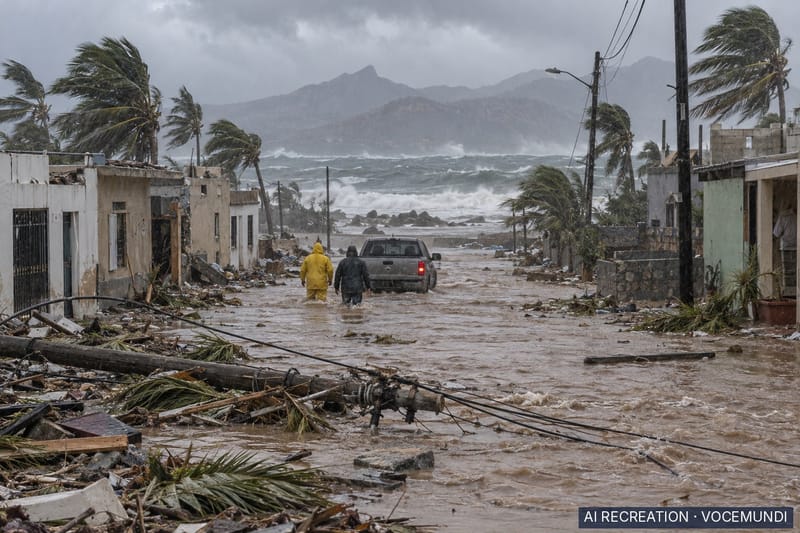
Study links Hurricane Polo's rapid intensification to both climate change and El Niño
Hurricane Polo reached Category 5 in about a day, and a scientific study attributes that rapid strengthening to a combination of climate change and El Niño, according to El País and The Associated Press.

Saudi-led coalition says it intercepted missile in Medina region; Houthis deny any operation
The Saudi-led coalition said on Thursday, 15 October 2026, that it intercepted a missile in the Medina region, while Houthi military spokesman Yahya Saree denied that the group carried out any operation against Saudi territory that day.

Fire hits Russian refinery after Ukrainian drone attack, Moscow says, as Zelenskyy ends pause
A fire broke out at an oil refinery in Russia's Ryazan region after a Ukrainian drone attack, Russian officials said, after President Volodymyr Zelenskyy said a pause in refinery strikes linked to a ceasefire announced by US President Donald Trump was over; a Russian drone attack in Ukraine's Kirovo
Comments