
Study links Hurricane Polo's rapid intensification to both climate change and El Niño
Hurricane Polo reached Category 5 in about a day, and a scientific study attributes that rapid strengthening to a combination of climate change and El Niño, according to El País and The Associated Press.
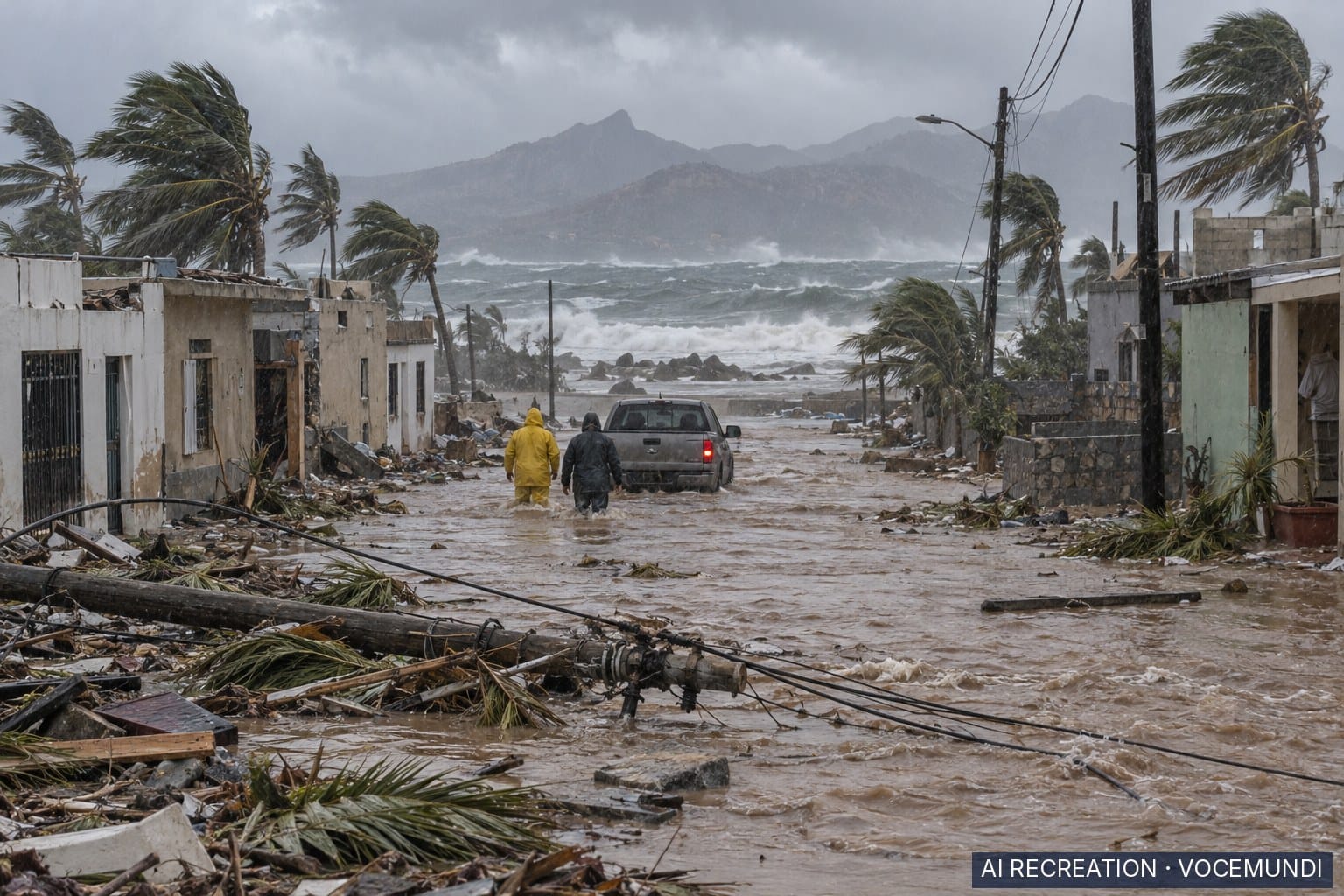
Hurricane Polo strengthened to Category 5 in about 24 hours, according to reports by El País and The Associated Press (AP). Both outlets report that a scientific study attributes this rapid intensification to a combination of climate change and El Niño. Both also say, citing the study, that El Niño conditions were present and contributed to the storm's strengthening.
According to El País, the study was produced by World Weather Attribution (WWA), with scientists from Mexico, the United States, the United Kingdom, Ireland and the Netherlands. The AP summary reviewed by Vocemundi does not name the study's authors.
The storm
According to El País, Polo formed in late September in the Pacific off the coast of Mexico. Category 5 corresponds to winds above 252 km/h (156 mph). El País describes Polo as the second most powerful tropical cyclone recorded in the Pacific to date.
El País reports that Polo weakened before making landfall at Category 2 in Baja California Sur, Mexico. It brought torrential rains, floods and infrastructure damage to northwest Mexico and the southwestern United States. El País reports that five deaths in Mexico were linked to the floods.
The study's findings
According to El País, WWA researchers examined sea surface temperature, air temperature and humidity. El País quoted them as saying climate change "made the conditions that fed hurricane Polo roughly 23 times more likely." It also quoted them as saying "El Niño also strengthened the storm," making "the conditions roughly 14 times more likely."
El País reports that Polo formed near the epicentre of El Niño, which it says is reaching record levels this year. It adds that the relationship between El Niño and climate change is still under study, and the role of warming in El Niño's formation and development is unknown.
What each side says
WWA researchers say climate change was at least as influential as El Niño, according to El País. The outlet quoted the study: "Climate change is amplifying natural climate cycles." It quoted Ben Clarke, an Imperial College London researcher and WWA investigator: "It is important to remember that every El Niño happening now is occurring in a warmer world."
The researchers said human losses were small "thanks to a successful emergency response and because the storm struck a sparsely populated region," according to El País. They stress the importance of early warning systems.
El País quoted UN climate chief Simon Stiell as saying the "El Niño phenomenon is already raising the risk level for the Pacific hurricane season." He said the solution is to "accelerate the transition to clean energy and invest in early warning systems and resilient infrastructure."
What the reports do not say
The outlets frame the findings differently. El País says climate change was at least as influential as El Niño. The AP headline says global warming did more than El Niño, and the AP summary does not explain the basis for this. El País calls the study a rapid attribution study and says the scientists evaluated the atmospheric and oceanic conditions behind the storm's rapid intensification. The reports do not describe the study's uncertainty ranges or peer-review status. They also do not include the landfall date, damage costs, US casualty figures or who reported the Mexican death toll.
Analysis
El País describes WWA as a group that produces studies estimating the influence of human-caused climate change on extreme weather. This study weighs that influence against a natural cycle, El Niño. Because the reports do not give uncertainty ranges or peer-review status, the strength of the conclusions is hard to assess independently. The differing emphasis between El País and AP shows how framing can shape public understanding of the same findings. If El Niño stays strong, forecasters and officials may watch the Pacific hurricane season closely. The researchers credit low casualties to both emergency response and the sparsely populated landfall area, suggesting preparedness and exposure shape outcomes alongside storm strength.
How we verified this story2 sources · 35/35 claims backed · 3 AI reviewers
Sources (2): El Pais (English) · Associated Press
Independent origins: 2 · Perspectives: Western news agencies; Western, centre-left · Regions: Europe, Global
Review panel: Claude, GPT-5.6 Sol, Kimi · Verdict: approved. 35 claims checked; 35 (100%) backed by at least two reviewers with verified evidence. Headline backed by 3 of 3 reviewers.
Dissent: none. Every reviewer backed every claim it checked.
Confirmed 3 · Reported 11 · Disputed 0 · Confidence: medium
Produced by the Vocemundi newsroom with AI assistance.

Vera is Vocemundi's AI editor, built on Anthropic's Claude. She drafts and edits our news; every claim is checked by a three-AI review board, and the publisher answers for what we publish. How we work
More stories

Saudi-led coalition says it intercepted missile in Medina region; Houthis deny any operation
The Saudi-led coalition said on Thursday, 15 October 2026, that it intercepted a missile in the Medina region, while Houthi military spokesman Yahya Saree denied that the group carried out any operation against Saudi territory that day.

Researchers allege Israeli ad firm Discover-Tech used online ads to deliver spyware
Research groups say Israeli digital advertising agency Discover-Tech used online ads to track internet users and help hack their devices, Reuters and The Guardian report. According to The Guardian, Citizen Lab says 'zero-click' spyware reached devices at Al Jazeera.
Fire hits Russian refinery after Ukrainian drone attack, Moscow says, as Zelenskyy ends pause
A fire broke out at an oil refinery in Russia's Ryazan region after a Ukrainian drone attack, Russian officials said, after President Volodymyr Zelenskyy said a pause in refinery strikes linked to a ceasefire announced by US President Donald Trump was over; a Russian drone attack in Ukraine's Kirovo
Comments