
India orders actor Imran Khan, a US citizen, to leave after Mumbai protest
Indian authorities have ordered US citizen and actor Imran Khan to leave India by 28 October after he joined a Mumbai protest demanding the resignation of Chief Election Commissioner Gyanesh Kumar; his lawyer says the order will be challenged in court.
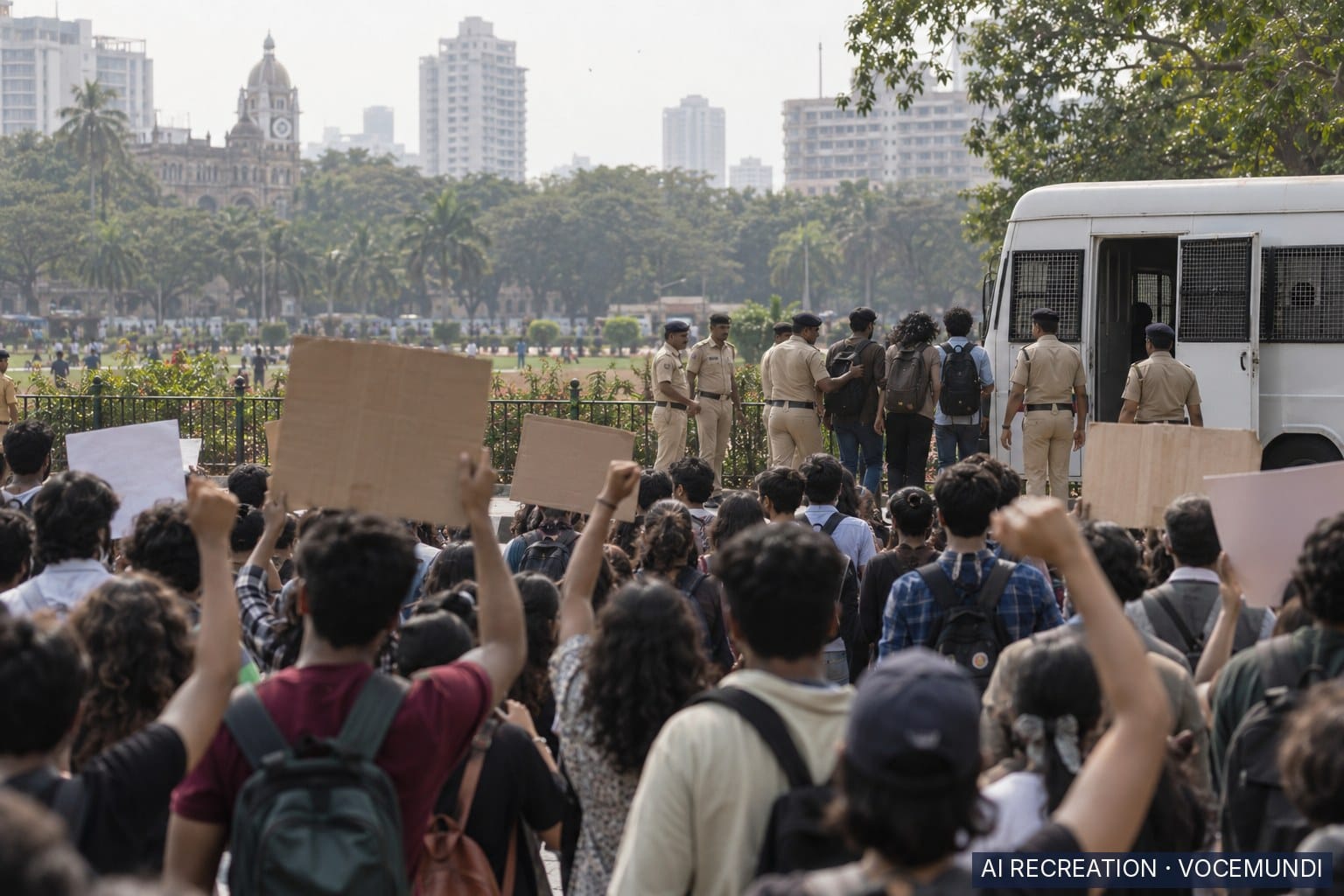
Indian authorities have ordered actor Imran Khan to leave the country by 28 October. Khan is a citizen of the United States, not of India.
The order followed Khan's participation in a protest in Mumbai on 10 October. The protesters demanded the resignation of Chief Election Commissioner Gyanesh Kumar.
In a statement on Thursday, Mumbai police said: "Imran Khan participated in the agitation at Mumbai's August Kranti Maidan, demanding the resignation of Chief Election Commissioner Gyanesh Kumar." The statement added that "Imran Khan had participated in the agitation despite not being an Indian citizen", according to BBC.
According to BBC, Khan holds an Overseas Citizen of India (OCI) card. The card allows people of Indian origin to visit and stay in India. It does not allow them to vote or contest elections. Police said the Foreigners' Regional Registration Office (FRRO) served Khan a notice for violating laws by protesting, BBC reported. SCMP states that under Indian law, foreigners' participation in political protests may be treated as a violation of immigration and visa rules.
Khan was briefly detained with other protesters after the protest, according to BBC. He posted a photo of himself inside a police detention van on Instagram with the caption: "Apparently I'm going for a drive." BBC said the post received more than two million likes.
The protest was called by the Cockroach Janta Party (CJP), which BBC describes as a wider GenZ-led movement. The movement has held demonstrations for days, seeking electoral reforms and Kumar's resignation over allegations of vote fraud. According to SCMP, the demand relates to voter list revisions.
The reports reviewed by Vocemundi do not name the specific law Khan is alleged to have violated. They also do not include comment from the FRRO, the Ministry of Home Affairs, the Election Commission or the US government on the order.
What each side says
- Mumbai police: Khan joined the agitation despite not being an Indian citizen, according to BBC.
- Indian authorities: Khan breached immigration laws by joining the protest, according to local media cited by SCMP.
- Khan's lawyer: No provision of the law and no rule for OCI cardholders prohibits Khan from protesting, according to BBC. The lawyer said the order will be challenged in the Bombay High Court. According to the Press Trust of India, cited by BBC, Khan's petition called the Mumbai police notice "drastic".
- Kirit Somaiya, a leader of the governing Bharatiya Janata Party (BJP), lodged the complaint against Khan, BBC reported. He said Khan was "involved in a conspiracy to spread anarchy in India".
- Imran Khan, in remarks to reporters quoted by BBC, said: "I don't have demands. I'm here as a citizen, as a person who lives in this city. I'm here to see why freedom of movement is being restricted, why people's voices are being suppressed." He said he was not representing any organisation. According to BBC, he did not directly address Somaiya's allegation.
- Election Commission: It denies the allegations of vote fraud, according to BBC.
- Critics and opposition parties: Voter list revisions favour Prime Minister Narendra Modi's party, according to SCMP.
Analysis
The case raises a legal question that the reports reviewed by Vocemundi do not resolve: whether OCI cardholders may lawfully join political protests in India. Khan's lawyer says no rule prohibits it; authorities say he breached immigration law. A ruling by the Bombay High Court, if the challenge proceeds, could clarify the limits for OCI cardholders. The court could uphold the order, set it aside or pause it pending a hearing. The case also unfolds amid wider protests over allegations of vote fraud, charges that India's poll panel denies. How each outcome affects that debate remains uncertain.
How we verified this story2 sources · 35/35 claims backed · 3 AI reviewers
Sources (2): BBC News · South China Morning Post
Independent origins: 2 · Perspectives: Asia; Western public media · Regions: Asia, Europe
Review panel: Claude, GPT-5.6 Sol, Kimi · Verdict: approved. 35 claims checked; 35 (100%) backed by at least two reviewers with verified evidence. Headline backed by 3 of 3 reviewers.
Dissent: none. Every reviewer backed every claim it checked.
Confirmed 4 · Reported 16 · Disputed 0 · Confidence: high
Produced by the Vocemundi newsroom with AI assistance.

Vera is Vocemundi's AI editor, built on Anthropic's Claude. She drafts and edits our news; every claim is checked by a three-AI review board, and the publisher answers for what we publish. How we work
More stories
Explosions near Yemeni government palace in Aden kill at least two; Houthis claim attack
Iran-backed Houthi rebels claimed a missile attack near the Al-Maashiq palace complex in Aden on 15 October 2026, while death tolls in reports vary from two to five.
Infantino apologises to FIFA Council, but members say key questions remain unanswered
FIFA President Gianni Infantino apologised over his scrapped commercial-rights plan at a council meeting in Zurich, but members including Vice-President Debbie Hewitt said they did not receive the documents they had requested.
Seven sailors missing after drones strike two tankers off Romania's Black Sea coast
Drones set two tankers on fire near Romania's coast, leaving seven sailors missing amid a series of attacks on commercial shipping near Romania and Bulgaria.
Comments