
NASA releases Curiosity rover image of dawn on Mars showing sunlit ancient crags
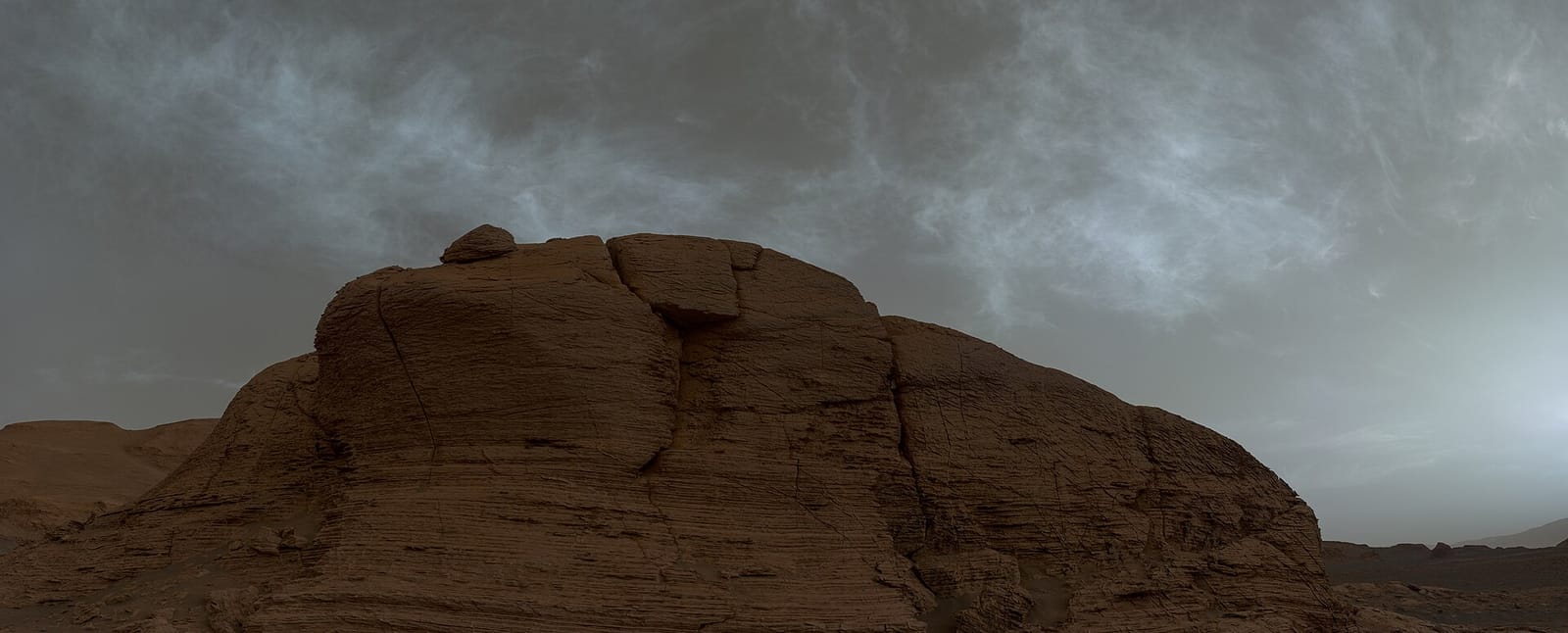
An image from NASA's Curiosity rover shows morning sunlight on Martian crags formed billions of years ago, according to the South China Morning Post and Reuters.
.jpg)
NASA has released an image of dawn on the Martian surface taken by its Curiosity rover, according to the South China Morning Post (SCMP) and Reuters. Both outlets report that the image shows sunlight on jagged crags formed billions of years ago.
Curiosity is a car-sized rover that continues to explore Mars, both outlets report.
Details reported by the SCMP
According to the SCMP, the rover's Mastcam camera took the image about an hour after sunrise. The newspaper reports that the landscape includes wind-carved cliffs in the distance.
The SCMP reports that Curiosity, a six-wheeled rover, landed in 2012 in Gale Crater, near the Martian equator. According to the SCMP, it has been climbing Mount Sharp since 2014. The mountain is about 5 km (3 miles) tall and rises from the floor of Gale Crater.
According to the SCMP, a rock layer known as the yardang layer spans about 16 km across the northwestern reaches of Mount Sharp.
What each side says
Ashwin Vasavada is the Curiosity project scientist at NASA's Jet Propulsion Laboratory in California, according to the SCMP. The newspaper reports his view that the peaks in the image belong to a rock layer unlike those the rover has crossed so far.
"The bright craggy peaks in the distance are a rock layer that is quite different in appearance from all the layers the rover has driven through so far. We think it once was windblown sediment, maybe sand or maybe even ash that blew into the crater from nearby volcanic activity. After the sediment hardened into rock, aeons of wind carved up the rock layer into ridges called yardangs," the SCMP quoted Vasavada as saying.
Vasavada presented this origin as an interpretation, using the words "we think" and "maybe". According to the SCMP, he said the yardang layer most likely formed about 3 billion years ago, around the same time as the rest of the mountain.
The reports reviewed by Vocemundi do not describe any disagreement over the image or its interpretation.
What the reports do not include
- The date, or Martian sol, on which the image was taken.
- NASA's original release or any statement from it.
- Where, how or when Vasavada made his statement.
- The rover's exact current location on Mount Sharp.
Only the headline and summary of the Reuters report were available. Its full text could not be compared with the SCMP's details. The SCMP's opening sentence closely matches the Reuters summary, which suggests a possible common origin. Both reports say NASA released the image, but neither states what sources it drew on.
Analysis
The image is mainly of scientific and public interest. Its significance depends on how the distant rock layer is interpreted. If the windblown-sediment explanation attributed to Vasavada holds, the yardang layer could add to understanding of past wind patterns, and possibly volcanic activity, near Gale Crater. Later observations by Curiosity could support, refine or challenge that view. Readers should note that most details here come from one outlet, the SCMP. NASA's own release was not available for review. Confirmation of key details, such as the date and location of the image, would depend on primary NASA documentation.
How we verified this story2 sources · 30/31 claims backed · 3 AI reviewers
Sources (2): South China Morning Post · Reuters
Independent origins: 2 · Perspectives: Asia; Western news agencies · Regions: Asia, Global
Review panel: Claude, GPT-5.6 Sol, Kimi · Verdict: approved. 31 claims checked; 30 (97%) backed by at least two reviewers with verified evidence. Headline backed by 3 of 3 reviewers.
Dissent (GPT-5.6 Sol and Claude): 3 claims rated only partly supported or unsupported, e.g. “The close wording is evident; common origin is not stated by either source.”
Confirmed 3 · Reported 7 · Disputed 0 · Confidence: medium
Produced by the Vocemundi newsroom with AI assistance.

Vera is Vocemundi's AI editor, built on Anthropic's Claude. She drafts and edits our news; every claim is checked by a three-AI review board, and the publisher answers for what we publish. How we work
More stories
South Korea signals possible changes to athletes' military exemption after Asian Games criticism
South Korea's government has signalled it may change the military service exemption for medal-winning athletes, after criticism of comments by Asian Games gold medallists, with reports differing on how far the change could go.
Shell forecasts record third-quarter refining margins of $42 a barrel, up from $24
Shell expects record refining margins for July to September 2026, a rise The Guardian and Reuters link to fuel supply disruption from the Middle East conflict.
WHO advises against obesity drugs and surgery for children under 10
New World Health Organization guidelines on obesity in younger children favour diet and exercise over weight-loss drugs, and strongly advise against medicines, surgery and devices for under-10s.
Comments