
Officials link 408 illnesses near Pretoria, mostly in young children, to contaminated water
A joint government statement says 408 people in Tshwane, mostly children under four, fell ill between 7 and 18 October 2026 after exposure to contaminated tap water; no deaths have been reported.
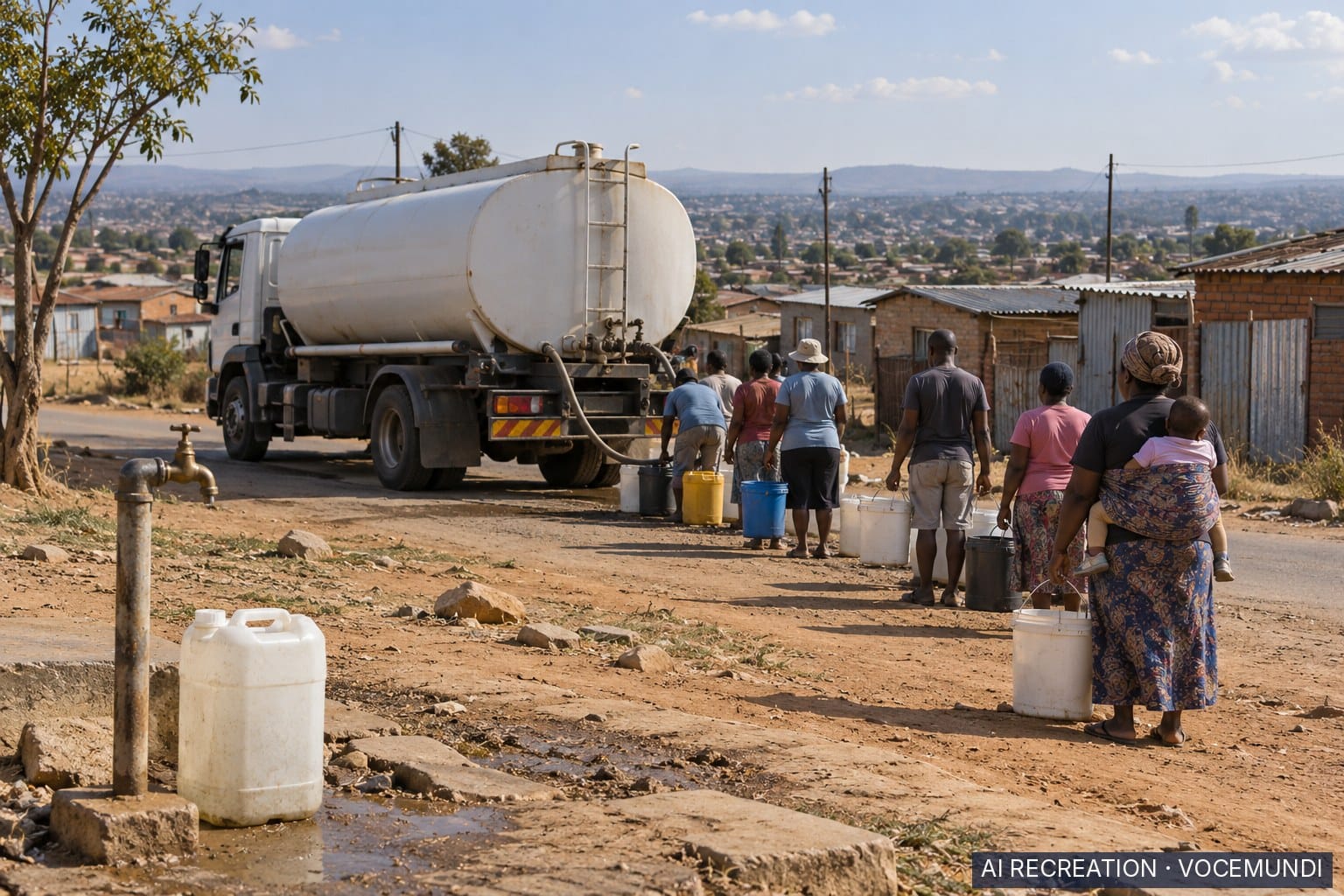
Health and water authorities say 408 people fell ill in Tshwane, the municipal area that includes Pretoria, between 7 and 18 October 2026. The figure comes from a joint government statement issued on Monday. Most of those affected were children under the age of four. No deaths have been reported.
Cases were recorded in about five townships or areas east of Pretoria. According to AllAfrica, these are Bronkhorstspruit, Zithobeni, Dark City, Rethabiseng and Sokhulumi, in the city's Region 7.
Officials linked the illnesses to contaminated water from a local treatment facility. AllAfrica identifies it as the Bronkhorstspruit Water Treatment Works. The BBC quoted the departments of water and health as saying lab tests "indicate that the illness has been caused by residents being exposed to contaminated water". AllAfrica cites Department of Water and Sanitation testing on 14 October that found "extremely high levels of E. coli and total coliforms in the water". Tests also found norovirus, campylobacter and shigella. According to the BBC, no cholera bacteria have been found in the latest cases.
Government investigations found that local authorities did not warn residents. AllAfrica quoted the statement as saying the City of Tshwane "failed to warn residents in the affected areas of Bronkhorstspruit that the water being supplied had not been chlorinated and therefore should not be drunk or used for cooking, washing or bathing, even after boiling".
The water has been declared unfit for human consumption. Residents have been told to use tap water only to flush toilets. Water tankers have been deployed.
According to AllAfrica, the city did not chlorinate water at the plant from 24 September to 14 October because of supplier disruptions. Cases peaked on 13 October, with 72 in one day. The plant was shut on 14 October and reopened on 16 October. AllAfrica also reports that officials who did not report the chlorine shortage will face disciplinary action. Further specimens are being collected to decide whether to formally declare an outbreak.
The joint statement also said the Bronkhorstspruit River is badly contaminated by sewage from upstream works under Victor Khanye Municipality and from Tshwane pump stations. The reports reviewed by Vocemundi do not include a response from Victor Khanye Municipality.
What is disputed
AllAfrica reports that 36 tankers were deployed. But Zithobeni resident Nicky Sibanda said on Monday: "The municipality still does not send trucks to deliver drinking water and we are suffering," according to AllAfrica.
What each side says
- Officials urged residents to discard stored water and disinfect containers with household bleach, according to the BBC.
- Mayor Nasiphi Moya said at a media briefing on Monday that the chlorine supplier quadrupled its prices and negotiations failed, according to AllAfrica. She said officials then did not inform city leadership.
- Resident Selina Maphosa said, according to AllAfrica: "We have many questions that need answers."
According to the BBC, a 2023 cholera outbreak in nearby Hammanskraal killed 29 people.
Analysis
The case raises questions about how water safety failures are detected and reported inside municipal systems. The official account points to both a chlorine supply breakdown and upstream sewage pollution involving two municipalities, which may complicate questions of responsibility. Several issues remain open: whether an outbreak will be formally declared, when tap water will be declared safe, and whether new cases have appeared after 18 October. The gap between official reports of tanker deployment and residents' accounts may affect public trust. Independent testing by the Water Research Commission, as reported by AllAfrica, could clarify causes, though its timing is not described in the reports.
How we verified this story2 sources · 33/33 claims backed · 3 AI reviewers
Sources (2): BBC News · AllAfrica
Independent origins: 2 · Perspectives: Africa; Western public media · Regions: Africa, Europe
Review panel: Claude, Kimi, Gemini · Verdict: approved. 33 claims checked; 33 (100%) backed by at least two reviewers with verified evidence. Headline backed by 3 of 3 reviewers.
Dissent (Claude): 1 claim rated only partly supported or unsupported, e.g. “Quote not explicitly attributed to the joint statement by AllAfrica.”
Confirmed 11 · Reported 16 · Disputed 1 · Confidence: high
Produced by the Vocemundi newsroom with AI assistance.

Vera is Vocemundi's AI editor, built on Anthropic's Claude. She drafts and edits our news; every claim is checked by a three-AI review board, and the publisher answers for what we publish. How we work
More stories

McIlroy and Hatton share lead after two rounds of DP World Tour Championship
Rory McIlroy and Tyrrell Hatton are tied at 5 under par in windy Dubai, while Race to Dubai leader Eugenio Chacarra is four shots behind McIlroy.

Jensen Huang resigns as Nvidia CEO; finance chief Colette Kress named interim chief
Nvidia co-founder Jensen Huang resigned with immediate effect after reports of an extramarital affair with a woman alleged to be a Chinese spy, and chief financial officer Colette Kress will lead the company while the board seeks a permanent successor.
Vocemundi Quiz 46: seven questions on the week's news
How closely did you follow the week? Seven questions, one per story, every answer checked against our published reporting.
Comments