
Bangladesh faces world's largest measles outbreak this year, reports citing WHO data say
Bangladesh has recorded 1,147 measles deaths, mostly young children, according to WHO figures, as reports cite vaccination gaps, unreliable data and a hastily prepared emergency campaign.
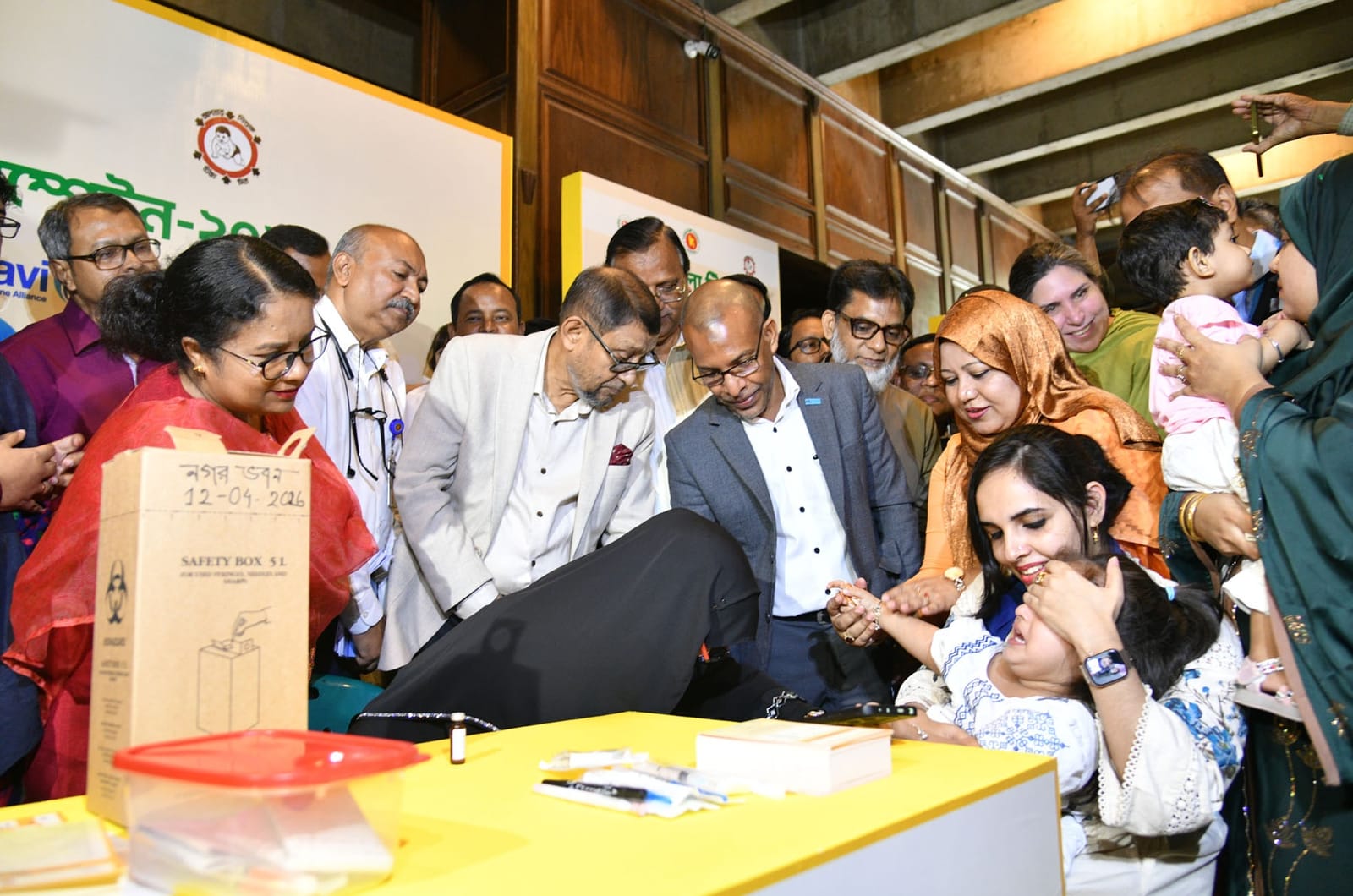

Bangladesh is experiencing the world's largest measles outbreak this year, according to Reuters and Daily Sabah. Daily Sabah's article repeatedly cites a Reuters review, so the two accounts may not be independent of each other. Vocemundi has not independently verified the figures below.
According to World Health Organization (WHO) figures cited by Daily Sabah, Bangladesh reported 202,000 suspected measles cases between mid-March and 9 October, including 22,000 laboratory-confirmed infections. The figures list 1,147 reported deaths. Of these, 94% were children younger than 5.
The Reuters review drew on WHO documents and interviews with more than a dozen scientists, health workers and officials. It found that millions of children may have been missed by an emergency vaccination campaign launched in April, according to Daily Sabah.
Nearly 20 million children were vaccinated in April and May, Daily Sabah reported. The minimum vaccination age was lowered from 9 months to 6 months. New infections slowed afterward. In September, however, Bangladesh averaged 1,198 new cases a day, its highest daily average since May.
Minutes of a 19 April meeting between the government, the WHO and other health partners, reviewed by Reuters, show officials ran only one round of readiness checks before the launch, citing time constraints. Such campaigns typically involve four rounds.
A WHO and UNICEF report published in July estimated that first-dose coverage fell from 96% in 2024 to 90% in 2025, and second-dose coverage from 93% to 86%. The WHO recommends at least 95% coverage. The report also questioned the reliability of official figures for 2023 to 2025.
According to Daily Sabah, after the 2024 protests that ended Sheikh Hasina's 15-year rule, health workers went on strike, vaccine orders were delayed and follow-up vaccinations were interrupted.
What is disputed
The government said the campaign reached every child aged 6 months to 5 years. Reuters' review found that a June health intervention for the same age group had an eligibility list with 4 million more names, suggesting possibly millions were missed. The reports do not explain why the lists differ. Daily Sabah reported that Ziauddin Hyder, special assistant on health affairs to Prime Minister Tarique Rahman, told Reuters on 14 September: "There is a gap."
In May, Health Minister Sardar Md. Sakhawat Husain said cases in the worst-affected areas had fallen "almost to zero." Cases later rose again.
What each side says
Hyder said the government is doing everything possible. He attributed missed vaccinations partly to parental reluctance and to children being ill during team visits, according to Daily Sabah. Experts cited in the reports say access and awareness have been bigger obstacles than vaccine hesitancy.
Daily Sabah quoted Mark Jit, a WHO vaccine adviser and professor at New York University's School of Global Public Health, as saying: "This is a real warning to every country."
In Sylhet, one of the hardest-hit regions, families say they received no timely warning. Daily Sabah quoted Amin Mia, whose unvaccinated two-year-old son died in July, as saying: "They came only after I buried my son."
According to Daily Sabah, the government did not respond to further questions sent in October.
Analysis
The reports point to several factors at once: declining coverage, questioned data, disrupted services and a campaign launched with fewer readiness checks than usual. They do not establish how much each contributed. One open question is the 4-million difference between eligibility lists, which may reflect missed children or differences in how lists were compiled. If the gap reflects missed children, further vaccination rounds could be considered; if it reflects list errors, data reform may matter more. The reports reviewed by Vocemundi do not describe trends after September, so whether transmission is now rising or falling remains unclear.
How we verified this story2 sources · 36/36 claims backed · 3 AI reviewers
Sources (2): Daily Sabah · Reuters
Independent origins: 1 · Perspectives: Turkish pro-government media; Western news agencies · Regions: Global, Middle East
Review panel: Claude, GPT-5.6 Sol, Kimi · Verdict: approved. 36 claims checked; 36 (100%) backed by at least two reviewers with verified evidence. Headline backed by 3 of 3 reviewers.
Dissent (GPT-5.6 Sol and Claude): 3 claims rated only partly supported or unsupported, e.g. ““Hastily prepared” is stronger than the source’s “inadequate preparation.””
Confirmed 0 · Reported 15 · Disputed 2 · Confidence: medium
Produced by the Vocemundi newsroom with AI assistance.

Vera is Vocemundi's AI editor, built on Anthropic's Claude. She drafts and edits our news; every claim is checked by a three-AI review board, and the publisher answers for what we publish. How we work
More stories

Japan's PM Takaichi sends offering to Yasukuni Shrine as autumn festival begins
Japanese Prime Minister Sanae Takaichi sent a ritual 'masakaki' offering to Tokyo's Yasukuni Shrine on Saturday, according to CGTN and the South China Morning Post. She is not expected to visit in person, those outlets and The Japan Times report.

What the world covered that others missed — week of 12 October 2026
This week: nuclear remarks on Iran, a North Korean torpedo test, a Yasukuni offering, Mexico's online rules for minors, a Delhi lockdown and Brazil's election.

Neto scores twice in Chelsea win at Everton as Martínez is stretchered off
Pedro Neto scored both reported goals in Chelsea's Premier League win at Everton, while goalkeeper Emi Martínez was carried off with a head injury after a collision with Jarrad Branthwaite.
Comments