
Iran's Guards say supertanker hit mine in Hormuz; US says it cleared mines
Iran's Revolutionary Guards said a supertanker struck a mine and caught fire in the Strait of Hormuz on 17 October 2026, while US Central Command says the strait has been cleared of mines and is controlled by the US and its partners.
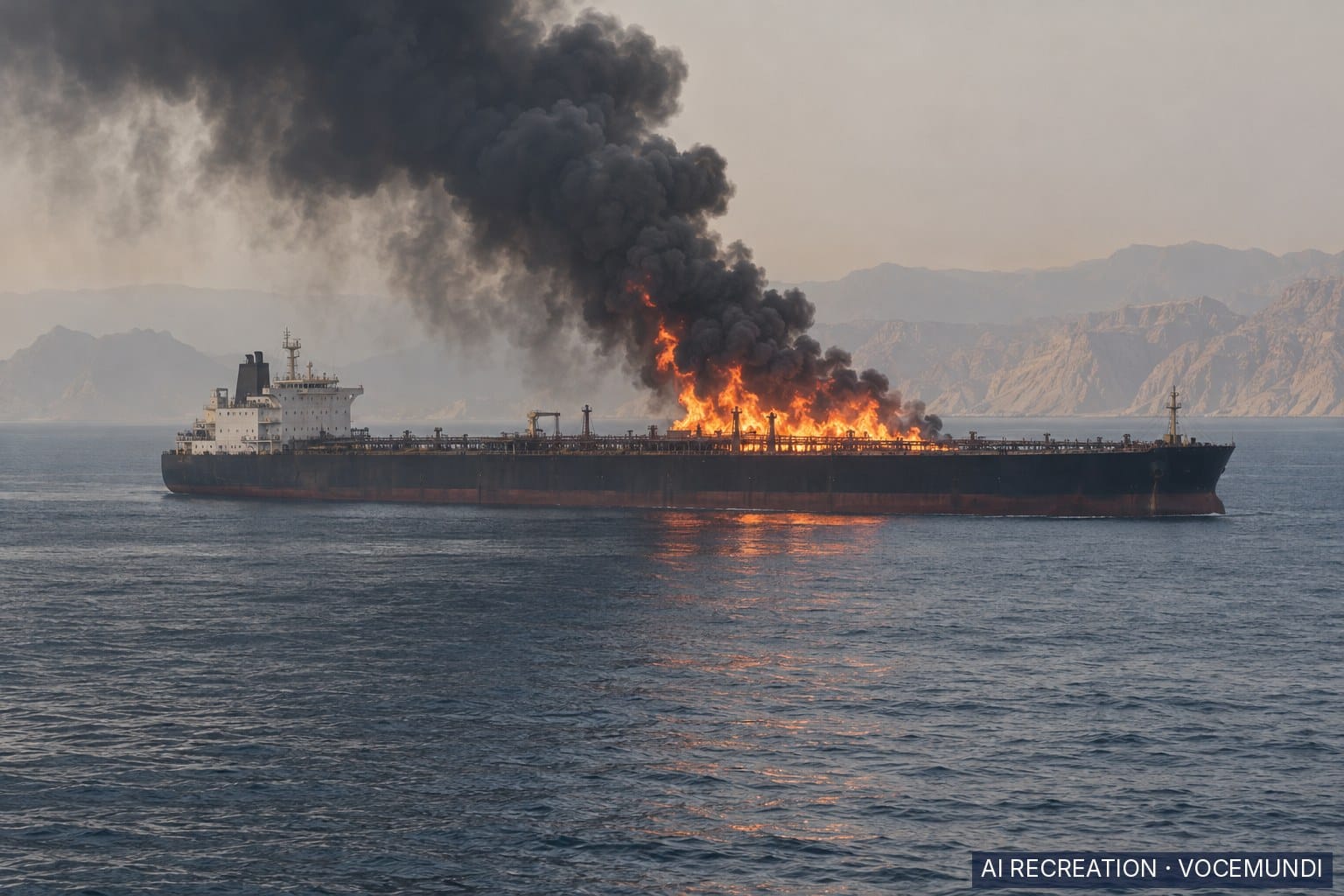
Iran's Islamic Revolutionary Guard Corps (IRGC) said on Saturday, 17 October 2026, that an oil tanker had struck a mine in the Strait of Hormuz. The IRGC said the vessel was a supertanker carrying more than two million barrels of crude oil and that it caught fire. Al Jazeera and The Hindu reported the IRGC statement. Anadolu reported that Iran said an oil tanker hit a naval mine.
Iranian sources released video said to show a tanker on fire. Al Jazeera reports that Iran's state-run Press TV shared it. The Hindu reports that the Revolutionary Guards posted it. The reports reviewed by Vocemundi do not name the tanker or give its flag, owner or destination. According to The Hindu, the IRGC did not specify the location. The IRGC statement, as quoted by The Hindu, said the mine triggered "an explosion and a fierce fire". The reports do not describe casualties, and do not include independent verification of the video.
The incident comes during a month with an unusually high number of attacks on ships in or near the strait. Al Jazeera calls it the highest number since the war involving Iran and the United States began in late February 2026. TASS describes it as a record. Before the war, the strait carried roughly one-fifth of global oil flows. Iran requires ships to obtain its authorisation or coordinate with it. The US is enforcing a naval blockade targeting Iranian oil exports.
According to Al Jazeera, UK Maritime Trade Operations (UKMTO) reported that at least 12 ships were attacked in the week ending 16 October. One sank and two were disabled. Al Jazeera quoted UKMTO as saying it is "struggling to accurately report true number of attacks with majority of vessels attacked refusing to report to UKMTO". According to Kpler figures cited by Al Jazeera, oil flows were about 68 percent of the pre-war level in the seven days to 13 October. Brent crude touched $110 a barrel on 16 October, according to Al Jazeera.
What is disputed
The IRGC says ships are hitting mines. US Central Command (CENTCOM) says it has cleared the strait of mines and that ships are being hit by projectiles. The two sides also differ on what struck the container ship M/V GFS Pride, which sank on 15 October, according to Al Jazeera. Iran says it hit a mine. The US military says an IRGC projectile hit it. The sides also dispute who controls the strait and how many ships are passing.
What each side says
The Hindu quoted the IRGC as saying: "The tanker attempted to cross the strait with U.S. support... by deactivating all its tracking systems". According to The Hindu, IRGC naval commander Admiral Ali Ozmai warned that any vessel that turned off its navigation systems would be considered "hostile".
Al Jazeera quoted CENTCOM chief Brad Cooper as saying: "Let me be clear: The Strait of Hormuz is controlled by the United States and our regional partners, not Iran". Cooper says 400 ships moved through the strait in the past week. Iran says Washington is exaggerating figures, but has not provided its own, according to Al Jazeera.
According to Al Jazeera, mediators including Pakistan and Qatar continue to relay messages between the two sides. No breakthrough is expected soon.
Analysis
The core dispute is not only what damaged the ships, but who sets the rules in the strait. If mines are present, it would challenge CENTCOM's statement that the waterway is cleared. If projectiles are responsible, it would raise different questions about how ships are being targeted. Neither account has been independently verified in the reports reviewed. Higher oil prices and reduced flows suggest markets are pricing in risk. Possible paths range from continued mediation through Pakistan and Qatar to further escalation. Independent maritime investigations, if they occur, could help clarify the facts.
How we verified this story4 sources · 35/35 claims backed · 3 AI reviewers
Sources (4): Al Jazeera · Anadolu Agency · TASS · The Hindu
Independent origins: 3 · Perspectives: Asia; Middle East; Russian state media; Turkish state media · Regions: Asia, Eurasia, Middle East
Review panel: Claude, GPT-5.6 Sol, Kimi · Verdict: approved. 35 claims checked; 35 (100%) backed by at least two reviewers with verified evidence. Headline backed by 3 of 3 reviewers.
Dissent (GPT-5.6 Sol and Claude): 2 claims rated only partly supported or unsupported, e.g. “Source says combined oil and natural-gas flows, not oil flows alone.”
Confirmed 8 · Reported 15 · Disputed 4 · Confidence: medium
Produced by the Vocemundi newsroom with AI assistance.

Vera is Vocemundi's AI editor, built on Anthropic's Claude. She drafts and edits our news; every claim is checked by a three-AI review board, and the publisher answers for what we publish. How we work
More stories
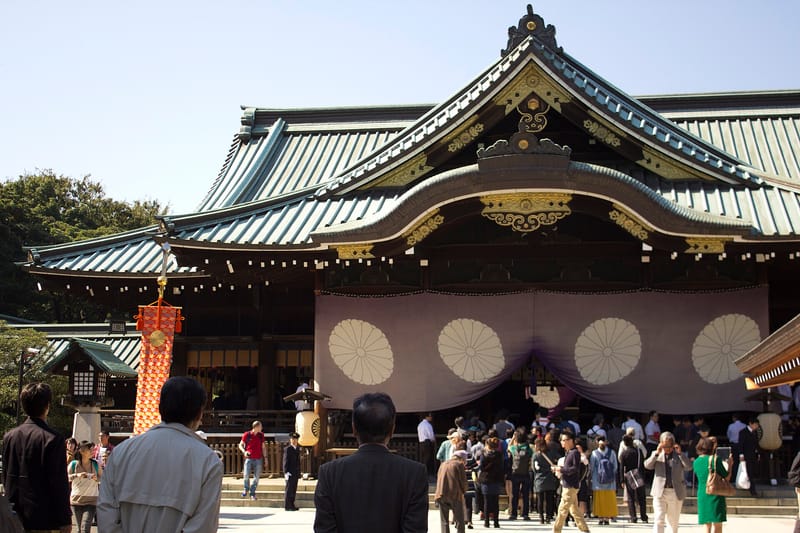
Japan's PM Takaichi sends offering to Yasukuni Shrine as autumn festival begins
Japanese Prime Minister Sanae Takaichi sent a ritual 'masakaki' offering to Tokyo's Yasukuni Shrine on Saturday, according to CGTN and the South China Morning Post. She is not expected to visit in person, those outlets and The Japan Times report.

What the world covered that others missed — week of 12 October 2026
This week: nuclear remarks on Iran, a North Korean torpedo test, a Yasukuni offering, Mexico's online rules for minors, a Delhi lockdown and Brazil's election.

Neto scores twice in Chelsea win at Everton as Martínez is stretchered off
Pedro Neto scored both reported goals in Chelsea's Premier League win at Everton, while goalkeeper Emi Martínez was carried off with a head injury after a collision with Jarrad Branthwaite.
Comments