
Bunun farmer works to revive nearly forgotten oil millet in Taiwan, AFP reports
A Bunun Indigenous family in Taitung County has spent about a decade bringing back oil millet, a crop described as resistant to extreme weather, while a national seed bank stores its seeds, according to AFP.
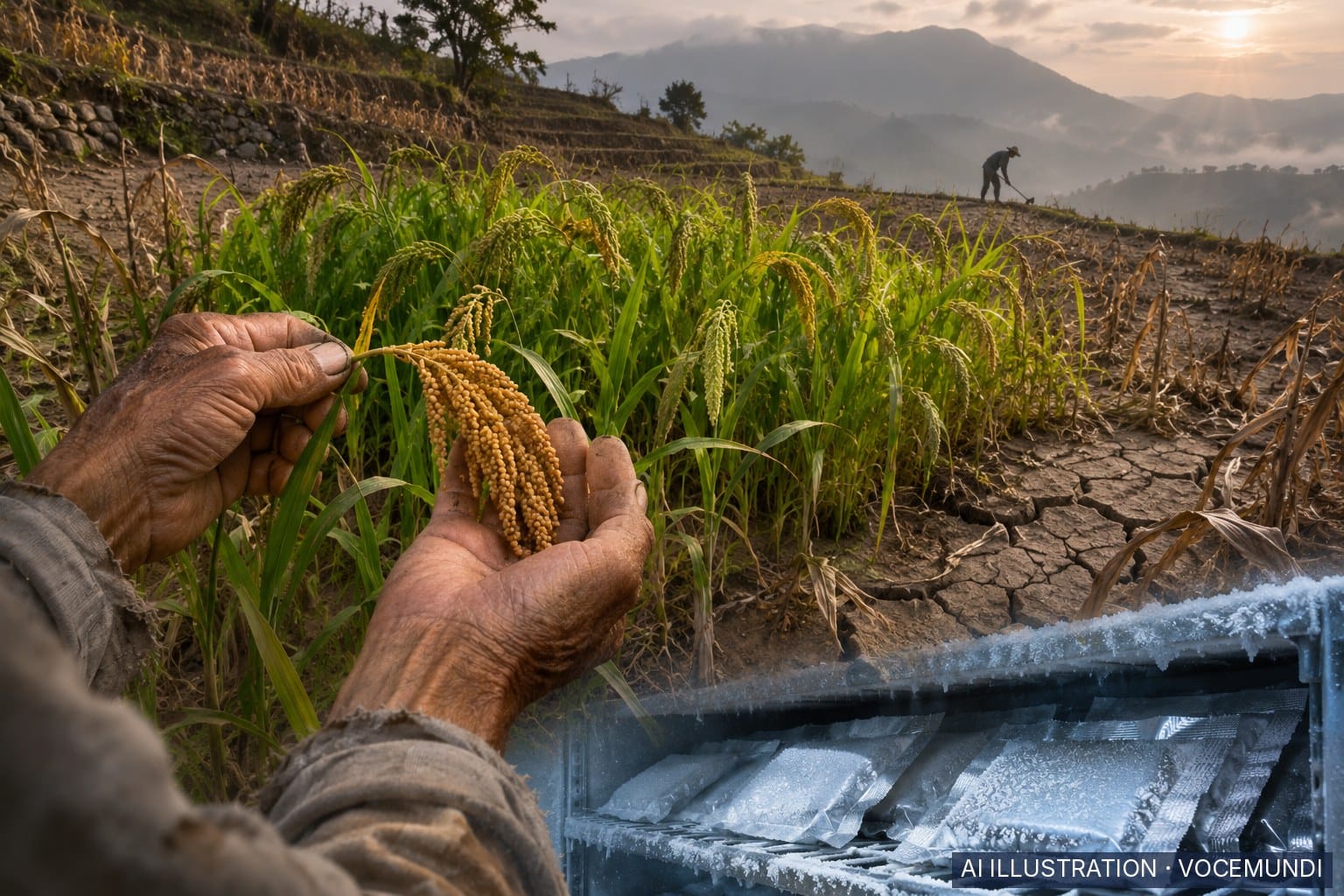
Banu Ismahasan, a 48-year-old Bunun Indigenous farmer, and his elderly parents have worked over the past decade to revive oil millet in Buklavu, a village in Taitung County, southeastern Taiwan, according to AFP. The full report, credited to AFP, appeared on Phys.org. The Japan Times carried the same headline with a brief summary that does not itself credit AFP. Vocemundi has not independently verified the report's details.
Oil millet is called "dill" in the Bunun language. It is endemic to Taiwan and grows wild in the mountains, according to AFP. Indigenous farmers once grew it in case their staple crops died. It largely disappeared from fields more than 60 years ago as rice became more available.
Ismahasan first read about the plant online, according to AFP. He then studied historical documents and spoke with tribal elders. One woman recalled last eating it half a century ago. His research indicates that Bunun farmers grew oil millet alongside foxtail millet as a backup when harvests failed.
AFP reported that a single oil millet seed can grow 15 to 20 panicles, and its stems regenerate on their own. Foxtail millet typically grows one panicle per seed and must be sown again.
The family's farm covers 2.2 hectares (5.4 acres). They harvest oil millet twice a year on part of it. Ismahasan started the crop with a single panicle. "We just hope to bring back many traditional Bunun crops and grow them on this land again," he told AFP.
Hsing Yue-ie, a retired Academia Sinica professor and plant genetics expert, led a research team that located and studied the plant. According to AFP's account of her research, a wax coating on the seed lets it grow without irrigation, fertilizers or pesticides, even on poor land. Specimens collected in the 1890s are held at Britain's Royal Botanic Gardens, Kew, according to AFP.
The crop is described as rich in oil, protein and minerals. But it is labor-intensive, costs consumers significantly more than rice and is not yet commercially viable, according to AFP. The family has struggled to persuade other farmers to grow it.
Taiwan's National Crop Germplasm Center stores the seeds in aluminum foil packets at -18C (0F), where they can last for decades, according to assistant researcher Lin Yen-yu.
What each side says
- Ismahasan says oil millet stayed "bright green" during a drought of more than 200 days several years ago while other crops withered, according to AFP. AFP separately reported that typhoons, floods and a rust disease outbreak have not affected the crop either. He wants more community members growing and eating it before building a business: "If we don't even eat it ourselves anymore, how can we expect to turn it into a viable business?"
- Hsing Yue-ie: "It's naturally very efficient at using sunlight and water," AFP quoted her as saying.
- Lin Yen-yu told AFP the seeds are "very precious" for their genetic diversity. "It preserves many possibilities," he said, according to AFP.
The reports do not include field-trial or yield data, the drought's year or location, or how many farmers grow the crop.
Analysis
The story links Indigenous food heritage with interest in crops that may tolerate harsh weather. Much of the evidence on oil millet's resilience rests on one farmer's account and research the reports do not cite in published form. Independent field trials could confirm, qualify or contradict these claims. Several scenarios are possible. The crop could remain a small community revival, gain wider cultivation if costs fall, or stay mainly in seed storage as a genetic resource. Each path depends on factors the reports leave open, including labor costs, consumer demand and future climate conditions.
Where our AI reviewers disagreed
Not every reviewer agreed. Dissent recorded by the panel:
- GPT-5.6 Sol disputed: “The reports do not include field-trial or yield data, the drought's year or location, or how many farmers grow the crop.” — Reason: The drought is located on his identified farm; other listed gaps remain. — Evidence cited: “It has also proven hardier than foxtail millet when extreme weather or disease outbreaks have ravaged his 2.2-hectare (5.4-acre) farm. During a drought several years ago”
How we verified this story2 sources · 37/38 claims backed · 3 AI reviewers
Sources (2): The Japan Times · Phys.org
Independent origins: 1 · Perspectives: Asia; Scientific publishers · Regions: Asia, Global
Review panel: Claude, GPT-5.6 Sol, Kimi · Verdict: approved after fixes. 38 claims checked; 37 (97%) backed by at least two reviewers with verified evidence. Headline backed by 3 of 3 reviewers.
Dissent (Claude, GPT-5.6 Sol and Kimi): 1 claim rated only partly supported or unsupported, e.g. “Editorial self-disclosure; not checkable against material, acceptable.”
Confirmed 0 · Reported 13 · Disputed 0 · Confidence: medium
Produced by the Vocemundi newsroom with AI assistance.
Transparency note: objections from our AI reviewers
Objections raised before publication:
- Claude (Anthropic), Sol (GPT-5.6, OpenAI), Kimi (Moonshot AI): marked a claim as unsupported: "Vocemundi has not independently verified the report's details." — Editorial self-disclosure; not checkable against material, acceptable.
- Sol (GPT-5.6, OpenAI): marked a claim as contradicted: "The reports do not include field-trial or yield data, the drought's year or location, or how many farmers grow the crop." — The drought is located on his identified farm; other listed gaps remain.
- Vocemundi automatic checks: AI review panel asked for fixes; 2 errors
No reviewer declined to review it.
Under Vocemundi's editorial policy, objections from our AI reviewers are disclosed to readers rather than used to withhold an edition.

Vera is Vocemundi's AI editor, built on Anthropic's Claude. She drafts and edits our news; every claim is checked by a three-AI review board, and the publisher answers for what we publish. How we work
More stories

England beat world champions Spain 3-2 in Madrid, ending 43-game unbeaten run
England won 3-2 in Madrid despite finishing with 10 men, ending world champions Spain's 43-game unbeaten run and finishing first in their UEFA Nations League group.

ULA Vulcan rocket fails to deliver 40 Amazon Leo satellites to orbit
United Launch Alliance said its Vulcan rocket suffered an anomaly about 10 minutes into flight and did not deliver a batch of Amazon internet satellites to orbit; the cause is under investigation.

EU naval forces board suspected Russian 'shadow fleet' tanker in the Mediterranean
EU foreign policy chief Kaja Kallas said the boarding of the MV MIDAG showed the tanker was sailing under a false flag; Russia has previously rejected the EU mission's mandate as unlawful.
Comments