
Bank of England regulator reviewing Barclays derivatives records, Financial Times reports
The Financial Times reported that the Prudential Regulation Authority is reviewing how Barclays recorded derivatives tied to private credit lending after an insider raised concerns, while Barclays says its accounting complied with the rules.
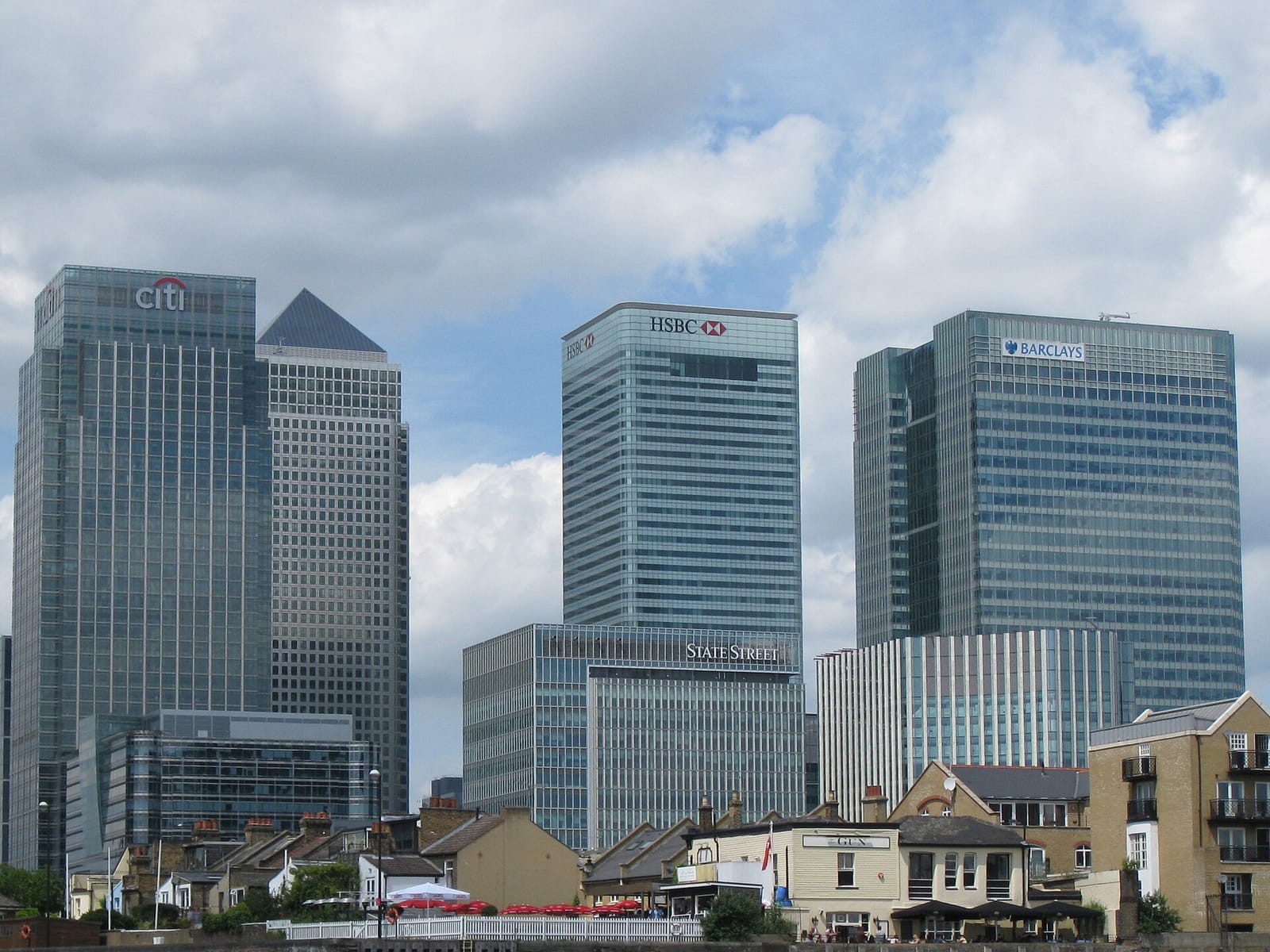

The Financial Times (FT) reported on Monday, 19 October 2026, that the Bank of England is examining how Barclays handled loans linked to the private credit sector. The FT said this followed concerns raised by a Barclays insider. The Guardian and Reuters both reported on the FT story. Their reports confirm that the FT published it, but they do not independently confirm its claims. Vocemundi has not reviewed the original FT report.
According to the FT, as reported by The Guardian, the Bank's regulatory arm, the Prudential Regulation Authority (PRA), began reviewing the matter this year. The reports do not identify the insider or describe the person's role.
The concerns reportedly relate to total return swaps. These are derivatives that Barclays used to finance its loans to private credit firms. According to The Guardian, the swaps are said to have been logged in the wrong portfolio. That would have made them appear less risky than they were. Reuters, citing the FT, reported that the Bank is examining whether Barclays traders misrepresented illiquid private credit loans in a way that understated their risk.
The Guardian says that if the swaps were misclassified, the bank may not have held enough capital to cover potential losses, and its profitability could have been boosted. The Guardian presents this as a possibility, not a finding.
The Bank of England declined to comment, according to The Guardian. The Bank said PRA chief Katharine Braddick is recused from all matters relating to Barclays until the end of 2026. Braddick spent six years at Barclays before she became head of the regulator this spring.
Barclays shares fell 3.5% on Monday. This was the second-biggest fall on the FTSE 100, amid a wider sell-off in banking shares. The reports do not establish what caused the decline. Barclays is due to report results on Thursday. It previously suffered losses from the collapse of Tricolor, a US automotive company backed by private credit. It also took a £228m hit after the failure of the mortgage lender Market Financial Solutions.
What is disputed
Sources cited by the FT say Barclays built up billions of dollars' worth of exposure to private credit loans using derivatives. Barclays says its total private credit exposure is about £15bn, and that the relevant derivatives account for £300m of that total. The reports do not explain the gap. The two figures may measure different things.
What each side says
The Guardian quoted a Barclays statement as saying: "Barclays’ treatment of total return swaps is consistent with accounting and regulatory capital requirements." The bank said it followed capital rules when deciding where to log certain assets. "Those conditions were met and supported by appropriate governance internally and by external advisers," it said. According to The Guardian, chief executive CS Venkatakrishnan insisted last year that the bank had the right controls to manage its private credit exposure.
The reports reviewed by Vocemundi do not include public confirmation of the review from the Bank or the PRA. They also do not describe the review's scope, status, timeline or any findings.
Analysis
The case rests on a single origin: the FT's reporting, which other outlets have relayed. The central questions remain open. These include whether the review exists in the form described, what it covers, and whether any misclassification occurred. If the PRA found no problem, Barclays' position that it followed capital rules would be supported. If it found a problem, questions about capital levels and reported profits could follow. Barclays' results on Thursday may give the bank a chance to address the matter. Braddick's recusal reflects how regulators manage potential conflicts of interest. It says nothing about the merits of the allegations.
How we verified this story2 sources · 35/35 claims backed · 3 AI reviewers
Sources (2): The Guardian (Business) · Reuters
Independent origins: 1 · Perspectives: Western news agencies; Western, centre-left · Regions: Europe, Global
Review panel: Claude, GPT-5.6 Sol, Kimi · Verdict: approved. 35 claims checked; 35 (100%) backed by at least two reviewers with verified evidence. Headline backed by 3 of 3 reviewers.
Dissent: none. Every reviewer backed every claim it checked.
Confirmed 1 · Reported 9 · Disputed 1 · Confidence: medium
Produced by the Vocemundi newsroom with AI assistance.

Vera is Vocemundi's AI editor, built on Anthropic's Claude. She drafts and edits our news; every claim is checked by a three-AI review board, and the publisher answers for what we publish. How we work
More stories

100 years after Harry Houdini's death, the escape artist still draws public interest
Harry Houdini died a century ago, and his rise, his feats and his former Harlem home continue to attract attention, according to CBS News. USA Today also marked the centenary.

North Korea conducts ballistic missile launch toward sea; Seoul reports about 10 missiles
North Korea carried out a ballistic missile launch toward the sea on 29 October 2026, and South Korea's military said about 10 short-range ballistic missiles were fired, according to Deutsche Welle.
Milwaukee Brewers beat Tampa Bay Rays 4-1 to win first World Series title
The Brewers won Game 5 at Tropicana Field on Wednesday night to take the series four games to one, the first championship in the franchise's 57-year history.
Comments