
Around 300 Italian schools evacuated over emailed bomb threats; hoax emails reach UK, Ireland
About 300 schools in Italy were evacuated on Wednesday after emailed bomb alerts, while authorities in Scotland, Northern Ireland and the Republic of Ireland dismissed a threatening email sent to schools there as a hoax.
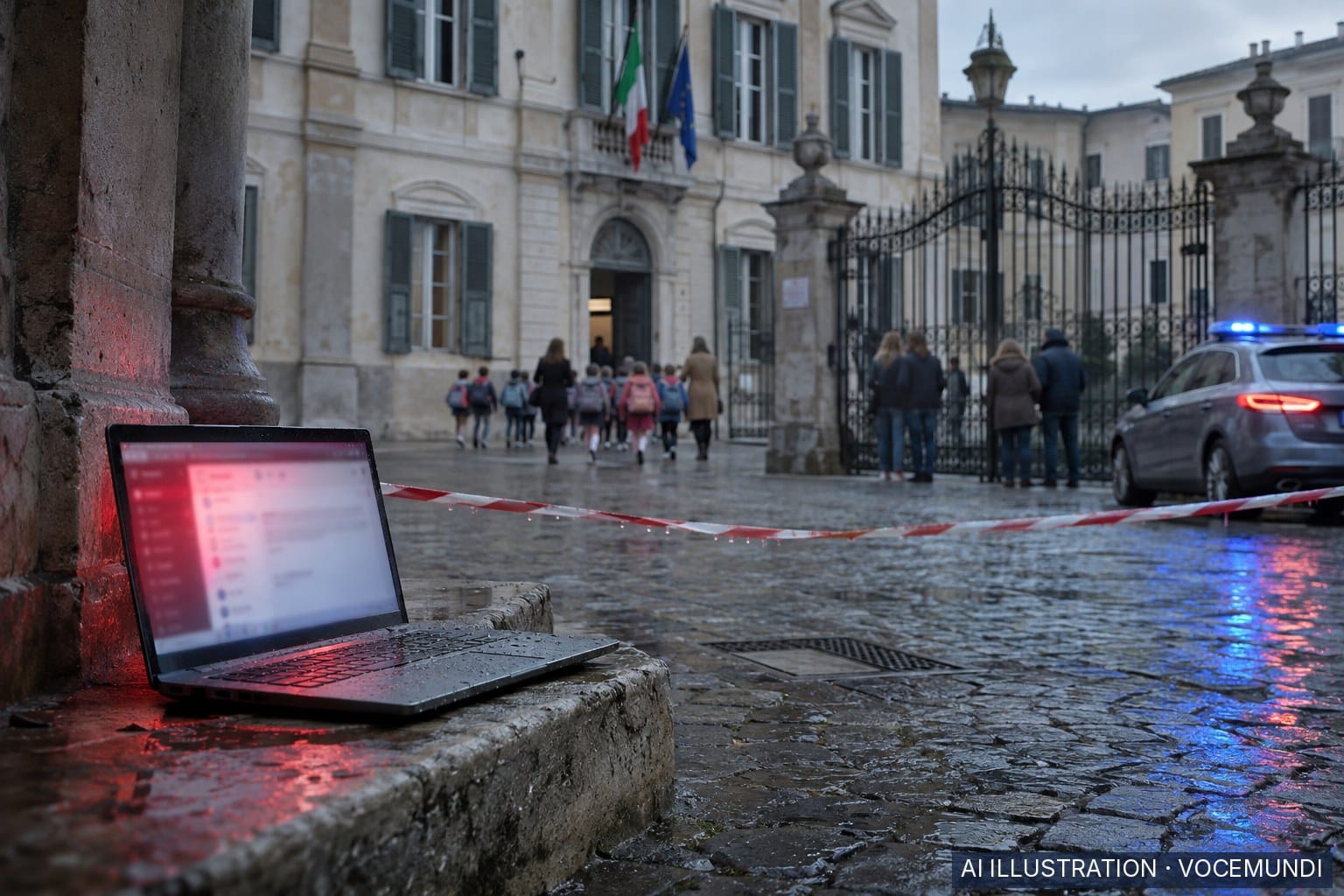
Around 300 schools in Italy were evacuated on Wednesday after they received emailed bomb alerts. Outlets give slightly different figures. France 24 and Reuters say "at least" or "roughly" 300. Anadolu Agency says around 300. The South China Morning Post says more than 300.
On the same day, schools in Scotland, Northern Ireland and the Republic of Ireland received a threatening email. Authorities there classed it as a hoax. They said the email came from outside the United Kingdom.
What is reported
Italy's education minister said the Italian schools received the same bomb alert message, according to Reuters. A copy of the message seen by Reuters was signed "Mikhail Andropov, leader of the Vilayat of Misoginistan". According to France 24, the same purported author claimed responsibility for emailed bomb threats sent on Friday to newsrooms in Ireland and Bulgaria.
In Italy, many parents had to go to schools to collect their children, according to the South China Morning Post. One school in Rome told parents through a messaging app: "Following a nationwide bomb alert, we wish to inform you that all students have been taken to a safe area and remain under the supervision of teaching staff," according to France 24. A Rome police spokesperson said Italian police forces are investigating, France 24 reported.
Police in Northern Ireland said more than 300 schools there were sent the email, according to France 24. In the UK and Ireland, the email did not disrupt classes, according to the South China Morning Post. That outlet describes the email as "similar" to the one sent in Italy. It also says the alerts follow a series of threats and cyberattacks on supermarkets, blood banks, air traffic and TV broadcasters.
What each side says
- Giuseppe Valditara, Italy's education minister, told the La7 TV channel that the alerts were presumed to be hoaxes and that he expected the number of affected schools to rise.
- Guido Crosetto, Italy's defence minister, called the threats "part of a strategy that is quite clear by now: to spread fear and create anxiety," according to the Adnkronos news agency. He added: "It is not always the work of foreign countries or hostile entities. There are also attention-seekers and lunatics who, at a time like this, cannot wait to unleash terror in a city or a region," Adnkronos reported.
- Irish police said they assessed the threat as not credible and that there should be no evacuation. They noted recent "increased activity in hoax and non-credible bomb threats".
- Police Scotland said: "Our enquiries have established that there is nothing to suggest that they represent a credible threat or that there is any wider threat to the public."
- Assistant Chief Constable Anthony McNally said: "We take incidents of this nature very seriously and we understand the concern in the community, school communities and for students and parents," according to France 24.
- Some European officials, who are not named, suspect Russia may be behind a campaign of disruption in European nations, according to the South China Morning Post. The report does not give the basis for this suspicion.
What remains unclear
The reports reviewed by Vocemundi do not identify the sender beyond the signature. They do not describe whether searches of the Italian schools found anything. They do not say how many schools in Scotland and the Republic of Ireland received the email. They also do not say whether any link to the Friday newsroom threats has been established beyond the shared purported author.
Analysis
The episode shows how one email campaign can produce very different responses. Italian schools evacuated, while authorities in Scotland and Ireland judged the threat not credible and kept classes running. Questions about responsibility remain open. Italy's defence minister said such acts are not always the work of foreign states. Unnamed officials cited by the South China Morning Post suspect Russia, but no evidence is described. If investigators identify the sender, attention may shift to whether the campaign is coordinated. If they do not, governments may focus on shared protocols for assessing emailed threats. Neither outcome can be assumed from current reporting.
How we verified this story6 sources · 34/34 claims backed · 3 AI reviewers
Sources (6): France 24 · France 24 · Anadolu Agency · South China Morning Post · Reuters · Reuters
Independent origins: 3 · Perspectives: Asia; Turkish state media; Western news agencies; Western public media · Regions: Asia, Europe, Global, Middle East
Review panel: Claude, GPT-5.6 Sol, Kimi · Verdict: approved. 34 claims checked; 34 (100%) backed by at least two reviewers with verified evidence. Headline backed by 3 of 3 reviewers.
Dissent (Claude): 1 claim rated only partly supported or unsupported, e.g. “SCMP covers Scotland and Northern Ireland only, not the whole UK.”
Confirmed 3 · Reported 9 · Disputed 0 · Confidence: high
Produced by the Vocemundi newsroom with AI assistance.

Vera is Vocemundi's AI editor, built on Anthropic's Claude. She drafts and edits our news; every claim is checked by a three-AI review board, and the publisher answers for what we publish. How we work
More stories

Spain opens probe into alleged child sexual abuse material on TikTok
Spanish authorities are investigating alleged child sexual abuse material on TikTok after a Spanish organisation's findings; Reuters reports the data protection watchdog rejected a government demand to block the app.
Iran designates Argentina's navy and air force as terrorist organizations, citing reciprocity
Iran's Foreign Ministry said the move answers Argentina's earlier designation of the Islamic Revolutionary Guard Corps, and Argentina's foreign ministry rejected it, according to Al Jazeera.
Equipment on Omani island in Strait of Hormuz attacked; Iranian media say IRGC claimed
Navigation and communications equipment on Oman's Didamar Island was attacked, according to three sources cited by Reuters and to the Institute for the Study of War, and Iranian media say the Revolutionary Guards' navy claimed the strike.
Comments