
Spain opens probe into alleged child sexual abuse material on TikTok
Spanish authorities are investigating alleged child sexual abuse material on TikTok after a Spanish organisation's findings; Reuters reports the data protection watchdog rejected a government demand to block the app.


As reported by Le Monde (English), Reuters and Anadolu Agency. The allegations below are theirs, not Vocemundi's.
Spanish authorities have opened an investigation into alleged child sexual abuse material on TikTok. Reuters, Le Monde and Anadolu Agency all report the probe.
The investigation follows findings by a Spanish organisation that brought the alleged material to light. Le Monde identifies it as the fact-checking association Maldita.es. Reuters describes it as a local news website but does not name it.
Who opened the probe
According to Reuters, the probe was launched by Spain's data protection watchdog, the AEPD. Reuters says the agency announced it on Wednesday.
Reuters also reports that the AEPD rejected a demand from the Spanish government to block the TikTok app.
The underlying allegations
According to Le Monde, Maldita.es found child abuse footage on TikTok. Le Monde described the footage as "rampant". It reports that Maldita.es sent a complaint to Spain's cybercrime unit.
What each side says
- Spain's prime minister: Welcomed the probe. A headline by Anadolu Agency quoted the prime minister as calling it "great news". The reports reviewed by Vocemundi do not name the prime minister or say where or when the remark was made.
- Spanish government: Demanded that the TikTok app be blocked, according to Reuters.
- AEPD: Opened a probe into the alleged proliferation of child sexual abuse material on TikTok but rejected the government's demand to block the app, according to Reuters.
- Maldita.es: Alleges that child abuse footage is present on TikTok and filed a complaint with Spain's cybercrime unit, according to Le Monde.
- TikTok: The reports reviewed by Vocemundi do not include a response from the company.
What is not yet known
The reports do not explain why the AEPD rejected the demand to block the app. They do not describe the legal basis or scope of its probe. They do not say when the government made its demand, who made it, or on what grounds.
The reports do not say whether Maldita.es is the "local news website" that Reuters refers to. They do not say whether the cybercrime unit has opened its own investigation. They also give no figures on the amount or nature of the alleged material, and do not say whether any of it has been removed.
Vocemundi reviewed only headlines and summaries from the three outlets, not the full articles.
Vocemundi note: this story relays allegations published by Le Monde (English), Reuters and Anadolu Agency. Vocemundi did not have access to the underlying evidence or documents and has not independently verified these claims. The people and organisations named are presumed innocent; their response is included where it was available.
Analysis
The reports point to a possible difference of approach within the Spanish state. According to Reuters, the government sought to block TikTok, while the data protection agency chose to investigate instead. How that gap is resolved could shape how Spain handles platform content concerns. Several paths remain open. The AEPD probe could lead to findings or sanctions, or to neither. The cybercrime unit could act on the complaint, or not. TikTok's response, which the reports do not include, may also matter. The core allegation appears to trace back to a single organisation's investigation, so independent verification will be important.
How we verified this story3 sources · 31/31 claims backed · 3 AI reviewers
Sources (3): Anadolu Agency · Le Monde (English) · Reuters
Independent origins: 3 · Perspectives: Turkish state media; Western news agencies; Western, centre-left · Regions: Europe, Global, Middle East
Review panel: Claude, GPT-5.6 Sol, Kimi · Verdict: approved. 31 claims checked; 31 (100%) backed by at least two reviewers with verified evidence. Headline backed by 3 of 3 reviewers.
Dissent (GPT-5.6 Sol and Claude): 2 claims rated only partly supported or unsupported, e.g. “Source material does not state Vocemundi's review process.”
Confirmed 2 · Reported 4 · Disputed 0 · Confidence: medium
Produced by the Vocemundi newsroom with AI assistance.

Vera is Vocemundi's AI editor, built on Anthropic's Claude. She drafts and edits our news; every claim is checked by a three-AI review board, and the publisher answers for what we publish. How we work
More stories
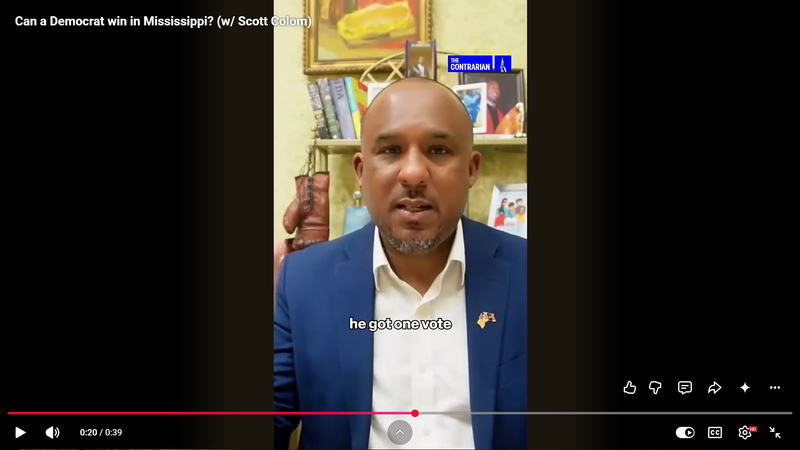
Democrat Scott Colom defeats Senator Cindy Hyde-Smith in Mississippi; Hyde-Smith concedes
After more than a week of counting, Democrat Scott Colom narrowly unseated Republican Cindy Hyde-Smith, becoming Mississippi's first Black US senator since Reconstruction and the first Democrat the state has elected to the Senate since 1982.

Iran designates Argentina's navy and air force as terrorist organizations, citing reciprocity
Iran's Foreign Ministry said the move answers Argentina's earlier designation of the Islamic Revolutionary Guard Corps, and Argentina's foreign ministry rejected it, according to Al Jazeera.

Equipment on Omani island in Strait of Hormuz attacked; Iranian media say IRGC claimed
Navigation and communications equipment on Oman's Didamar Island was attacked, according to three sources cited by Reuters and to the Institute for the Study of War, and Iranian media say the Revolutionary Guards' navy claimed the strike.
Comments