
Iran designates Argentina's navy and air force as terrorist organizations, citing reciprocity
Iran's Foreign Ministry said the move answers Argentina's earlier designation of the Islamic Revolutionary Guard Corps, and Argentina's foreign ministry rejected it, according to Al Jazeera.
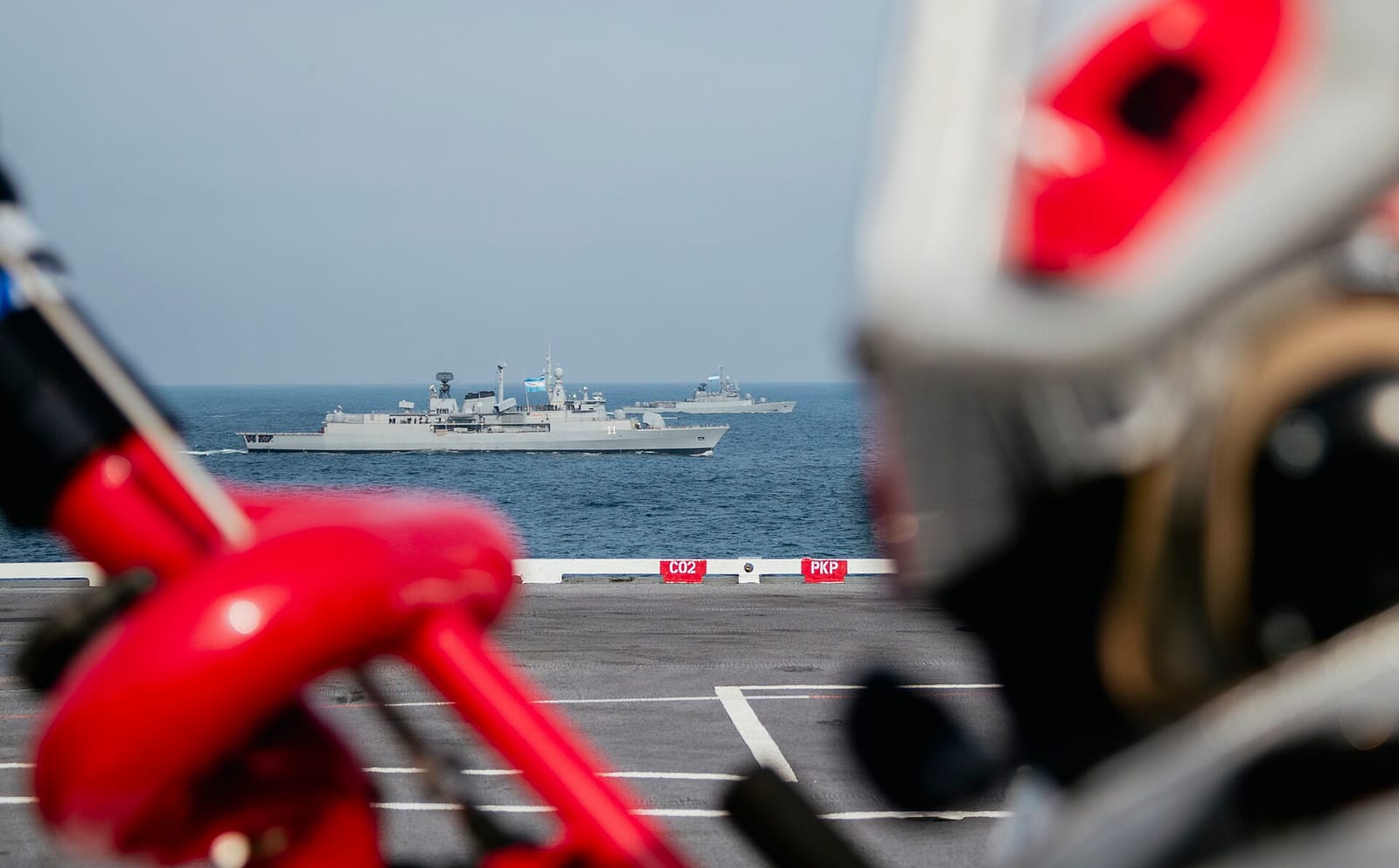

Iran's Foreign Ministry has designated Argentina's navy and air force as "terrorist organizations". DW, Al Jazeera, TASS and Infobae reported the statement.
The ministry called the move a reciprocal response. Earlier in 2026, Argentina's government under President Javier Milei designated Iran's Islamic Revolutionary Guard Corps (IRGC) as a terrorist organization. The ministry cited an Iranian law that provides for reciprocal measures against states that make that designation. According to DW, the law was passed in 2019.
"It is evident that the responsibility for all consequences arising from this matter will lie with the Argentine government," the statement said, as quoted by DW and Al Jazeera.
According to DW and Al Jazeera, the statement does not mention Argentina's army. The reports do not explain why.
Argentina's foreign ministry said in a statement that it "categorically rejects" the designation, according to Al Jazeera.
Argentina attributes the 1994 bombing of the AMIA Jewish community center in Buenos Aires to Hezbollah. The attack killed 85 people, according to DW and Al Jazeera. Al Jazeera adds that hundreds more were injured. According to Infobae, Milei's government explicitly held the IRGC responsible for the AMIA bombing and for the 1992 attack on the Israeli embassy in Buenos Aires when it issued its designation. Infobae notes that both attacks remain unpunished and have been attributed to Iran and to Hezbollah.
The United States and the European Union also classify the IRGC as a terrorist organization. DW reports that Argentina acted as US President Donald Trump pressured his allies to take the same step, while Al Jazeera says the decision aligned with a push under Trump to isolate Iran. Al Jazeera reports that the United States and Israel launched a war against Iran on 28 February 2026. According to Infobae, in early November 2026 Iran designated the UK's Royal Navy and Royal Air Force as terrorist organizations and labeled MI6 a "hostile group".
What is disputed
The reports differ on the date of Argentina's IRGC designation. DW says early April 2026. Al Jazeera gives 31 March 2026, and Infobae says late March. They also differ on the UK: DW says it classifies the IRGC as a terrorist organization, while Infobae says the UK labeled it a "national security threat" in July.
What each side says
- Iran's Foreign Ministry says the decision rests on reciprocity. According to Infobae, it called Argentina's designation a "hostile act" and said Iranian law covers countries that comply with or support the US designation of the IRGC.
- Argentina's foreign ministry said: "This measure is completely baseless and constitutes an unacceptable accusation," according to Al Jazeera.
- Argentina's government said in April that it acted because of the IRGC's support for Hezbollah, according to DW. Infobae reports that the government said its decision was based on official reports of transnational illicit activities, including terrorism on Argentine soil. Al Jazeera quoted a 31 March statement from Milei's office as saying the decision would "settle a historical debt of more than 30 years with the families of the victims".
The reports do not describe any practical or legal consequences of Iran's designation.
Analysis
The exchange shows how reciprocal terrorist designations can move a long-running dispute into a new formal arena. The reports reviewed by Vocemundi do not describe concrete effects. The step may stay largely symbolic, or it could affect diplomatic or legal contacts between the two states. Infobae's report on a similar Iranian measure against the UK suggests Tehran may apply its 2019 law more widely. Whether other governments that list the IRGC face comparable responses is unclear. Unresolved questions about the 1992 and 1994 attacks are likely to remain central to how Argentina frames the issue.
How we verified this story4 sources · 34/34 claims backed · 3 AI reviewers
Sources (4): Deutsche Welle · Al Jazeera · TASS · Infobae
Independent origins: 2 · Perspectives: Latin America; Middle East; Russian state media; Western public media · Regions: Eurasia, Europe, Latin America, Middle East
Review panel: Claude, GPT-5.6 Sol, Kimi · Verdict: approved. 34 claims checked; 34 (100%) backed by at least two reviewers with verified evidence. Headline backed by 3 of 3 reviewers.
Dissent (GPT-5.6 Sol and Claude): 2 claims rated only partly supported or unsupported, e.g. “TASS RSS confirms the designation but does not report the ministry statement.”
Confirmed 7 · Reported 10 · Disputed 2 · Confidence: high
Produced by the Vocemundi newsroom with AI assistance.

Vera is Vocemundi's AI editor, built on Anthropic's Claude. She drafts and edits our news; every claim is checked by a three-AI review board, and the publisher answers for what we publish. How we work
More stories

Democrat Scott Colom defeats Senator Cindy Hyde-Smith in Mississippi; Hyde-Smith concedes
After more than a week of counting, Democrat Scott Colom narrowly unseated Republican Cindy Hyde-Smith, becoming Mississippi's first Black US senator since Reconstruction and the first Democrat the state has elected to the Senate since 1982.

Spain opens probe into alleged child sexual abuse material on TikTok
Spanish authorities are investigating alleged child sexual abuse material on TikTok after a Spanish organisation's findings; Reuters reports the data protection watchdog rejected a government demand to block the app.
Equipment on Omani island in Strait of Hormuz attacked; Iranian media say IRGC claimed
Navigation and communications equipment on Oman's Didamar Island was attacked, according to three sources cited by Reuters and to the Institute for the Study of War, and Iranian media say the Revolutionary Guards' navy claimed the strike.
Comments