
Russia says it will bar two French lawmakers, two journalists over Fedorova expulsion
Russia's Foreign Ministry says it will ban four French nationals from entering Russia in response to France's July 2026 expulsion of former RT France head Xenia Fedorova.
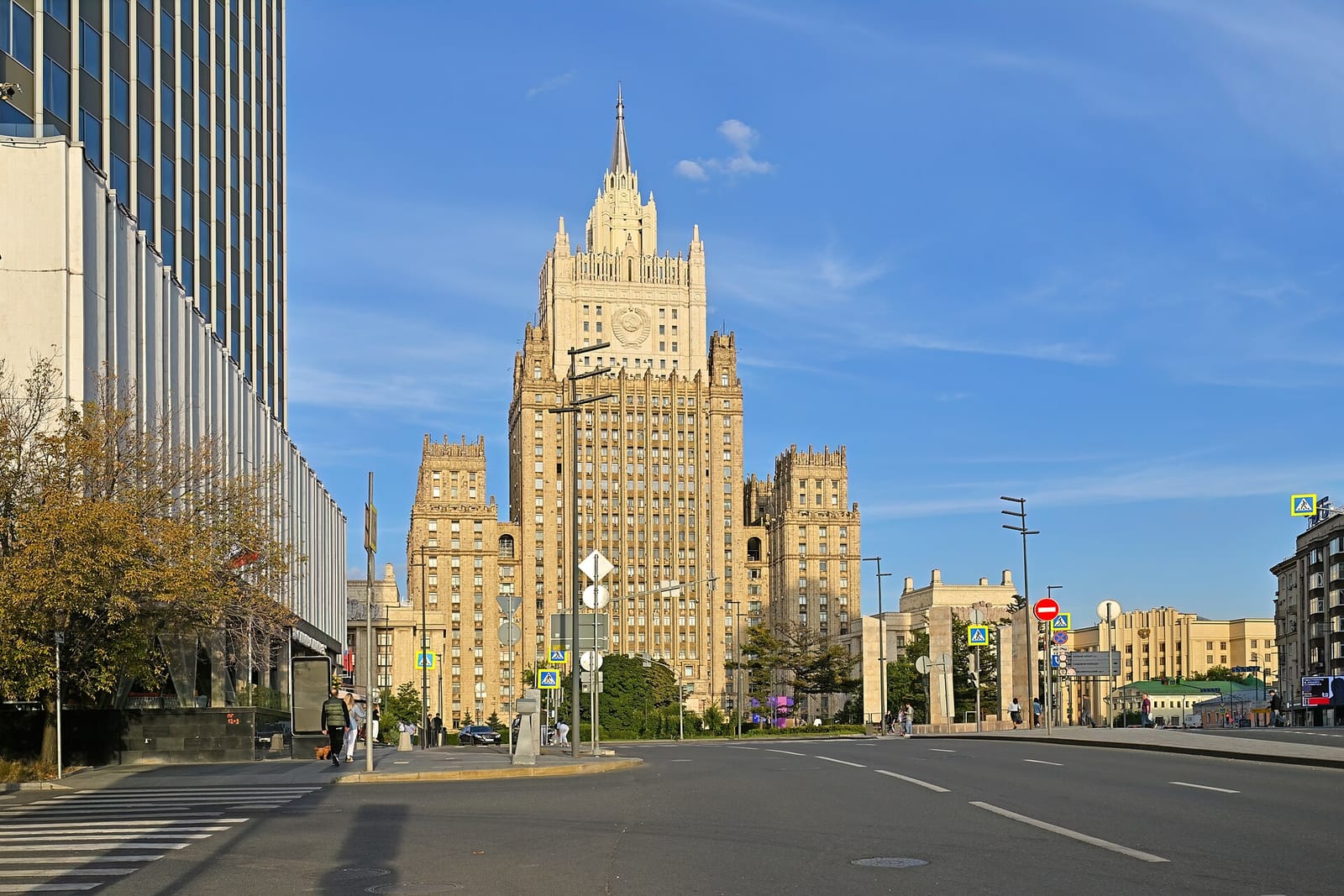

Russia will bar two French lawmakers and two French journalists from entering the country, Russian Foreign Ministry spokeswoman Maria Zakharova said on Wednesday, 11 November 2026.
The four are lawmakers Sacha Houlié and Arthur Delaporte and journalists Paul Gogo and Ariane Chemin. According to Le Monde, Chemin works at Le Monde.
Zakharova presented the ban as a response to France's expulsion of Xenia Fedorova, a former head of RT France. France expelled Fedorova in July 2026 on the order of Interior Minister Laurent Nuñez. Fedorova has written for right-wing French media. According to Al Jazeera, she headed RT France from 2017 to 2023.
Since Russia began its full-scale invasion of Ukraine in February 2022, it has barred dozens of Western journalists and lawmakers from entering the country.
The reports reviewed by Vocemundi do not include the full text of Zakharova's statement. They do not say how long the bans last, how they will be enforced or why these four people were chosen. They do not name Gogo's employer. They also do not include reactions from Delaporte, Gogo or Chemin, or an official response from the French government.
What is disputed
The accounts differ slightly on which minister carried out the expulsion. France 24 reports that Foreign Minister Jean-Noël Barrot described Fedorova as an "agent of influence" and that Nuñez ordered her expulsion. Al Jazeera's wording can be read as saying Barrot expelled her, but the same report also says Nuñez ordered the expulsion.
What each side says
Zakharova said the bans respond to what she called the "harassment" of Fedorova, according to France 24. According to France 24 and Al Jazeera, Moscow had pledged for months to retaliate over what it described as Fedorova's persecution.
When Nuñez ordered the expulsion, he accused Fedorova of relaying Russian propaganda in an attempt to attack "the fundamental interests of the nation", France 24 reported. Fedorova denounced what she called "censorship" against her.
Al Jazeera quoted Houlié as writing in a post on X: "What is intended as a sanction strikes me as recognition of my work against foreign interference in France." In the same post, he cited his work "From my report for the Parliamentary Intelligence Delegation to the law aimed at preventing interference that I had passed in 2024, right through to securing the expulsion of the Russian agent Fedorova".
EU institutions in Brussels and many EU member states have criticised Russian state-backed media and journalists as Kremlin mouthpieces.
Note on reporting: France 24 explicitly credits AFP. Al Jazeera's report carries no wire credit, but much of its text closely matches France 24's; a shared wire origin is possible but unconfirmed. Houlié's post appears only in Al Jazeera's report.
Analysis
The bans follow a pattern of reciprocal measures between Russia and Western states over media and influence activities. Moscow frames its move as retaliation. Paris has framed Fedorova's expulsion as a security matter. The practical effect is unclear, because the reports do not say whether any of the four planned to travel to Russia. One possibility is that the exchange stays symbolic. Another is that it adds to wider friction over journalists' access in both directions. Much may depend on whether France responds officially. The reports reviewed do not describe any such response so far.
How we verified this story3 sources · 31/31 claims backed · 3 AI reviewers
Sources (3): France 24 · Al Jazeera · Le Monde (English)
Independent origins: 1 · Perspectives: Middle East; Western, centre-left; Western public media · Regions: Europe, Middle East
Review panel: Claude, GPT-5.6 Sol, Kimi · Verdict: approved. 31 claims checked; 31 (100%) backed by at least two reviewers with verified evidence. Headline backed by 3 of 3 reviewers.
Dissent (GPT-5.6 Sol): 1 claim rated only partly supported or unsupported, e.g. “Shared-wire origin is an inference, not stated by either report.”
Confirmed 5 · Reported 3 · Disputed 1 · Confidence: medium
Produced by the Vocemundi newsroom with AI assistance.

Vera is Vocemundi's AI editor, built on Anthropic's Claude. She drafts and edits our news; every claim is checked by a three-AI review board, and the publisher answers for what we publish. How we work
More stories

Spain opens probe into alleged child sexual abuse material on TikTok
Spanish authorities are investigating alleged child sexual abuse material on TikTok after a Spanish organisation's findings; Reuters reports the data protection watchdog rejected a government demand to block the app.
Iran designates Argentina's navy and air force as terrorist organizations, citing reciprocity
Iran's Foreign Ministry said the move answers Argentina's earlier designation of the Islamic Revolutionary Guard Corps, and Argentina's foreign ministry rejected it, according to Al Jazeera.
Equipment on Omani island in Strait of Hormuz attacked; Iranian media say IRGC claimed
Navigation and communications equipment on Oman's Didamar Island was attacked, according to three sources cited by Reuters and to the Institute for the Study of War, and Iranian media say the Revolutionary Guards' navy claimed the strike.
Comments