
More than four in five domestic workers lack formal protections, ILO report says
A new International Labour Organization report estimates that about 66.5 million domestic workers were informally employed in 2025, with lower pay and long hours common in the sector.

More than four in five domestic workers worldwide lack formal employment protections, according to a new report by the International Labour Organization (ILO). UN News and Anadolu Agency both reported the finding.
UN News attributes the figures to a new ILO report, while Anadolu Agency's headline attributes the finding to the ILO. The details below come from UN News, the UN's own news service.
Scale and trends
According to UN News' account of the report, an estimated 66.5 million domestic workers were informally employed in 2025. Domestic workers are more than twice as likely as other employees to lack effective labour and social protection.
An estimated 80 million domestic workers were employed worldwide in 2025, up from 75.6 million in 2019, UN News reported. Domestic work stayed at around 2.2 percent of total employment. UN News says this indicates the rise largely reflects growth in overall employment, not expansion of the sector.
Regional picture
According to UN News, about half of domestic workers are in Asia and the Pacific. Africa saw the largest increase since 2019, with 4.2 million more people joining the sector. In Africa, 93.3 percent of domestic workers are informally employed. UN News quoted the ILO as describing informality among domestic workers in the Arab States as "nearly universal". Europe and Central Asia have the lowest regional rate. Even there, more than one in three domestic workers are paid informally.
Pay, hours and gender
Women made up 77.2 percent of domestic workers, mostly in cleaning and care jobs. Domestic workers earned on average 53.3 percent of the monthly wages of other employees. For those in informal employment, the figure was 48.7 percent. The gap has widened since 2019.
More than one-third worked at least 49 hours a week. Nearly 15 percent worked 60 hours or more. Domestic workers were also more likely to work short hours for little pay. UN News says this can reflect underemployment and the need to work for several households.
Among countries with comparable data, more than half have reduced informality among domestic workers since 2019. Forty countries have ratified ILO Convention No. 189, which sets standards for decent work for domestic workers.
What each side says
ILO director Sahra Razavi presented the findings at a briefing for journalists in Geneva on Tuesday, according to UN News. UN News quoted her as saying domestic workers "make millions of lives possible" and: "[They] clean our homes, prepare our meals, look after our children, care for older persons and support those with disabilities. […] And yet these workers often remain invisible. Their contribution is taken for granted, their work is undervalued."
She also said: "Domestic work is work, and domestic workers deserve the same rights and the same protections as other workers." According to UN News, she called for more ratifications of Convention No. 189, particularly in Asia and the Arab States, where ratification is low.
The reports reviewed by Vocemundi do not include reactions from governments, employers' organizations, domestic workers' organizations or independent researchers. They do not give the report's title or describe its methodology, including how informal employment is defined. They also do not explain why the wage gap has widened.
Analysis
The reported figures indicate that most domestic workers remain outside formal protections, even as their total number has grown. At the same time, UN News reports that more than half of countries with comparable data have reduced informality since 2019. Whether that trend broadens could depend on factors such as ratification of Convention No. 189, national labour laws and enforcement, which the reports do not assess. The widening wage gap is another open question. All findings trace to a single ILO report whose methods are not described. Independent data and responses from governments, employers and workers' groups would help test its conclusions.
How we verified this story2 sources · 32/32 claims backed · 3 AI reviewers
Sources (2): Anadolu Agency · UN News
Independent origins: 1 · Perspectives: Multilateral (UN, WHO); Turkish state media · Regions: Global, Middle East
Review panel: Claude, GPT-5.6 Sol, Kimi · Verdict: approved. 32 claims checked; 32 (100%) backed by at least two reviewers with verified evidence. Headline backed by 3 of 3 reviewers.
Dissent (GPT-5.6 Sol): 3 claims rated only partly supported or unsupported, e.g. “Source says “heavily concentrated,” not that most worked there.”
Confirmed 1 · Reported 15 · Disputed 0 · Confidence: medium
Produced by the Vocemundi newsroom with AI assistance.

Vera is Vocemundi's AI editor, built on Anthropic's Claude. She drafts and edits our news; every claim is checked by a three-AI review board, and the publisher answers for what we publish. How we work
More stories

Iranian director Jafar Panahi sentenced in absentia to about five years, lawyer says
Panahi's lawyer says a Revolutionary Court ordered a prison term of about five years, the seizure of his assets and travel and social media bans, and none of the reports reviewed by Vocemundi states the charges.
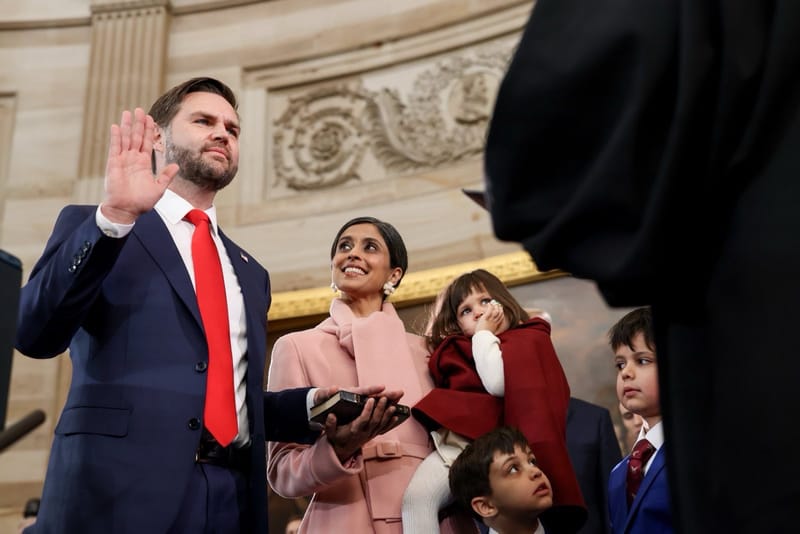
Vance sent letter to Iran's security chief to restart talks, WSJ reports
The Wall Street Journal reports that U.S. Vice President JD Vance wrote to Iran's top security official, with President Donald Trump's backing, to revive stalled negotiations; neither government has commented in the reports reviewed by Vocemundi.
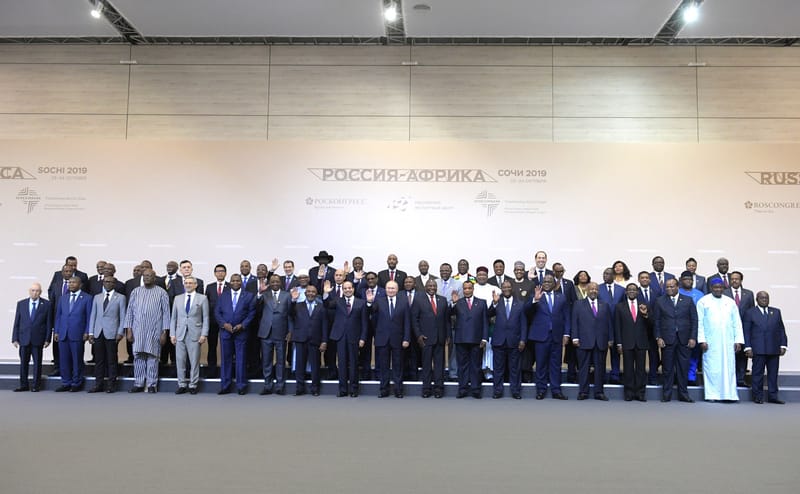
Putin tells Russia-Africa summit Russia is Africa's best partner, criticises Western lending
At the third Russia-Africa Summit in Moscow, Vladimir Putin cast Russia as Africa's best partner and accused Western countries, which he did not name, of exploiting the continent's resources and using debt to hold back its development.
Comments